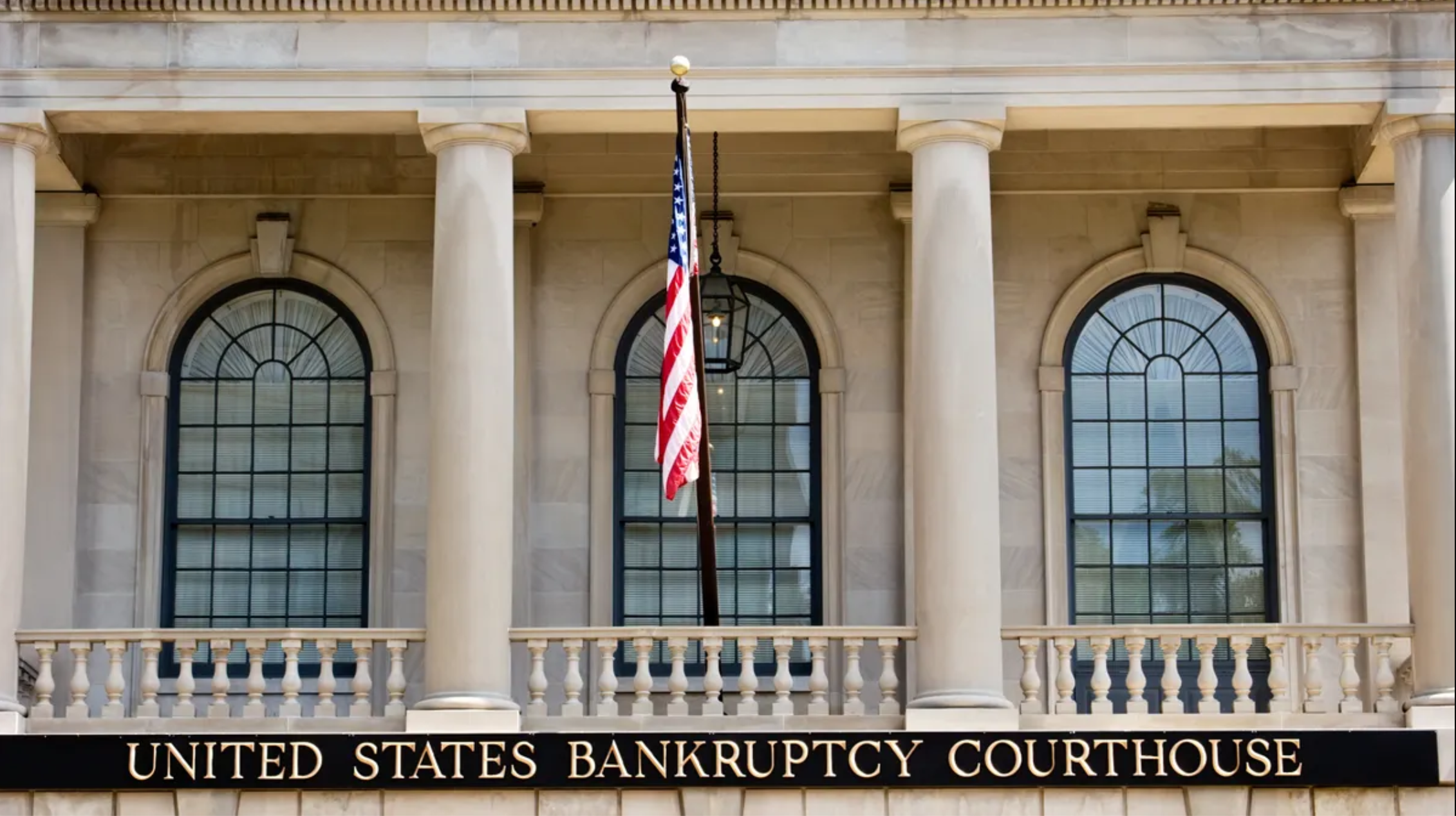
A Cyberattack Has Left Bankruptcy Courts Reassigning Their Own Legal Notices
A cybersecurity incident has disrupted the system responsible for delivering legally required notices across U.S. bankruptcy courts, forcing courts to shift responsibilities to attorneys and debtors. Separate outages affecting banking, court hearings, and grocery services reveal how essential institutions depend on shared digital infrastructure—and how the burden of keeping services functioning can fall on the people who rely on them.
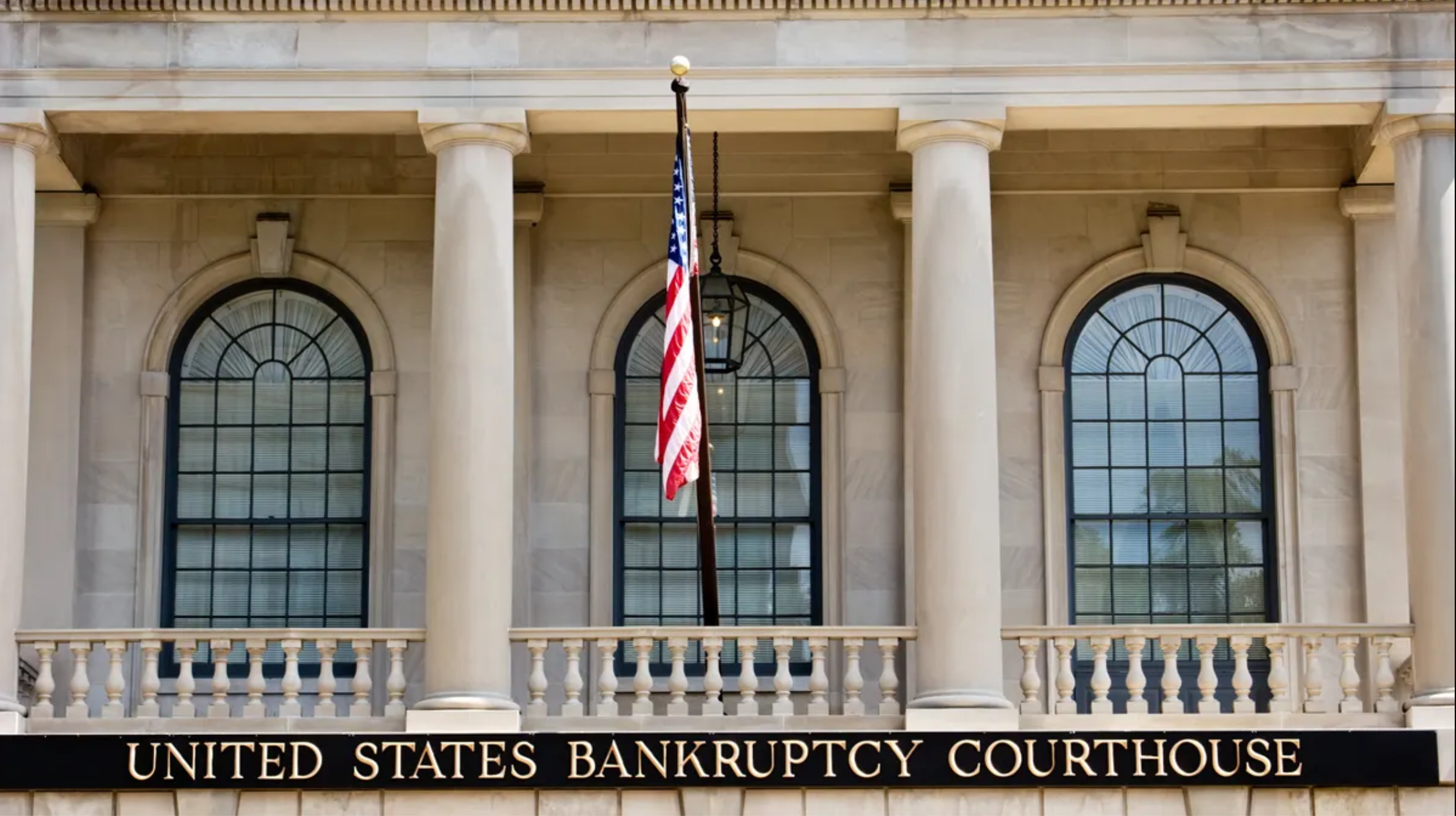
A cybersecurity incident has disrupted the federal Bankruptcy Noticing Center, forcing courts nationwide to establish temporary procedures for delivering legally required notices.
On October 16, the U.S. Bankruptcy Court for the Southern District of Florida issued an emergency administrative order changing who must deliver official notices in bankruptcy cases. For cases filed on or after October 7, the debtor's attorney, or the debtor personally if unrepresented, must mail the notice announcing the case and the required meeting of creditors. The order gives them three days after the later of its issuance or the court's production of the notice. It also assigns additional mailing responsibilities when cases are discharged, dismissed or closed, and requires affected parties to document that service was completed.
These are ordinarily functions supported by the federal judiciary's Bankruptcy Noticing Center, a centralized system responsible for producing and distributing notices across the country's bankruptcy courts. Since October 9, that system has been unavailable following a cybersecurity incident affecting its contractor, BAE Systems. The Administrative Office of the U.S. Courts publicly confirmed the disruption on October 15, explaining that the incident had stopped the center's production and distribution of notices nationwide. Several associated websites and the National Creditor Registration Service were also unavailable.
Bankruptcy courts have continued accepting filings, opening cases and processing documents. Their primary electronic case-management system remains operational, and registered users can still receive certain electronic filing notifications. But those systems don't replace every notice that must reach a debtor, creditor or other interested party. In particular, people who aren't registered for electronic court notifications may depend on the service that has stopped functioning.
Florida's order illustrates what happens when a centralized administrative function becomes unavailable while the legal obligations it supports remain in force. Hearings and statutory deadlines generally continue unless the court orders otherwise. Parties who believe they were harmed by delayed notice can request relief, but they may need to file a motion identifying the affected notice, explaining the consequences and specifying what remedy they need. Unrepresented parties who cannot comply with the temporary procedures are instructed to contact the clerk or seek relief from the court. Filing that request doesn't automatically extend a deadline.
The court has established protections intended to prevent people from suffering adverse consequences because legally required notice wasn't delivered. It has also preserved judicial discretion to assign notice responsibilities differently in individual cases. Those safeguards matter. They show that the judiciary has retained the authority and some of the practical capacity to respond to the disruption.
But the response also reveals how much administrative work was concentrated in the system that failed. Responsibilities previously handled through a national service are being redistributed among individual courts, attorneys, trustees and debtors. People who entered bankruptcy because they couldn't meet their financial obligations may now have additional procedural work to complete simply because the institution's contracted notice system is unavailable. The order doesn't establish that anyone has lost a legal right. It establishes that protecting those rights now requires different procedures, additional effort and, in some cases, an individual request for relief.
The distinction between a court remaining open and its procedures remaining accessible is central to this development. A functioning docket doesn't guarantee that everyone entitled to participate has received the information necessary to do so. Nor does the existence of a legal remedy guarantee that the person who needs it knows the remedy is available.
That makes the outage more consequential than an ordinary interruption of a government website. It has affected a process through which legal obligations are communicated, deadlines become meaningful and affected people are given an opportunity to respond.
Courts Are Using Different Procedures to Replace the Same National Service
The Bankruptcy Noticing Center was designed to perform a shared function for federal bankruptcy courts. Centralization allows courts to rely on common infrastructure for a large volume of routine communications, including paper and electronic notices. It can reduce administrative duplication and provide consistent processes across districts. But the October incident demonstrates what happens when a service used nationally loses its ability to operate.
The Eastern District of Texas reported that the disruption began late on October 9. By October 14, it had issued two general orders addressing deadlines and relief associated with the outage. The court continued accepting filings and processing cases, but warned that notices and orders might be delayed. It also published instructions for obtaining creditor names and addresses through the case-management system because the normal mailing-matrix function was affected.
That workaround has limitations. The court cautioned that the available creditor list doesn't necessarily include everyone entitled to notice, including debtors, trustees and certain government parties. Attorneys and other users must therefore determine whether additional recipients need to be identified. The technical ability to retrieve a list of creditors is useful, but it doesn't fully replace the administrative process that previously assembled and distributed legally sufficient notices.
The District of Hawaii issued similar guidance. It confirmed that ordinary electronic filing notifications remained operational while notices generated through the Bankruptcy Noticing Center were interrupted. Its instructions directed people without access to the electronic case-management system to contact the court's help desk. The court also advised that people prejudiced by missing or delayed notices could request relief. At the time of its October 14 announcement, it had no estimated restoration date.
These responses demonstrate meaningful compensatory capacity. The judiciary hasn't simply waited for its contractor to restore service. Courts have identified affected functions, published alternative procedures and exercised their authority to address deadlines and notice requirements. The electronic filing infrastructure also provides a functioning channel for some users, limiting the scope of the disruption.
The difficulty is that the substitute procedures aren't equivalent to the original service. A national system ordinarily performs notice-related work without requiring each affected person to determine which parts of the process have failed. Under the temporary arrangements, responsibility is more dispersed. Individual courts must decide how to handle the interruption, legal professionals must verify service requirements, and some unrepresented parties must perform tasks that would otherwise have been handled for them.
There is also a difference between making relief legally available and making it practically accessible. Someone represented by an attorney may have help identifying a missing notice, understanding its significance and requesting an extension. Someone without representation may first have to discover that a notice was delayed, determine which deadline was affected and understand how to bring the problem before a judge.
The Florida order recognizes this problem by allowing unrepresented parties to seek procedural assistance and by authorizing the court to establish alternatives where necessary. It also specifies that a motion for relief doesn't automatically stop an approaching deadline. The system therefore remains capable of correcting individual problems, but some of the work required to obtain that correction has shifted toward the people affected.
The outage's ultimate consequences aren't yet established. There is no verified national count of notices delayed, parties prejudiced, hearings continued or additional costs imposed. Nor has the judiciary publicly established that the incident compromised case records or personal information. The contractor has described the incident as isolated to the Bankruptcy Noticing Center system, while the investigation and restoration work continue.
Those unknowns limit what can responsibly be concluded about the damage already done. They don't prevent an assessment of the structural change documented in the court orders. A nationally shared administrative service stopped performing a legally consequential function, and courts have had to reconstruct that function through local procedures while continuing their ordinary operations.
The central question is how effectively those procedures preserve access for people who depend on the missing service, particularly if restoration takes longer than anticipated.
A London Cloud Outage Interrupted Banking and Court Hearings
On October 20, a separate disruption affected digital services across the United Kingdom and parts of Europe. Google reported that a power-related incident had caused an outage in one of the availability zones within its London cloud region, known as europe-west2. Multiple cloud products experienced service interruptions, elevated error rates or intermittent network failures.
The consequences appeared across organizations that provide very different services. Revolut reported problems affecting card payments, transfers, cash withdrawals and account access. Customers of several other banks experienced difficulties using online services. Britain's courts and tribunals service also encountered problems with its Cloud Video Platform, which is used to connect participants to court proceedings remotely.
The disruption affected legal hearings as well as financial transactions. Reporting from the United Kingdom described difficulties involving remote court attendance, including proceedings that depend on video links for participants who aren't physically present. By early afternoon London time, Google was reporting recovery across most affected workloads, and court video services were beginning to return. Google said the underlying power event had been mitigated and suggested that customers could attempt to move affected workloads to another available zone or region where feasible.
This incident was not caused by the cyberattack affecting U.S. bankruptcy notices. The two events involved different providers, infrastructure and failure mechanisms. There is no evidence connecting them operationally.
Their significance lies in the functions they interrupted. In the United States, a cybersecurity incident at a government contractor stopped a centralized system for communicating legal notices. In Britain, a cloud infrastructure failure temporarily interrupted technology used to participate in court proceedings. The same cloud incident also affected banking services, demonstrating how infrastructure operated by one provider can support organizations whose public responsibilities and commercial activities are otherwise unrelated.
The cloud outage also provides evidence of recovery capacity. Google identified the affected region, reported the power-related failure and began restoring services within hours. Some customers had options to move workloads to another location. Financial institutions communicated with customers, and at least some affected services resumed during the day. These responses distinguish a serious but temporary service interruption from a prolonged loss of the underlying institutions' ability to operate.
Still, moving an application to another region isn't necessarily a practical option for every customer. It depends on how the service was designed, whether its data and dependencies can be transferred, and whether alternative infrastructure is already available. The existence of multiple availability zones doesn't mean every application can automatically survive the loss of one. A service may rely on a particular database, network configuration or supporting component that wasn't designed to fail over immediately.
This is especially important for public institutions and regulated services because their responsibilities continue during a technology failure. A court must still provide lawful proceedings. A financial institution must still account for customer funds and transactions. Restoring the technical system is essential, but organizations may also have to reconcile delayed transactions, reschedule proceedings or verify that records remained complete and accurate.
British financial regulators had already identified the significance of these dependencies. In July, the United Kingdom designated several technology providers, including Google Cloud's European business, as critical third-party suppliers to financial institutions. That designation brought them under direct regulatory oversight intended to address the risks associated with concentrating important financial services in external technology infrastructure. European Union regulators have established related oversight arrangements for critical information and communications technology providers.
The October outage doesn't establish that those regulatory arrangements failed. Their purpose includes identifying and managing risks that cannot necessarily be eliminated. What the incident provides is a concrete test of the relationship between external technology providers and institutions that remain responsible for delivering essential services. The relevant questions now include whether affected organizations had workable continuity plans, how quickly they restored operations, and whether regulators can obtain enough information to evaluate the incident and require improvements where necessary.
Grocery Stores Stayed Open While Their Digital Services Were Disabled
A third development provides a useful comparison because its compensatory arrangements operated differently.
On October 19, international grocery retailer Ahold Delhaize confirmed that malicious activity had prompted it to take parts of its information technology infrastructure offline. The company operates grocery brands in Europe and the United States, including Albert Heijn, Stop & Shop, Giant Food, Hannaford and Food Lion. Its decision to disconnect systems affected websites, applications and other services across most of its brands, although the consequences differed by business.
The incident began around October 11 and was disclosed publicly on October 12. By October 19, some services had been restored, but Albert Heijn's home deliveries in the Netherlands were not expected to resume until October 23. E-commerce services at the company's American brands were also still being restored. Belgian e-commerce operations had returned, along with many websites and applications elsewhere in Europe.
The company reported that its physical grocery stores remained open throughout the incident. It also said that its investigation had not identified evidence that sensitive customer, employee or partner information had been taken, while emphasizing that the investigation was continuing. The identity of the attackers and the precise method used had not been publicly established.
The stores' continued operation is consequential. Customers retained an alternative way to purchase food even when online ordering and delivery services were unavailable. Employees and distribution operations were also able to maintain at least some functions while digital systems were restored. The company's response demonstrates that shutting down compromised technology can preserve other parts of a business, even when the protective action itself causes significant disruption.
But physical stores aren't an interchangeable substitute for every customer. Home delivery may be essential for people who cannot easily travel, lack transportation, have disabilities or depend on scheduled deliveries. The same outage can therefore be a manageable inconvenience for one household and a serious access problem for another. The existence of a functioning alternative tells us something about the organization's resilience, but not necessarily whether that alternative is accessible to everyone who relied on the original service.
The grocery incident also illustrates the operational reach of shared corporate infrastructure. Ahold Delhaize operates distinct brands in different countries, but a security problem affecting shared systems required protective measures across much of the group. That is evidence of an internal dependency capable of transmitting disruption across geographic and organizational boundaries. It doesn't establish that every affected brand used identical systems or that all services were disabled for the same technical reason.
These three incidents shouldn't be combined into a single cybersecurity event. The U.S. bankruptcy disruption involves a contracted court-notification service. The London cloud outage resulted from a reported power event. The grocery disruption followed malicious activity in a corporate network. Their immediate causes, recovery processes and consequences differ.
What makes them analytically related is the location of the work that must continue when the technology becomes unavailable. In each case, organizations had to preserve functions that depended on infrastructure outside the immediate control of the people using those functions. The alternatives ranged from manually delivering court notices to moving cloud workloads or keeping physical stores operational.
Those alternatives have different limits. Some require additional labor. Some require technical preparation before the incident occurs. Others depend on whether customers or affected parties can use a different service channel. The availability of a substitute is therefore only one part of the assessment. Its capacity, accessibility and cost determine how much of the original function it can actually preserve.
Federal Agencies Still Don't Have Complete Inventories of Connected Devices
The latest incidents occurred against a broader record of incomplete technology oversight.
On September 30, the Government Accountability Office released a report examining how federal civilian agencies identify and manage networked devices. These include internet-connected equipment and operational technologies used in buildings, laboratories and other government facilities. Federal requirements call for agencies to maintain inventories containing information necessary to understand and secure those devices.
Of the 22 agencies reviewed, 15 had established an inventory as of September 2026. Eleven were maintaining their inventories, and ten had included all required information for each device. Only seven had fully met all three requirements. GAO also found that the Office of Management and Budget had not issued updated guidance covering fiscal year 2026 or provided the oversight needed to ensure agencies completed the work.
This finding doesn't explain the Bankruptcy Noticing Center incident, the London outage or the grocery cyberattack. GAO examined a different set of federal technology-management responsibilities, and the report doesn't establish that any of those incidents resulted from missing device inventories.
Its relevance is to the capacity to identify and manage technological dependencies before they fail. An organization cannot reliably assess the security of equipment it hasn't identified. Incomplete inventories can leave agencies uncertain about which devices are connected, what software they use, which security controls apply and whether known vulnerabilities have been addressed. The GAO findings document an institutional weakness in maintaining that information, even though the relevant requirements have existed for years.
Another development this week raises the importance of those unresolved responsibilities. On October 19, Reuters reported on a cybersecurity investigation documenting the use of autonomous AI agents to attempt intrusions against more than 1,200 websites across several countries. Researchers reported more than 100 successful compromises, while Reuters independently examined activity records and contacted affected companies. Some businesses confirmed limited intrusions or remediation, although the extent of any data theft remained uncertain.
The investigation suggests that automated tools can reduce the labor required to search for vulnerabilities across large numbers of targets. It doesn't establish that the same tools were involved in any of this month's major service disruptions. The relevance is prospective: organizations with incomplete inventories, poorly secured secondary systems or insufficient monitoring may face a growing volume of attempts to exploit those weaknesses. The number of attempted intrusions could increase without a corresponding increase in the number of human attackers conducting them.
That changes the demands placed on defensive systems. Preventing incidents requires knowing which systems exist, how they connect and what access they provide. Responding to incidents requires isolating affected components without unnecessarily disabling essential functions. Recovering requires alternative procedures, accurate records and enough personnel to restore services while meeting continuing obligations.
The federal bankruptcy response shows that some of those capabilities remain available even after a shared service stops operating. Courts have preserved case processing, identified substitute procedures and established ways to seek relief. The British cloud outage shows that substantial technical recovery can occur within hours. Ahold Delhaize's decision to disconnect affected systems preserved physical retail operations while digital services were restored.
These are meaningful successes. They also demonstrate that resilience isn't captured by whether a system is described as operational. A court can remain open while notice delivery is interrupted. A bank can safeguard deposits while customers cannot complete transactions. A grocery chain can keep stores open while its delivery network is unavailable. Each organization may be functioning in an important sense while particular obligations or services remain difficult to fulfill.
The structural concern becomes more significant when those interruptions require the people least equipped to manage them to perform additional work. Bankruptcy debtors may need to send official notices. Customers may have to find another way to purchase groceries. People participating in remote hearings may have to wait for proceedings to resume. These consequences vary in severity, and the available evidence doesn't establish widespread irreversible harm. But they show where the cost of preserving institutional function can move when centralized systems fail.
This is the point at which the Risk Monitor needs to distinguish technical restoration from institutional repair. Restoring the Bankruptcy Noticing Center would allow ordinary notice production to resume. It wouldn't automatically establish whether every delayed notice had been delivered, every affected deadline had been addressed or every person entitled to relief had received it. Similarly, restoring cloud services doesn't by itself establish that all delayed transactions and proceedings have been reconciled.
The institutions remain responsible for those outcomes even when their contractors operate the systems through which the work is performed. Whether they can identify every affected obligation, correct the consequences and demonstrate that correction is the more consequential measure of recovery.
What I’m watching now
The immediate question is when the Bankruptcy Noticing Center resumes operations and how the federal judiciary handles notices accumulated during the interruption. A restoration announcement would establish that the contractor has recovered the service, but it would not establish that the notice backlog has been cleared. I want to see whether the Administrative Office publishes the duration and scope of the outage, how many notices were delayed, and whether courts identify cases requiring corrective service. The handling of deadlines, continuances and requests for relief will show whether temporary procedures protected affected parties or left problems to be resolved individually.
The differences among district responses also deserve attention. Florida has issued a detailed order reallocating service responsibilities. Texas and Hawaii have published their own procedures and protections. A useful next step would be to determine whether the judiciary develops a more uniform national response or continues relying primarily on district-level arrangements. Neither approach is automatically inadequate. The relevant measure is whether legally required notices reach the appropriate people and whether those affected by failures can obtain timely correction without unreasonable additional burdens.
For the London cloud outage, the strongest evidence of recovery will come from Google's final incident report and the responses of affected institutions. Restoration times, the specific infrastructure that failed, the effectiveness of failover arrangements and any remaining service backlogs will help establish whether the incident exposed weaknesses that require further intervention. Regulatory findings would be particularly important because financial authorities have already identified critical cloud providers as a subject of direct oversight. Evidence that institutions successfully maintained or restored essential operations through tested continuity plans would weaken the assessment of inadequate redundancy.
Ahold Delhaize's restoration schedule provides a more immediate operational measure. The return of home deliveries, online ordering and distribution services would demonstrate that the company can restore affected functions without compromising its remaining operations. Continued outages, additional disruptions or evidence of more extensive compromise would strengthen concern about the consequences of shared digital infrastructure. The company's final investigation may also clarify whether its protective shutdown prevented wider damage.
The GAO findings raise a longer-term question about institutional correction. OMB can issue updated guidance, and agencies can complete and maintain the required inventories. Those would be measurable improvements. The important evidence will be whether agencies actually meet the requirements and whether oversight verifies that the inventories are accurate and useful. A policy announcement without implementation would leave the underlying weakness largely unchanged.
I'm also watching whether the growing use of autonomous tools in cyber intrusions produces verified changes in incident frequency, detection times or defensive capacity. The October 19 investigation provides evidence of one significant campaign, but it doesn't establish how widespread the technique has become or how effectively organizations are adapting. Additional independently verified incidents, especially those affecting essential services, would alter that assessment.
Across these developments, the most important indicators concern the work that remains after a system is technically restored. If institutions can account for interrupted services, identify everyone affected and complete necessary corrections, the evidence would support substantial repair capacity. If systems return online while unresolved obligations, inaccessible remedies or incomplete records remain, the assessment would need to distinguish operational recovery from the restoration of the service people were entitled to receive.
Current Risk Assessment · October 20, 2026
Current assessment: Strained, with substantial compensatory capacity still functioning. A cybersecurity incident has interrupted the nationwide system used to distribute federal bankruptcy notices, requiring courts to establish temporary procedures for legally consequential communications. Separate cloud and corporate cybersecurity incidents have disrupted banking, court participation and grocery services. Recovery mechanisms are operating, but their effectiveness varies by service, institution and the ability of affected people to use available alternatives.
Expected if this assessment holds: Continued reliance on temporary administrative procedures while the Bankruptcy Noticing Center is restored, followed by additional work to reconcile delayed notices and affected proceedings. Organizations dependent on shared digital infrastructure may experience further service interruptions requiring manual workarounds, technical failover or temporary suspension of affected systems. The consequences are likely to be uneven, with greater burdens on people and institutions that lack accessible alternatives.
Would weaken the assessment: Prompt restoration of the Bankruptcy Noticing Center accompanied by verified clearance of delayed notices, consistent protection of affected parties and limited unresolved procedural consequences; evidence that cloud and grocery services have recovered without significant outstanding obligations; effective continuity arrangements demonstrated through incident reviews; and measurable progress in federal technology inventories and oversight.
Status: STRAINED — COMPENSATING. The documented incidents have interrupted essential functions without establishing a general failure of the institutions responsible for them. Courts, technology providers and businesses have preserved or restored substantial operations. The unresolved risk concerns whether their compensatory arrangements can reliably deliver the original services, particularly where legal rights, financial access or essential household needs depend on functions that remain interrupted.
Sources
Administrative Office of the U.S. Courts, “Cybersecurity Incident Disrupting Bankruptcy Court Operations”, October 15, 2026. Primary confirmation of the contractor incident and nationwide interruption of Bankruptcy Noticing Center services.
U.S. Bankruptcy Court, Southern District of Florida, “Administrative Order 2026-06: Bankruptcy Noticing Center Service Interruption”, October 16, 2026. Primary court order establishing temporary notice responsibilities, deadlines, safeguards and procedures for relief.
U.S. Bankruptcy Court, Eastern District of Texas, “BNC Service Interruption Update”, October 14, 2026. Court announcement documenting emergency orders, continued case processing and alternative creditor-list procedures.
U.S. Bankruptcy Court, District of Hawaii, “Notice of BNC Nationwide Outage”, October 14, 2026. Primary description of affected notice services, functioning electronic filing notifications and available procedural remedies.
Reuters, “U.S. Federal Bankruptcy Court Operations Disrupted by Cybersecurity Incident”, October 16, 2026. Independent reporting on the contractor incident and its effects on federal court operations.
Google Cloud Service Health, “Multiple Services Are Experiencing Issues in the europe-west2 Region”, October 20, 2026. Primary incident record identifying the affected infrastructure, reported power event, service interruptions and recovery updates.
Reuters, “Google Cloud Services Down in UK; Banks, Public Sector Report Issues”, October 20, 2026. Reporting on the cloud outage, affected financial services and regulatory oversight of critical technology providers.
The Guardian, “Google Cloud Failure Hits Millions as UK Courts and Banks Knocked Offline”, October 20, 2026. Reporting on disrupted remote court hearings, banking services and the initial recovery.
Ahold Delhaize, “Ahold Delhaize Update on Status of Cybersecurity Incident”, October 19, 2026. Primary company statement documenting the incident, protective shutdowns, continued store operations and restoration schedule.
U.S. Government Accountability Office, “Internet of Things: OMB Action Needed to Ensure Agencies Secure Their Networked Devices,” GAO-26-108937, September 30, 2026. Primary audit of federal agency networked-device inventories and oversight deficiencies.
Reuters, “How One Hacker Used AI Agents and a Few Thousand Dollars to Break Into Scores of Sites”, October 19, 2026. Investigation documenting autonomous AI-assisted intrusions, affected businesses and remaining uncertainties about the extent of compromise.
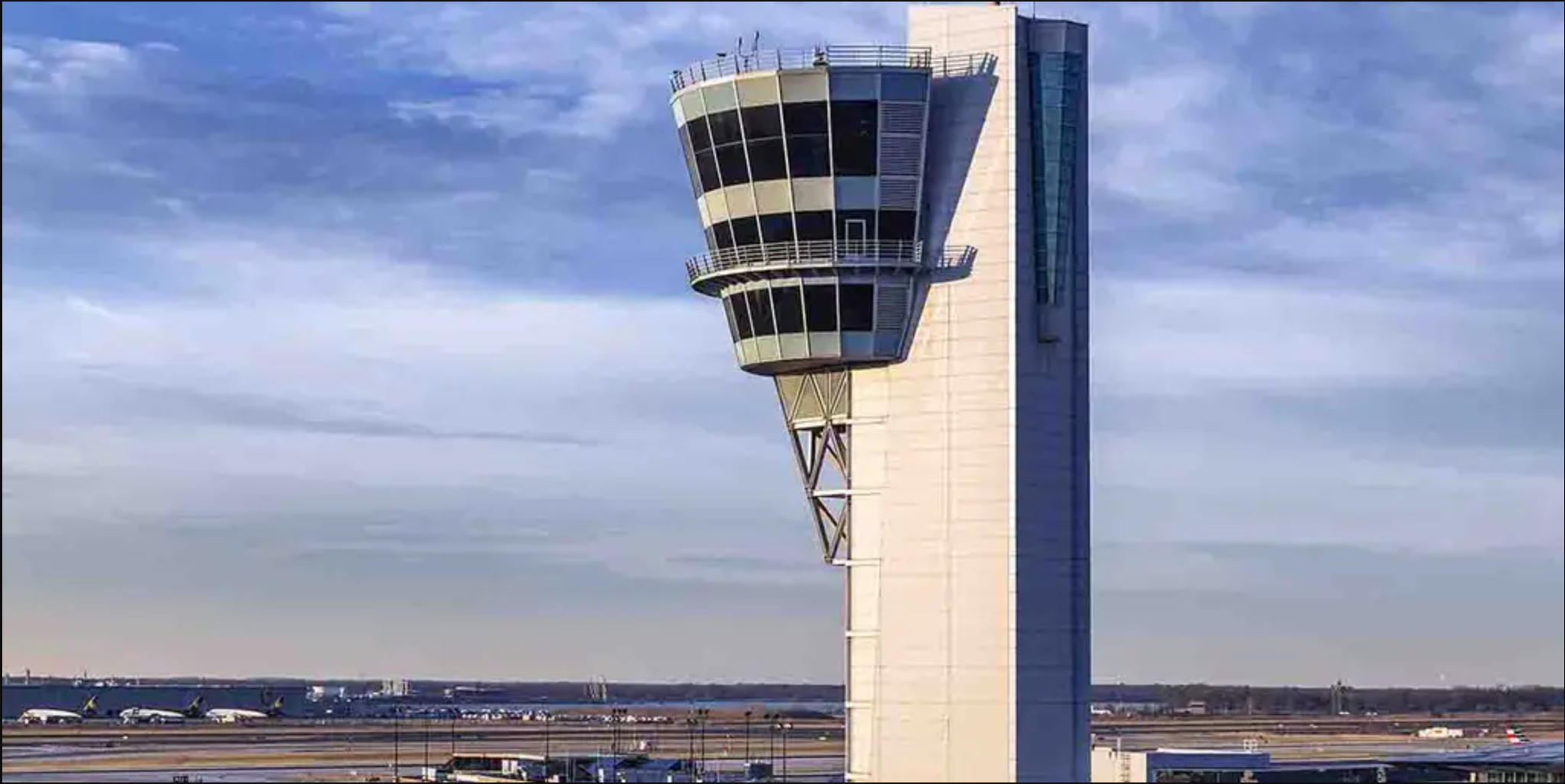
FAA Outage Reveals Redundancy Failures
A telecommunications outage across the Northeast exposed a problem the FAA has already been trying to fix. A backup route only provides redundancy if it’s still available when the primary route fails, and on September 21, it wasn’t.
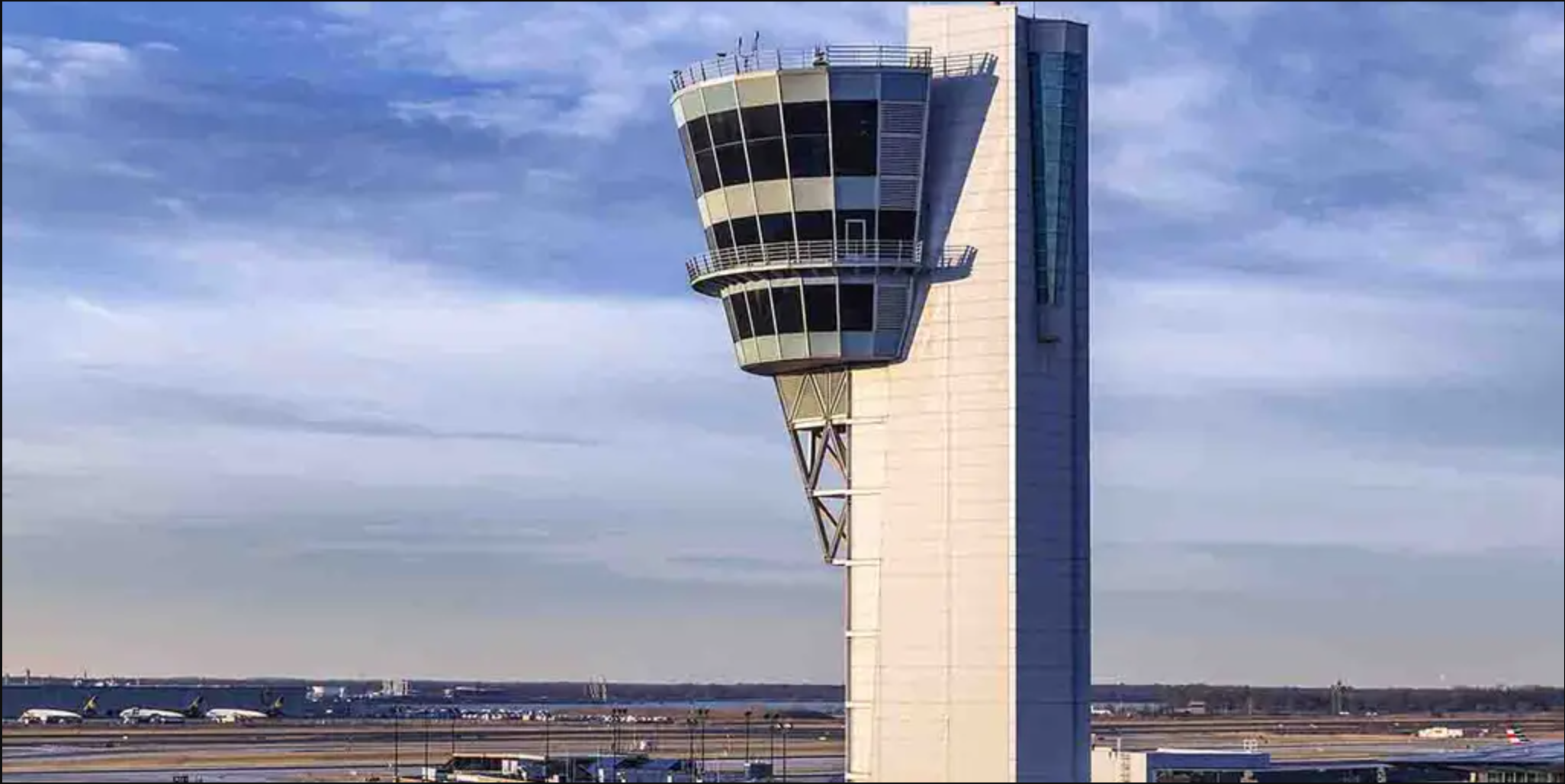
Aircraft at Newark Liberty International Airport. A September telecommunications failure at the FAA facility controlling Newark-area traffic became a regional disruption after the system's backup fiber path was also unavailable.
In July 2025, the FAA announced that it had completed a new fiber-optic communications network between New York and the Philadelphia facility responsible for Newark-area air traffic. Two months earlier, telecommunications failures had disrupted operations at the Philadelphia TRACON, where controllers handle aircraft arriving at and departing from Newark. The new network was part of the response. The FAA added three high-bandwidth telecommunications connections between New York and Philadelphia, deployed a temporary backup system, and began establishing a local STARS radar-data hub so Philadelphia would no longer depend entirely on radar information coming from New York. By July, the agency said the new fiber connections were running along two separate communications paths so that equipment could continue operating if one path was disrupted.
On September 21, 2026, a telecommunications circuit at the Philadelphia facility failed. The FAA attempted to move communications onto the second path, only to find that a construction crew in New Jersey had accidentally severed the fiber line. Incoming flights were halted at Newark, JFK, LaGuardia, Philadelphia and Boston, and the disruption spread as traffic was redirected through the system. More than 100 flights were diverted. By the FAA's later accounting, roughly 9,500 flights were delayed or canceled, and the telecommunications problem took about eight hours to resolve.
The scale of the disruption got most of the attention, but I'm more interested in the order in which things happened. The FAA had built a second communications path because it knew a failure on the first shouldn't be able to interrupt air traffic across the region. A failure occurred anyway, and the second path had already been lost to an unrelated event.
A fiber line being cut is ordinary enough. So is a telecommunications circuit failing. Put them together in this order, though, and something happening to a fiber line in New Jersey can stop arrivals hundreds of miles away.
The FAA Had Already Added a Backup Route
Had the second communications path been available, most of us probably would've never known the first circuit had failed. One route would've taken over while the other was repaired, and flights would've continued moving.
From the outside, a system in that condition can look unchanged. Inside it, the situation is different. Before the circuit failed, two routes were available. Afterward, one route would've been carrying the work previously distributed across an arrangement that included both. The flights can look the same either way.
We see this elsewhere when electrical grids call demand-response resources or keep generation available that otherwise wouldn't be needed. Hospitals move patients when they run short of beds. Supply chains reroute goods around ports or transportation problems. Government agencies move work elsewhere when an office loses staff.
These responses are supposed to make problems disappear from ordinary life. That's why they exist. It also means the absence of a visible disruption doesn't tell us how much had to happen underneath it to keep things looking normal.
The FAA's response to the Newark problems in 2025 followed the same pattern. The agency wasn't waiting for the next outage. It was adding connections, moving to fiber, building a local radar-data hub and using a temporary backup while the work was underway. It also said that when staffing or equipment problems reduced what controllers could safely handle, it would slow the rate of arrivals into Newark.
By September 2026, the FAA had encountered a problem that the second communications route couldn't take over because the route itself was unavailable, leaving the agency to reduce the number of aircraft entering the affected airspace until controllers had what they needed to handle them safely.
When the second communications route was unavailable, the FAA had to respond outside the telecommunications network by reducing the number of aircraft moving through the affected airspace.
The FAA Is Still Replacing Its Aging Communications Network
The September outage occurred in the middle of a much larger FAA modernization effort. Administrator Bryan Bedford told Congress this month that the National Airspace System is still operating with obsolete technology even as the agency replaces it. As of September 1, the FAA had replaced more than 64 percent of its copper-based Time-Division Multiplexing telecommunications infrastructure with modern equipment and converted more than 400 radio sites. Congress has already provided $12.5 billion for the broader modernization effort.
After the September 21 outage, Transportation Secretary Sean Duffy said the replacement network is supposed to eliminate single and dual points of failure by providing multiple telecommunications routes into FAA facilities. The estimated cost of the telecommunications work has risen to $5.91 billion, and Bedford said the remaining outdated copper telecommunications wiring should be replaced by September 2027.
The FAA is already responding to the weaknesses exposed by the 2025 failures. The difficulty is that recognizing a problem and finishing the work required to fix it happen on very different timelines.
The National Airspace System can't be taken offline while its communications network is replaced. The FAA provides air-traffic services for more than 44,000 flights carrying roughly three million passengers every day, so old equipment has to keep working while new equipment is installed around it. Copper is still carrying traffic while fiber replaces it. Temporary systems have to cover gaps while permanent systems are installed. New equipment has to communicate with parts of the network that haven't been replaced yet.
That leaves a period in which the FAA can know exactly what needs to be repaired, be actively repairing it, and still remain dependent on some of the same equipment and connections that made the repair necessary in the first place.
The September outage happened during that period, when one telecommunications circuit failed while a separate fiber line had already been cut during construction work. There's no indication that one failure caused the other. Their connection was created by the system itself because the fiber line became consequential once the first circuit was gone.
A second route only protects the first route when it's still there at the moment the first one fails. That sounds obvious, but I think it gets lost when redundancy is treated as something a system either has or doesn't have. Its condition can change before anything visible happens.
A New GAO Report Identified Other Communications Vulnerabilities
On the same day as the outage, the Government Accountability Office released a report examining a different set of problems in aviation communications.
GAO looked at electromagnetic-spectrum threats including spoofing and jamming. The FAA has identified those threats, but GAO found that the agency hasn't completed all of the risk and mitigation assessments and updated security documentation needed to address them. The FAA also lacks defined real-time monitoring and detection for every spectrum-related threat GAO examined. In some cases, the agency can investigate an incident only after someone reports it.
GAO made nine recommendations covering risk assessments, monitoring and detection, coordination with other organizations, authentication and protection of aviation communications. The Department of Transportation agreed with all nine, and they remain open.
Nothing in the available evidence connects those findings to the September 21 outage. The fiber damage was reported as accidental construction damage. The GAO report is useful here for what it shows about the communications system around the fiber itself.
For a controller to communicate safely with an aircraft, the FAA has to know where the aircraft is, the controller has to be able to reach it, the information moving between them has to be accurate, and the equipment carrying that information has to work. The FAA also has to be able to recognize when one of those things has changed.
Adding another fiber route protects one part of that chain. It doesn't protect all of it. Another route won't tell the FAA that information has been spoofed, just as better authentication won't restore a cable that's been severed. A second facility also provides less protection if it depends on something that can be lost along with the first one.
Two systems can look independent on paper and still share something underneath them that makes them vulnerable at the same time.
The FAA happened to begin limited use of another new system on September 21. SMART brings roughly 200 data streams into one place, including weather, flight paths, traffic flow and controller staffing. It's intended to help FAA personnel see problems developing earlier and make decisions about traffic before congestion or weather produces larger disruptions.
SMART can give the FAA more information about what's happening across the airspace. The fiber outage gives us an unusually clear example of what information alone can't solve. Officials can know exactly where traffic is accumulating and exactly where they'd like aircraft to go while still lacking the communications route required to move the information controllers need.
The FAA is replacing the network carrying information at the same time it's improving the information available to the people managing traffic. It's also replacing old equipment and trying to close the security gaps GAO identified. Those projects overlap, but they don't solve the same problem, and progress in one doesn't necessarily tell us much about the condition of another.
The FAA Prevented a Safety Crisis by Reducing Air Traffic
When the telecommunications system couldn't support normal operations on September 21, the FAA reduced the amount of traffic controllers had to handle. Arrivals were halted or restricted, aircraft were held on the ground and more than 100 flights were diverted while the telecommunications lines were repaired.
Thousands of passengers experienced delays or cancellations, aircraft were diverted, crews and airlines had to adjust, and other airports received traffic they otherwise wouldn't have handled. Boston was affected even though the telecommunications failure wasn't there because the disruption altered traffic across the Northeast.
This is one reason I've become increasingly wary of describing large systems as either working or failing. The telecommunications network couldn't preserve normal service, while the air-traffic system could still preserve safe service by accepting fewer flights. What failed in one place was accommodated somewhere else, and the cost changed form as it moved.
The FAA reduced traffic until the communications lines could be repaired, shifting the immediate consequences into delays, cancellations and diversions while keeping the affected airspace operating safely.
As the new telecommunications network comes online, I'd expect more of these failures to be handled before they ever reach flight operations. A circuit fails, another route takes over, the first gets repaired and passengers never know it happened. If relatively ordinary technical problems continue making it through the backup systems and forcing the FAA to restrict traffic across several major airports, then we know those backups still aren't containing enough of the problem before it reaches everything connected to them.
What I’m watching now
The investigation into the New Jersey fiber cut should tell us more about how separate the communications routes really were. The FAA's July 2025 announcement described two separate paths intended to keep equipment operating if one was disrupted. I want to know how those routes were physically laid out, what could disable each one and what protection existed around a line that became critical as soon as another circuit failed.
I'm also watching what the FAA says about the temporary backup deployed after the 2025 Newark failures. The agency described it as providing redundancy during the move to the new fiber network, but the public information available so far doesn't establish what it could've carried under the conditions that developed on September 21. Until we know that, I don't think we can say whether another backup was present and unable to do the job, had already been removed from the relevant configuration, or was never intended to cover this particular failure.
More than 64 percent of the FAA's old copper-based TDM telecommunications network had been replaced as of September 1, and Bedford says the remaining outdated copper should be gone by September 2027. The plans described after this outage go further than replacing copper with fiber and call for multiple routes into facilities so that losing one or two doesn't recreate what happened this week.
We should eventually be able to see whether that worked by how uneventful future failures become. If a circuit fails, another independent route takes over and flights continue while the damaged line is repaired, the new network is doing what the FAA says it's being built to do.
The GAO report gives us another set of things we can follow without trying to infer them from outages. All nine recommendations remain open. We can watch whether the FAA completes the missing risk assessments, improves real-time detection of spectrum threats and strengthens authentication and data protection for aviation communications. Those changes would address problems the fiber replacement can't.
Another useful measure will be how often technical problems require the FAA to reduce traffic across multiple airports. Ground stops and traffic restrictions are supposed to protect safety, so their use alone doesn't tell us very much. The more useful question is what keeps requiring them. If relatively ordinary equipment and telecommunications problems repeatedly get past the technical backups and have to be dealt with by moving or stopping flights, then more of the system is depending on that last layer of response than the visible operation of the network would suggest.
Current Risk Assessment · September 25, 2026
Current assessment: The September Northeast aviation outage adds another case in which the existence of a backup tells us less than whether that backup remains available when the original system actually needs it. The FAA had already added separate communications paths after the 2025 Newark failures, but a telecommunications circuit failed after another fiber route had been severed, leaving the agency to reduce traffic across multiple airports while the lines were repaired. The FAA is already replacing the older network, and its response kept aircraft operating safely. The open question is how often problems can still get through the telecommunications backups and reach flight operations while that replacement continues.
Expected if this assessment holds: Individual equipment and telecommunications failures will usually be handled without creating a safety problem, but some will still produce large disruptions when another route or system is already unavailable. As more of the new network comes online, those events should become less common and more failures should be handled without large ground stops, diversions or cancellations.
Would weaken the assessment: Future telecommunications failures move onto independent backup routes without major traffic restrictions; the investigation identifies a specific problem behind the September outage that's subsequently corrected; multiple routes remain available when failures overlap; and the separate communications problems identified by GAO are addressed.
Status: ELEVATED — the FAA is replacing the network, but the September outage showed that two separate telecommunications problems can still reach flight operations before that work is complete.
Sources
Federal Aviation Administration, “Secretary Duffy Announces Completion of Another Major Milestone for Operations at Newark Liberty Airport,” July 3, 2025.
Federal Aviation Administration, “FAA Statements on Newark Liberty International Airport,” 2025.
Federal Aviation Administration, “Testimony of Bryan Bedford, FAA Administrator,” September 2026.
U.S. Government Accountability Office, “Aviation Cybersecurity: Enhanced Air Safety Requires FAA to Better Mitigate Threats to Aircraft Communications,” September 21, 2026.
Federal Aviation Administration, “Trump’s Transportation Secretary Sean P. Duffy Delivers State-of-the-Art Air Traffic Control,” September 21, 2026.
Reuters, “Thousands of US flights snarled before FAA resolves telecom problem,” September 21, 2026.
Reuters, “Airport operations in US Northeast resume after telecom lines repaired,” September 21, 2026.
Reuters, “US says new air traffic control system will not suffer disruptions,” September 22, 2026.

Why Is Europe Preparing Its Citizens for Disruption?
Across Europe, governments are expanding household preparedness, hospital contingency planning, infrastructure protection and civil-defense exercises. The public record cannot show what classified intelligence may sit behind those decisions, but the preparations themselves are becoming increasingly visible.

The Be Emergency Ready booklet contains essential information. Photograph: Jessica Doyle/The Irish Times
Beginning today, approximately 2.2 million households in Ireland are being sent a government booklet explaining how to prepare for emergencies. Be Emergency Ready recommends keeping water, food, medication, a battery-operated radio, flashlights and other supplies available in case electricity, communications or other basic services are interrupted. Ireland’s Department of Defence has said the program was influenced in part by Storm Éowyn, which left 768,000 households without power in January 2025.
Ireland joins several European countries that have moved civilian preparedness further into ordinary household planning over the past two years. The Netherlands distributed emergency-preparedness booklets to more than 8.5 million households between November 2025 and January 2026, advising residents to be capable of managing independently for the first 72 hours of a major emergency. Dutch guidance covers power failure, digital attack, flooding and other events that could interrupt access to electricity, water, communications or public assistance.
The European Union has adopted the same 72-hour benchmark. Its Preparedness Union Strategy, introduced in March 2025, calls for guidelines enabling households to remain self-sufficient for at least three days, along with stronger early-warning systems, stockpiling, civil-military planning, public-private emergency protocols and regular preparedness exercises.
The household campaigns are developing alongside changes in military planning, healthcare, infrastructure protection and civil defense. Germany is planning for civilian hospitals to absorb large numbers of military casualties in a NATO conflict. Finland has expanded public guidance for drone attacks and proposed new authorities to protect undersea infrastructure and counter unmanned systems. Switzerland adopted a new national security strategy on September 18 centered on resilience, protection and defense capacity. Poland has been running civil-defense exercises involving drones, evacuations and interruptions to drinking water while also activating real air-threat alerts during Russian attacks on Ukraine.
These programs were not created at the same time and are not responses to a single threat. Their overlap is in the kinds of failures governments are preparing civilian systems to absorb: electricity outages, communications failures, disrupted transport, cyberattacks, infrastructure sabotage, military spillover and periods in which normal government services cannot immediately reach everyone.
Households are being asked to carry the first several days
The Dutch preparedness campaign gives residents a specific time horizon: 72 hours. Households are advised to store water, food and necessary medication, maintain ways to receive information without internet access and prepare for interruptions to services they normally assume will remain continuously available. The program treats household preparedness as a way to reduce immediate dependence on emergency services while authorities respond to the broader disruption.
The EU’s Preparedness Union Strategy extends that approach across member states. Alongside the 72-hour household standard, the strategy calls for stronger preparedness in schools, improved warning systems, emergency protocols between governments and private companies, greater stockpiling capacity and comprehensive civil-military arrangements. It also calls for regular EU exercises and closer preparedness coordination with NATO.
Ireland’s new booklet is broader than military preparedness. It addresses severe weather, prolonged power failure and other emergencies, and the government has explicitly connected the initiative to lessons from Storm Éowyn. The distribution still places Ireland within a wider European shift toward asking households to maintain a small amount of independent operating capacity during disruptions to centralized systems.
The Netherlands and Ireland are therefore arriving at a similar household model through somewhat different threat environments. Residents are being asked to assume that electricity, water, communications or government assistance may occasionally become unavailable for long enough that the first stage of response has to happen inside the household.
Germany is planning civilian healthcare into a NATO conflict
Germany’s planning extends this model into healthcare. Bundeswehr contingency planning for a major conflict on NATO’s eastern flank uses an assumption of as many as 1,000 wounded military personnel arriving for treatment each day. Germany’s location would make it a transit point for troops and supplies moving east and for casualties moving west, while military medical services would depend heavily on civilian hospitals.
The 1,000-per-day figure is a planning assumption rather than a prediction that Germany expects that number of casualties. It determines the scale of hospital capacity, medical transport, pharmaceutical supply chains and coordination that would be required under a severe conflict scenario. Bundeswehr discussions this year have continued to focus on civilian-military healthcare structures, secure medical supply chains and the ability to treat large numbers of casualties during crisis or war.
The planning expands the resources relevant to military readiness beyond military hospitals. Civilian beds, medical staff, medicines, transport networks and supply systems become necessary to sustain operations if military demand rises sharply at the same time civilian healthcare continues to function.
Switzerland has formally expanded its security planning
Switzerland adopted its 2026 Security Policy Strategy on September 18. The Federal Council identified three priorities: strengthening resilience, improving resistance and protection capabilities, and strengthening defense capacity. Implementation of the strategy’s 10 objectives and 46 measures had already begun by the time it was formally approved.
The strategy describes Russia’s war against Ukraine, hybrid threats and critical dependencies as part of a substantially worse European security environment. It includes cyberattacks, espionage, sabotage, long-range weapons and other threats alongside conventional military attack, and it calls for coordination among federal and cantonal authorities as well as the private sector, academia, associations and the public where necessary.
Switzerland also states that a direct armed attack on the country remains unlikely in the foreseeable future. Its government is nevertheless expanding preparations for long-range attacks, hybrid activity and disruptions that could affect civilian infrastructure or public safety. The strategy therefore provides a clear example of preparedness increasing without a public assessment that conventional war on Swiss territory is likely.
Finland is changing both public guidance and legal authority
Finland added instructions for airborne threats to its national preparedness guide in June. The guidance explains how authorities would issue warnings, how civilians should respond to drone threats and where they should take shelter. It explicitly notes that an airborne threat could include a drone carrying explosives.
On September 10, the Finnish government submitted legislation that would give the Border Guard new responsibilities for protecting critical underwater infrastructure and additional powers to intercept unmanned vehicles. The proposal covers Finland’s territorial waters and exclusive economic zone and is intended to improve the Border Guard’s ability to respond to emerging security situations.
Those measures place civilian infrastructure, maritime security and drone defense inside the same preparedness framework. They also move beyond public information campaigns by changing the authority available to state institutions before a disruption occurs.
Poland is exercising scenarios it is also encountering in practice
Poland conducted a two-day civil-defense exercise called DRON-26 on September 9 and 10. The scenario included unidentified drones crashing in Mazovia, a large forest fire, disruption to drinking-water access and the evacuation of civilians. Fire services, police, territorial defense forces and regional authorities participated in the exercise.
Poland has also been testing warning sirens across multiple districts throughout September. At the same time, the government’s RCB alert system has issued real warnings during Russian aerial attacks on Ukraine. On September 17, residents received messages stating that a Russian attack was underway in Ukraine, Polish military aircraft were operating, and further communications should be monitored. Polish and allied aircraft have also been placed on preventive alert during major Russian strikes, including on September 19, when no violation of Polish airspace was ultimately recorded.
The same warning and response systems are therefore being used in exercises and activated during actual regional military events. Poland’s September activity includes both planned tests of civilian response and operational precautions prompted by attacks immediately across its border.
Drone incidents have increased the operational burden on NATO states
On September 14, an Italian fighter operating under NATO’s Baltic mission shot down a Russian-made drone after it entered Lithuanian airspace from Belarus. Initial reporting identified it as a suspected Geran-2 military drone. Lithuanian investigators later identified the aircraft as a Gerbera-type drone, and President Gitanas Nausėda said it was probably intended for Ukraine rather than Lithuania. Investigators continued examining its electronics and did not establish that Lithuania had been its intended target.
The later assessment limits what can be inferred about Russian intent, but the incident still required an operational NATO interception inside allied airspace. It also occurred during a period in which European governments have reported additional drone activity, sabotage concerns and other forms of hybrid disruption.
At NATO’s Military Committee meeting in Copenhagen on September 19, committee chair Admiral Giuseppe Cavo Dragone referred publicly to recent Russian airspace violations, drone incidents and hybrid activities and said they had been testing allied responses. The meeting focused on readiness, multi-domain operations, capability targets and the ability of defense industry to deliver equipment at greater speed and scale.
France has also moved to strengthen infrastructure protection. President Emmanuel Macron directed his government this month to prepare measures protecting sensitive infrastructure and defense sites against drones, cyberattacks and other hybrid threats.
What the public record shows
Public documents do not establish whether European governments possess classified intelligence pointing to a specific future Russian attack. They show governments making concrete preparations for severe disruption through legislation, exercises, infrastructure protection, hospital planning, warning systems and household preparedness.
The programs also began on different timelines. The EU Preparedness Union Strategy dates to March 2025. The Dutch household campaign began in November 2025. Germany published its 1,000-casualty planning assumption last year. Switzerland’s strategy went through a consultation process before formal approval this month. Ireland has linked its own program in part to the experience of a major weather event.
The public explanations also cover more than Russia. Flooding, cyberattack, prolonged power failure, sabotage, extreme weather, infrastructure damage and military conflict appear across national and EU preparedness documents. Switzerland explicitly describes direct armed attack as unlikely in the foreseeable future while still preparing for long-range weapons and hybrid threats.
The public record cannot show what classified intelligence, if any, sits behind individual decisions. It can show that governments across Europe are committing more resources to circumstances in which civilian systems may be interrupted for hours or days and central authorities may not be able to restore normal service immediately.
Civilian continuity is becoming part of security planning
The programs differ in scope, but they increasingly allocate responsibility across more parts of society. Households are asked to maintain basic supplies. Hospitals are incorporated into casualty planning. Border agencies receive powers to protect infrastructure. Municipalities practice evacuations and warning procedures. Governments are testing how civilian and military institutions would operate together under conditions that affect several systems at once.
A large disruption can produce secondary problems that extend beyond its original source. Loss of electricity affects communications, payment systems and fuel distribution. Transport disruption can interfere with medical supply chains. Cyberattack or sabotage can increase demand for emergency services while reducing the systems those services normally rely on. The 72-hour household model reduces immediate demand on centralized response by moving a small amount of continuity capacity to households.
Germany’s healthcare planning applies the same principle at an institutional scale. Civilian hospitals would absorb demand that military medical infrastructure could not handle alone. Finland’s proposed maritime authorities distribute infrastructure protection across agencies before an incident develops. Poland’s civil-defense exercises test the ability of separate services to operate together when a drone event produces fire, water disruption and evacuation requirements.
The preparations do not indicate that every government is planning for the same event. They indicate a broader reduction in the assumption that normal civilian systems will remain continuously available during a serious crisis.
What I’m watching now
The first indicator is whether household preparedness develops into more formal requirements for essential services. The EU has already called for minimum preparedness standards, 72-hour household self-sufficiency and stronger civil-military coordination. Additional national requirements for hospitals, telecommunications providers, schools, utilities or municipalities would extend the same planning assumptions further into civilian infrastructure.
Spending on physical capacity will provide another measure. Emergency stockpiles, shelter capacity, backup communications, redundant power, medical reserves and infrastructure hardening require sustained investment. Announced preparedness becomes more consequential when it changes what governments and public institutions can actually operate during an extended disruption.
Civil-military exercises will also show how far the integration has progressed. Germany is already planning civilian healthcare into a large-scale NATO conflict scenario, while the EU calls for regular civil-military exercises. Expansion into rail, ports, logistics, telecommunications and energy would increase the amount of civilian capacity incorporated directly into security planning.
The frequency of real activations will be equally important. Poland has repeatedly raised air-defense readiness during Russian attacks on Ukraine, and NATO has now used force against an unmanned aircraft inside Lithuanian airspace. Additional incidents would give governments more operational experience with systems that until recently were exercised primarily through planning scenarios.
Current Risk Assessment · September 21, 2026
Current assessment: Civilian preparedness is becoming more deeply integrated into European security planning. Household self-sufficiency programs, hospital contingency planning, infrastructure protection, drone-response powers, warning exercises and national security strategies are expanding across countries with different alliance relationships and threat profiles. The public record does not establish whether classified intelligence points to a specific forthcoming attack.
Expected if this assessment holds: European governments should continue increasing civil-defense capacity, infrastructure protection, emergency stockpiles, public warning systems and coordination between civilian and military institutions. More healthcare, transport, telecommunications, energy and local-government systems are likely to appear in contingency planning and exercises designed around prolonged interruption of ordinary services.
Would weaken the assessment: Reduced civil-defense investment, failure to implement recently announced measures, fewer operational responses to cross-border drone or sabotage incidents, lower official threat assessments, or evidence that the current programs remain temporary national initiatives rather than becoming durable parts of European security planning.
Status: Elevated, with civilian preparedness expanding.
Sources
European Commission, EU Preparedness Union Strategy, March 2025.
Swiss Federal Council, Comprehensive approach to security: Federal Council adopts the 2026 Security Policy Strategy, September 18, 2026.
Bundeswehr, Healthcare provision in a defense scenario, November 5, 2025, and Healthcare in crisis and war, May 13, 2026.
Finnish Government, Instructions on staying safe during threats from the air, June 30, 2026, and Border Guard preparedness and counter-drone authorities, September 10, 2026.
Netherlands NCTV, Prepare for an Emergency, November 17, 2025.
The Irish Times, Government emergency booklet distribution, September 17, 2026.
Polish government, DRON-26 civil-defense exercise, September 10, 2026.
NATO Military Committee statement, Military Committee Conference in Copenhagen, September 19, 2026. NATO Military Committee statement
Energy Disruption Is Spreading Into Freight and Credit
The disruption that began in energy infrastructure is moving downstream. Shipping and diesel costs are rising as credit becomes more expensive, increasing the cost of keeping goods moving even while the systems absorbing the pressure continue to function.
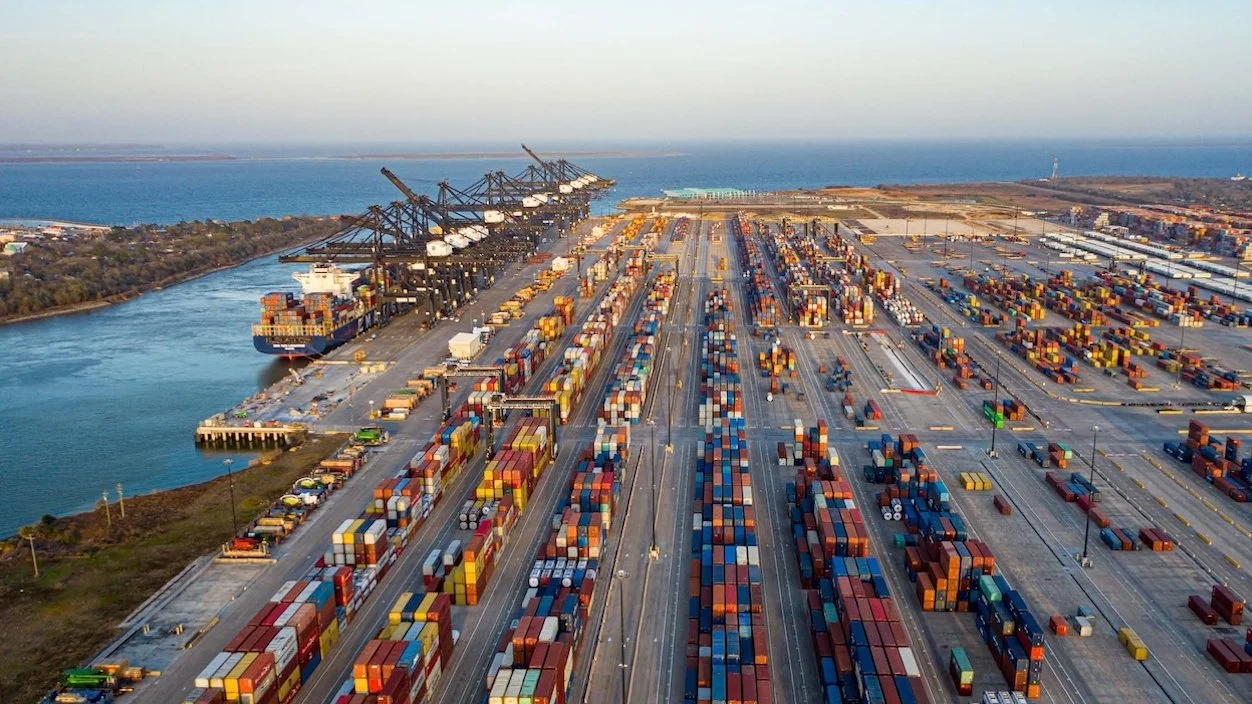
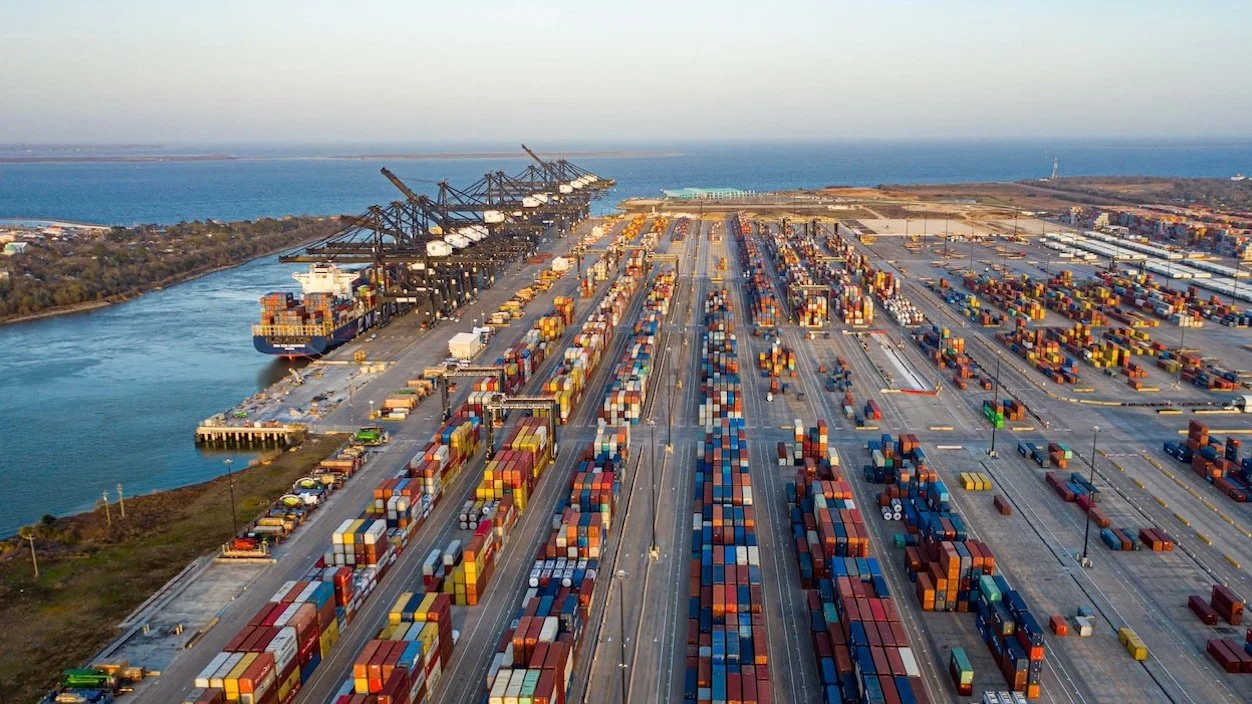
Container operations at the Port of Houston. Rising fuel and shipping costs are carrying the effects of energy disruption farther into U.S. freight and distribution networks.
The damage to Saudi Arabia’s East–West Pipeline is more extensive than initially reported.
When the pipeline was attacked on September 13, early reporting indicated that two pumping stations had been damaged. Satellite imagery reviewed by Reuters now shows damage at three. Three industry sources estimated that full repairs could take five to six weeks, although partial operations may resume sooner. That is substantially longer than the “days” suggested by U.S. Energy Secretary Chris Wright on September 15. Saudi authorities had not provided a detailed public repair schedule as of Reuters’ September 17 report.
The pipeline is important because it is one of Saudi Arabia’s primary alternatives to the Strait of Hormuz. It carries crude from production areas in the east of the country to the Red Sea, allowing those exports to avoid the strait. With traffic through Hormuz already constrained by the war with Iran, roughly 4 to 5 million barrels per day had been moving through the East–West line.
That was the basis for the September 13 Risk Monitor analysis, The Backup Routes Are Failing, which focused on the simultaneous exposure of routes that normally provide redundancy for one another. Hormuz was under pressure, fighting in Yemen was moving closer to Bab el-Mandeb, and the East–West Pipeline had been damaged while serving as an alternative to Hormuz.
The new evidence strengthens that assessment. There is more damage to the pipeline than was known five days ago, and the possible repair period is longer.
But several developments since then also show how the disruption is moving beyond the physical energy network. Shipping costs have increased sharply. U.S. diesel prices have continued rising. The Federal Reserve has raised interest rates for the first time in more than three years. Household expectations around credit and financial conditions were already deteriorating before that increase.
These are not independent indicators anymore, as the same disruption that has reduced physical redundancy in the energy system is increasing transportation costs while the cost of financing those increases is also rising.
Shipping is absorbing the disruption, at a higher cost
Saudi Arabia has not lost the ability to export oil.
It has continued selling crude through other arrangements, including additional loadings from inside the Persian Gulf. Oil prices fell on September 17 as markets became somewhat more confident that Saudi supply would continue reaching buyers despite the pipeline outage.
Commercial shipping is also continuing. But the price of maintaining those flows has increased substantially.
Reuters reported on September 17 that the spot rate for a forty-foot container from China to the U.S. East Coast had reached $10,948, more than four times its level at the beginning of the Iran war. Analysts said rates could approach or exceed pandemic-era records if fuel costs remain elevated.
Oil shipping has been affected even more directly. Rates for very large crude carriers reached record levels after attacks on commercial shipping increased security and insurance costs and disrupted normal routing. Marine fuel costs have also risen.
Some of those costs are now visible inside the United States.
The Energy Information Administration reported that the national average price of diesel reached $6.285 per gallon on September 14. It was $5.348 at the beginning of August and $3.897 in early March. Regular gasoline reached $4.319 nationally.
Diesel has broader economic effects than the price paid by drivers who own diesel vehicles. It is used throughout freight transportation, agriculture, construction and distribution. Higher diesel prices therefore increase operating costs across supply chains that were already facing higher maritime freight costs.
There is no fixed relationship between those increases and consumer prices yet. Businesses can absorb some costs through lower margins, and they can change suppliers, reduce inventory, postpone purchases or increase prices. Freight rates and fuel prices can also fall quickly if the underlying disruption improves.
For now, however, the direction is consistent across several parts of the transportation system: maintaining the movement of energy and goods has become more expensive.
Financing conditions are tightening at the same time
On September 16, the Federal Open Market Committee raised the federal funds target range by 25 basis points to 3.75–4.00 percent. It was the first rate increase since July 2023.
In June, the median FOMC participant projected a federal funds rate of 3.8 percent at the end of 2026 and 3.6 percent at the end of 2027. In September, both projections moved to 4.1 percent.
The Fed also raised its median projection for 2026 PCE inflation from 3.6 to 3.7 percent and core PCE inflation from 3.3 to 3.4 percent.
At the same time, the Fed increased its expected 2026 GDP growth rate and lowered its unemployment projection. Those forecasts are not observed outcomes or independent assessments of the economy. FOMC participants make them using their own assumptions about appropriate monetary policy and how the economy will respond to it, so they are more useful as evidence of how policymakers currently understand the economy and the effects they expect their decisions to have than as evidence that those outcomes will actually occur.
The rate increase therefore should not be read as evidence that the Fed believes the energy disruption itself can be corrected through monetary policy. Interest rates cannot restore the East–West Pipeline or increase shipping capacity.
The Fed's decision appears to reflect concern about what happens if higher energy and transportation costs spread into broader inflation. If businesses and households begin expecting higher prices to persist, those expectations can affect wages, contracts, spending and pricing decisions. Monetary tightening is intended to reduce that risk.
It also increases borrowing costs, as major U.S. banks raised their prime lending rates from 6.75 to 7 percent following the Fed decision, while the 10-year Treasury yield was around 5 percent this week.
Businesses facing higher fuel or freight costs may absorb them through lower margins, pass some of them on through higher prices, or reduce activity where the additional expense makes existing operations less viable. Credit can help bridge a period of unusually high costs or allow businesses to carry inventory until conditions improve, but borrowing becomes a more expensive way to create that room as interest rates rise.
The same applies to households, where higher prices can be absorbed through income, savings, reduced consumption or borrowing. Credit can delay or distribute financial stress rather than eliminating it, and tighter credit conditions reduce the flexibility households have to use it that way.
There was already evidence of weakening household expectations before the September rate increase.
The Federal Reserve Bank of New York’s August Survey of Consumer Expectations found that the perceived probability of finding another job after losing one had fallen to 45.4 percent. The share of respondents reporting that credit was harder to obtain increased, expectations for future credit availability deteriorated, and the perceived probability of missing a minimum debt payment during the next three months rose to 13.2 percent.
Households also reported worse assessments of their current and future financial situations.
The survey does not show that those outcomes have occurred. Some labor measures were also stronger, as perceived job-loss probability declined slightly and expected quits increased.
The survey establishes that additional energy and transportation costs are arriving while households already report less confidence in employment replacement, credit access and their financial position.
The Fed’s rate increase adds another source of pressure to that existing condition.
Public capacity is also being used to manage the conflict
The federal government is absorbing part of the same disruption through military spending.
On September 15, the Congressional Budget Office estimated that Department of Defense combat operations against Iran had cost approximately $38 billion through August 1. CBO estimates that another month of fighting at recent levels could add roughly $2 billion to $3 billion, with higher costs possible if operations intensify.
Those estimates don't include every federal cost associated with the conflict, and CBO cautions against simply adding all of its cost categories together.
The important point for this analysis is that public resources are being used at the same time private systems are adapting to the economic consequences of the conflict.
That is not inherently evidence of deteriorating state capacity. Governments maintain fiscal and military capacity specifically so that they can respond to emergencies. However, the question is how much capacity is being used, for how long, and whether additional demands begin arriving before existing ones have receded.
PJM Interconnection activated pre-emergency and emergency demand-response resources as unusually warm September weather coincided with generation and transmission outages. The Department of Energy also issued an emergency order under Section 202(c) of the Federal Power Act after PJM requested additional authority.
Demand response allows participating customers to reduce electricity use when grid conditions become tight, creating additional operating margin without requiring an equivalent amount of new generation.
It worked, as there was no reported blackout. PJM subsequently said it did not expect emergency conditions to continue beyond September 17.
The event therefore wouldn't support a claim that the PJM grid is failing. It shows that the system encountered conditions sufficient to require resources normally held in reserve, and those resources successfully absorbed the stress.
That is relevant to the broader assessment because the same distinction applies to the energy and economic systems currently under pressure.
Saudi Arabia still has other ways to get oil to market, and shipping companies have kept cargo moving by rerouting vessels and taking on higher fuel, insurance and security costs. Those costs then have to be absorbed somewhere else, whether that's by businesses through margins, inventories or prices; by households through changes in spending, or through additional borrowing. Government spending and monetary policy sit farther downstream, responding to consequences that the physical energy and shipping systems haven't been able to eliminate.
The existence of those responses is evidence that compensatory capacity remains available.
What has changed since the September 13 analysis
The Backup Routes Are Failing focused primarily on physical redundancy in the energy and maritime system, and that assessment has strengthened.
The known damage to the East–West Pipeline increased from two pumping stations to three, and industry estimates now suggest full repairs may take several weeks. Pressure at Hormuz therefore remains important while one of the principal alternatives around it is operating with reduced capacity.
What has changed since September 13 is the evidence farther downstream.
Container shipping costs have increased sharply as tanker rates reached records. U.S. diesel prices have risen above $6 per gallon nationally. The Federal Reserve has resumed monetary tightening and raised its expected policy-rate path. Major banks immediately raised their prime rates, and household expectations around credit access and financial conditions had already weakened before the rate increase.
None of those developments proves that the original supply disruption will produce a broader economic crisis yet. But they do show that several mechanisms used to absorb the disruption are now interacting.
Higher shipping costs can be absorbed through margins, prices or financing. Higher fuel costs can be absorbed through the same channels, while higher interest rates make financing more expensive. Households facing higher prices have less flexibility if credit becomes harder or more expensive to obtain. U.S. government intervention can offset some private-sector pressure, but that uses fiscal and administrative capacity.
The current concern is therefore no longer limited to whether enough oil can physically reach the market. We're now tracking whether the economic systems that compensate for reduced physical capacity are also becoming more constrained.
So far, they are still functioning.
What I’m watching now
The first indicator is actual throughput on the East–West Pipeline. Partial restoration would return some capacity around Hormuz even before repairs are complete. A rapid restoration would weaken this assessment, while continued delays, additional damage or lower-than-expected throughput would strengthen it.
The second is the relationship between crude prices and downstream transportation costs. If crude prices fall and diesel, marine fuel, tanker rates and container freight follow, that would indicate that current pressures are beginning to unwind. If crude stabilizes or falls while those downstream costs remain elevated, the disruption will have become more persistent inside transportation and distribution networks.
Credit conditions are the next indicator. The September rate increase changes the price of borrowing, but it does not establish that businesses or households have lost access to credit yet. Lending standards, delinquencies, high-yield spreads, revolving-credit use and small-business borrowing conditions will show whether higher rates are materially reducing the ability to absorb other costs.
I am also watching household data for confirmation or contradiction of the August New York Fed survey. Realized increases in delinquencies, unemployment or financial distress would strengthen the assessment, while improving job-finding expectations, easier credit conditions or stronger household balance sheets would weaken it.
PJM should be treated as a separate but relevant capacity indicator. One September demand-response activation is insufficient to establish a broader grid trend. But repeated emergency actions during shoulder seasons, particularly when they coincide with other infrastructure constraints, would be more significant. A return to normal operations would indicate that the September 17 event was successfully contained.
Finally, I am watching for additional cases in which one compensatory mechanism depends on another that is already under pressure. Freight costs combined with tighter business credit are more significant than either development separately. Higher household prices combined with weaker credit access would be more significant than higher prices alone. Additional federal emergency spending would matter differently if Treasury financing conditions continue tightening.
Those interactions will determine whether the current pressures remain manageable or begin reducing the system’s ability to absorb additional shocks.
Current Risk Assessment · September 18, 2026
Current assessment: Physical energy and shipping disruptions are increasingly interacting with freight costs and U.S. financing conditions. Compensatory mechanisms remain functional, but several are becoming more expensive to use at the same time.
Expected if this assessment holds: Energy and goods continue moving, but businesses, households and governments face higher costs to maintain normal activity. Additional disruption produces larger downstream effects if existing freight, credit and fiscal pressures remain elevated.
Would weaken the assessment: Restoration of substantial East–West Pipeline capacity; sustained improvement in Hormuz and Bab el-Mandeb shipping conditions; declining diesel, marine fuel and freight rates; stable or improving credit conditions; and evidence that recent emergency or compensatory measures can be withdrawn without replacement.
Status: DEGRADING — COMPENSATORY CAPACITY REMAINS FUNCTIONAL
The evidence does not currently support a finding of systemic failure.
Oil is still moving, commercial shipping continues, financial markets are functioning, and PJM used reserve capacity and maintained service. Current evidence also does not establish that the U.S. economy has entered a contraction.
What has changed is the number of connected systems now involved in absorbing the original disruption.
The September 13 analysis identified a reduction in physical redundancy across energy and maritime routes. Five days later, that problem remains unresolved, the known pipeline damage is more extensive, and higher transportation costs are interacting with tighter financial conditions.
Whether that becomes substantially more serious depends on what happens next: how quickly physical capacity is restored, whether transportation costs decline, and whether households and businesses retain enough financial capacity to absorb the costs that have already moved through the system.
Sources
Reuters — “Three pumping stations along Saudi East-West Pipeline were hit in recent attack, sources say,” September 17, 2026. Satellite imagery and industry-source reporting on the expanded damage footprint and repair estimates.
Reuters — “Ocean container shipping rates could test record highs as Iran war fuel spike drives rise,” September 17, 2026. China-to-U.S. East Coast spot freight rates and fuel-cost effects on container shipping.
Reuters — “Oil tanker rates hit record highs following Iran, US shipping attacks,” September 11, 2026. Tanker rates and the cost of maintaining oil shipments during maritime disruption.
U.S. Energy Information Administration — Gasoline and Diesel Fuel Update, September 15, 2026. National and regional retail gasoline and diesel prices through September 14.
Federal Reserve — FOMC Statement and Implementation Note, September 16, 2026. Official decision raising the federal funds target range to 3.75–4.00 percent.
Federal Reserve — Summary of Economic Projections, September 16, 2026. September projections for inflation, growth, unemployment and the federal funds rate.
Federal Reserve Bank of New York — Survey of Consumer Expectations, August 2026. Household expectations for employment, credit availability, debt payments and financial conditions.
Congressional Budget Office — “Estimating the Cost of Combat Operations Against Iran,” September 15, 2026. Estimates of Department of Defense costs associated with the conflict.
Department of Energy — PJM Emergency Order No. 202-26-45, September 17, 2026. Federal authorization for additional generation and emergency resources during PJM grid stress.
PJM Interconnection — Emergency Procedures, September 17–18, 2026. Operational notices documenting demand-response activation and the subsequent end of emergency conditions.