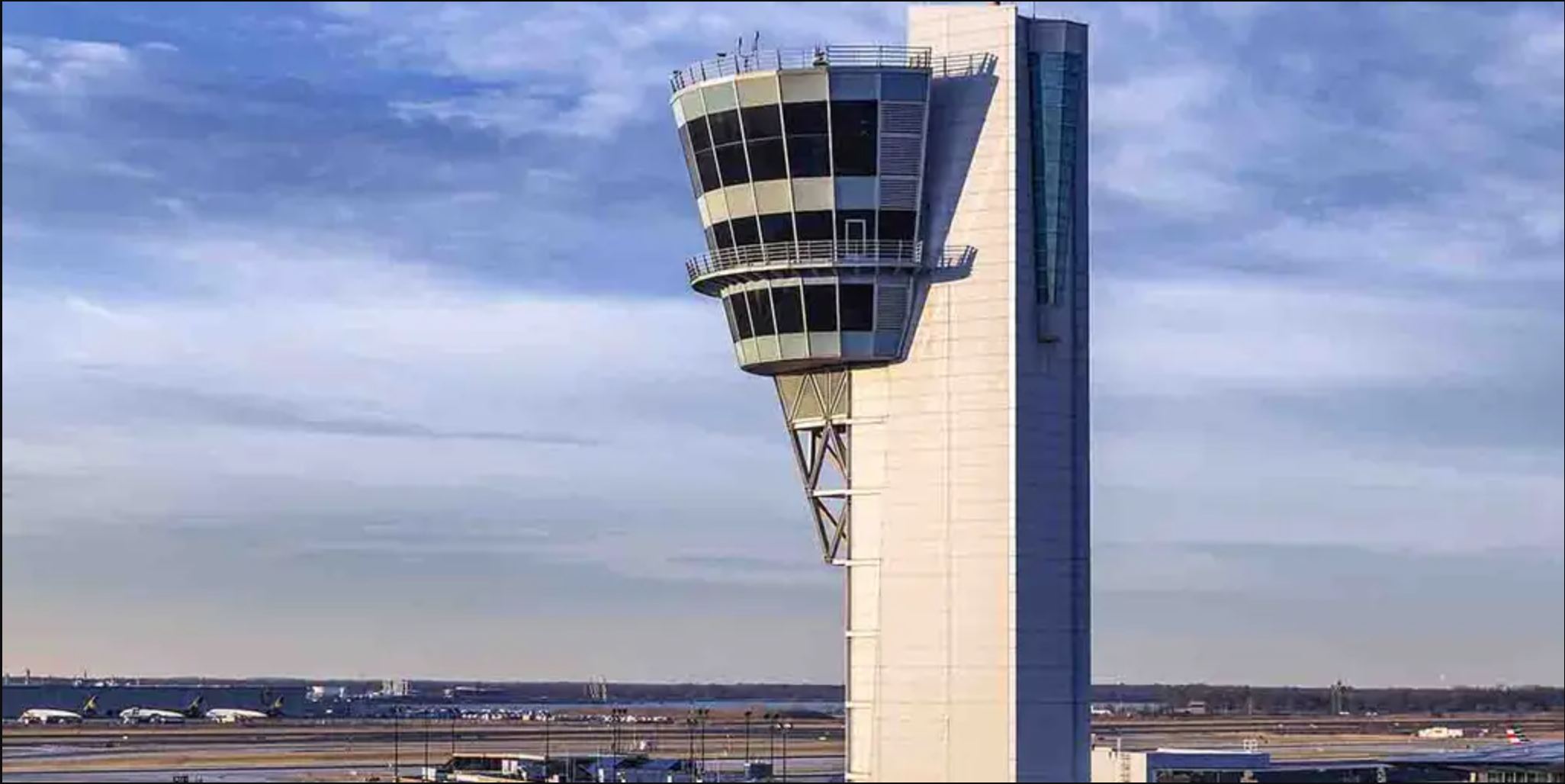
FAA Outage Reveals Redundancy Failures
A telecommunications outage across the Northeast exposed a problem the FAA has already been trying to fix. A backup route only provides redundancy if it’s still available when the primary route fails, and on September 21, it wasn’t.
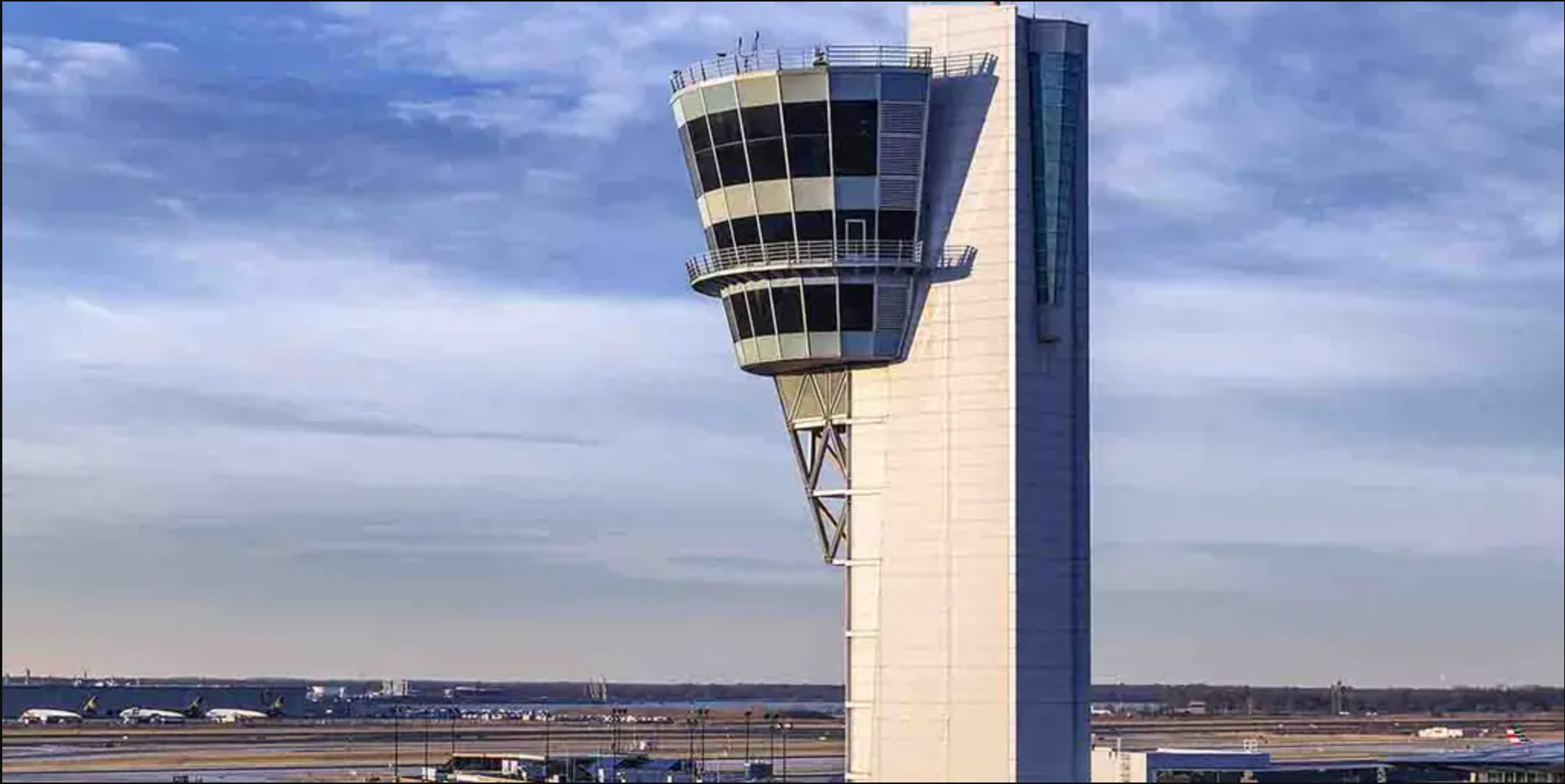
Aircraft at Newark Liberty International Airport. A September telecommunications failure at the FAA facility controlling Newark-area traffic became a regional disruption after the system's backup fiber path was also unavailable.
In July 2025, the FAA announced that it had completed a new fiber-optic communications network between New York and the Philadelphia facility responsible for Newark-area air traffic. Two months earlier, telecommunications failures had disrupted operations at the Philadelphia TRACON, where controllers handle aircraft arriving at and departing from Newark. The new network was part of the response. The FAA added three high-bandwidth telecommunications connections between New York and Philadelphia, deployed a temporary backup system, and began establishing a local STARS radar-data hub so Philadelphia would no longer depend entirely on radar information coming from New York. By July, the agency said the new fiber connections were running along two separate communications paths so that equipment could continue operating if one path was disrupted.
On September 21, 2026, a telecommunications circuit at the Philadelphia facility failed. The FAA attempted to move communications onto the second path, only to find that a construction crew in New Jersey had accidentally severed the fiber line. Incoming flights were halted at Newark, JFK, LaGuardia, Philadelphia and Boston, and the disruption spread as traffic was redirected through the system. More than 100 flights were diverted. By the FAA's later accounting, roughly 9,500 flights were delayed or canceled, and the telecommunications problem took about eight hours to resolve.
The scale of the disruption got most of the attention, but I'm more interested in the order in which things happened. The FAA had built a second communications path because it knew a failure on the first shouldn't be able to interrupt air traffic across the region. A failure occurred anyway, and the second path had already been lost to an unrelated event.
A fiber line being cut is ordinary enough. So is a telecommunications circuit failing. Put them together in this order, though, and something happening to a fiber line in New Jersey can stop arrivals hundreds of miles away.
The FAA Had Already Added a Backup Route
Had the second communications path been available, most of us probably would've never known the first circuit had failed. One route would've taken over while the other was repaired, and flights would've continued moving.
From the outside, a system in that condition can look unchanged. Inside it, the situation is different. Before the circuit failed, two routes were available. Afterward, one route would've been carrying the work previously distributed across an arrangement that included both. The flights can look the same either way.
We see this elsewhere when electrical grids call demand-response resources or keep generation available that otherwise wouldn't be needed. Hospitals move patients when they run short of beds. Supply chains reroute goods around ports or transportation problems. Government agencies move work elsewhere when an office loses staff.
These responses are supposed to make problems disappear from ordinary life. That's why they exist. It also means the absence of a visible disruption doesn't tell us how much had to happen underneath it to keep things looking normal.
The FAA's response to the Newark problems in 2025 followed the same pattern. The agency wasn't waiting for the next outage. It was adding connections, moving to fiber, building a local radar-data hub and using a temporary backup while the work was underway. It also said that when staffing or equipment problems reduced what controllers could safely handle, it would slow the rate of arrivals into Newark.
By September 2026, the FAA had encountered a problem that the second communications route couldn't take over because the route itself was unavailable, leaving the agency to reduce the number of aircraft entering the affected airspace until controllers had what they needed to handle them safely.
When the second communications route was unavailable, the FAA had to respond outside the telecommunications network by reducing the number of aircraft moving through the affected airspace.
The FAA Is Still Replacing Its Aging Communications Network
The September outage occurred in the middle of a much larger FAA modernization effort. Administrator Bryan Bedford told Congress this month that the National Airspace System is still operating with obsolete technology even as the agency replaces it. As of September 1, the FAA had replaced more than 64 percent of its copper-based Time-Division Multiplexing telecommunications infrastructure with modern equipment and converted more than 400 radio sites. Congress has already provided $12.5 billion for the broader modernization effort.
After the September 21 outage, Transportation Secretary Sean Duffy said the replacement network is supposed to eliminate single and dual points of failure by providing multiple telecommunications routes into FAA facilities. The estimated cost of the telecommunications work has risen to $5.91 billion, and Bedford said the remaining outdated copper telecommunications wiring should be replaced by September 2027.
The FAA is already responding to the weaknesses exposed by the 2025 failures. The difficulty is that recognizing a problem and finishing the work required to fix it happen on very different timelines.
The National Airspace System can't be taken offline while its communications network is replaced. The FAA provides air-traffic services for more than 44,000 flights carrying roughly three million passengers every day, so old equipment has to keep working while new equipment is installed around it. Copper is still carrying traffic while fiber replaces it. Temporary systems have to cover gaps while permanent systems are installed. New equipment has to communicate with parts of the network that haven't been replaced yet.
That leaves a period in which the FAA can know exactly what needs to be repaired, be actively repairing it, and still remain dependent on some of the same equipment and connections that made the repair necessary in the first place.
The September outage happened during that period, when one telecommunications circuit failed while a separate fiber line had already been cut during construction work. There's no indication that one failure caused the other. Their connection was created by the system itself because the fiber line became consequential once the first circuit was gone.
A second route only protects the first route when it's still there at the moment the first one fails. That sounds obvious, but I think it gets lost when redundancy is treated as something a system either has or doesn't have. Its condition can change before anything visible happens.
A New GAO Report Identified Other Communications Vulnerabilities
On the same day as the outage, the Government Accountability Office released a report examining a different set of problems in aviation communications.
GAO looked at electromagnetic-spectrum threats including spoofing and jamming. The FAA has identified those threats, but GAO found that the agency hasn't completed all of the risk and mitigation assessments and updated security documentation needed to address them. The FAA also lacks defined real-time monitoring and detection for every spectrum-related threat GAO examined. In some cases, the agency can investigate an incident only after someone reports it.
GAO made nine recommendations covering risk assessments, monitoring and detection, coordination with other organizations, authentication and protection of aviation communications. The Department of Transportation agreed with all nine, and they remain open.
Nothing in the available evidence connects those findings to the September 21 outage. The fiber damage was reported as accidental construction damage. The GAO report is useful here for what it shows about the communications system around the fiber itself.
For a controller to communicate safely with an aircraft, the FAA has to know where the aircraft is, the controller has to be able to reach it, the information moving between them has to be accurate, and the equipment carrying that information has to work. The FAA also has to be able to recognize when one of those things has changed.
Adding another fiber route protects one part of that chain. It doesn't protect all of it. Another route won't tell the FAA that information has been spoofed, just as better authentication won't restore a cable that's been severed. A second facility also provides less protection if it depends on something that can be lost along with the first one.
Two systems can look independent on paper and still share something underneath them that makes them vulnerable at the same time.
The FAA happened to begin limited use of another new system on September 21. SMART brings roughly 200 data streams into one place, including weather, flight paths, traffic flow and controller staffing. It's intended to help FAA personnel see problems developing earlier and make decisions about traffic before congestion or weather produces larger disruptions.
SMART can give the FAA more information about what's happening across the airspace. The fiber outage gives us an unusually clear example of what information alone can't solve. Officials can know exactly where traffic is accumulating and exactly where they'd like aircraft to go while still lacking the communications route required to move the information controllers need.
The FAA is replacing the network carrying information at the same time it's improving the information available to the people managing traffic. It's also replacing old equipment and trying to close the security gaps GAO identified. Those projects overlap, but they don't solve the same problem, and progress in one doesn't necessarily tell us much about the condition of another.
The FAA Prevented a Safety Crisis by Reducing Air Traffic
When the telecommunications system couldn't support normal operations on September 21, the FAA reduced the amount of traffic controllers had to handle. Arrivals were halted or restricted, aircraft were held on the ground and more than 100 flights were diverted while the telecommunications lines were repaired.
Thousands of passengers experienced delays or cancellations, aircraft were diverted, crews and airlines had to adjust, and other airports received traffic they otherwise wouldn't have handled. Boston was affected even though the telecommunications failure wasn't there because the disruption altered traffic across the Northeast.
This is one reason I've become increasingly wary of describing large systems as either working or failing. The telecommunications network couldn't preserve normal service, while the air-traffic system could still preserve safe service by accepting fewer flights. What failed in one place was accommodated somewhere else, and the cost changed form as it moved.
The FAA reduced traffic until the communications lines could be repaired, shifting the immediate consequences into delays, cancellations and diversions while keeping the affected airspace operating safely.
As the new telecommunications network comes online, I'd expect more of these failures to be handled before they ever reach flight operations. A circuit fails, another route takes over, the first gets repaired and passengers never know it happened. If relatively ordinary technical problems continue making it through the backup systems and forcing the FAA to restrict traffic across several major airports, then we know those backups still aren't containing enough of the problem before it reaches everything connected to them.
What I’m watching now
The investigation into the New Jersey fiber cut should tell us more about how separate the communications routes really were. The FAA's July 2025 announcement described two separate paths intended to keep equipment operating if one was disrupted. I want to know how those routes were physically laid out, what could disable each one and what protection existed around a line that became critical as soon as another circuit failed.
I'm also watching what the FAA says about the temporary backup deployed after the 2025 Newark failures. The agency described it as providing redundancy during the move to the new fiber network, but the public information available so far doesn't establish what it could've carried under the conditions that developed on September 21. Until we know that, I don't think we can say whether another backup was present and unable to do the job, had already been removed from the relevant configuration, or was never intended to cover this particular failure.
More than 64 percent of the FAA's old copper-based TDM telecommunications network had been replaced as of September 1, and Bedford says the remaining outdated copper should be gone by September 2027. The plans described after this outage go further than replacing copper with fiber and call for multiple routes into facilities so that losing one or two doesn't recreate what happened this week.
We should eventually be able to see whether that worked by how uneventful future failures become. If a circuit fails, another independent route takes over and flights continue while the damaged line is repaired, the new network is doing what the FAA says it's being built to do.
The GAO report gives us another set of things we can follow without trying to infer them from outages. All nine recommendations remain open. We can watch whether the FAA completes the missing risk assessments, improves real-time detection of spectrum threats and strengthens authentication and data protection for aviation communications. Those changes would address problems the fiber replacement can't.
Another useful measure will be how often technical problems require the FAA to reduce traffic across multiple airports. Ground stops and traffic restrictions are supposed to protect safety, so their use alone doesn't tell us very much. The more useful question is what keeps requiring them. If relatively ordinary equipment and telecommunications problems repeatedly get past the technical backups and have to be dealt with by moving or stopping flights, then more of the system is depending on that last layer of response than the visible operation of the network would suggest.
Current Risk Assessment · September 25, 2026
Current assessment: The September Northeast aviation outage adds another case in which the existence of a backup tells us less than whether that backup remains available when the original system actually needs it. The FAA had already added separate communications paths after the 2025 Newark failures, but a telecommunications circuit failed after another fiber route had been severed, leaving the agency to reduce traffic across multiple airports while the lines were repaired. The FAA is already replacing the older network, and its response kept aircraft operating safely. The open question is how often problems can still get through the telecommunications backups and reach flight operations while that replacement continues.
Expected if this assessment holds: Individual equipment and telecommunications failures will usually be handled without creating a safety problem, but some will still produce large disruptions when another route or system is already unavailable. As more of the new network comes online, those events should become less common and more failures should be handled without large ground stops, diversions or cancellations.
Would weaken the assessment: Future telecommunications failures move onto independent backup routes without major traffic restrictions; the investigation identifies a specific problem behind the September outage that's subsequently corrected; multiple routes remain available when failures overlap; and the separate communications problems identified by GAO are addressed.
Status: ELEVATED — the FAA is replacing the network, but the September outage showed that two separate telecommunications problems can still reach flight operations before that work is complete.
Sources
Federal Aviation Administration, “Secretary Duffy Announces Completion of Another Major Milestone for Operations at Newark Liberty Airport,” July 3, 2025.
Federal Aviation Administration, “FAA Statements on Newark Liberty International Airport,” 2025.
Federal Aviation Administration, “Testimony of Bryan Bedford, FAA Administrator,” September 2026.
U.S. Government Accountability Office, “Aviation Cybersecurity: Enhanced Air Safety Requires FAA to Better Mitigate Threats to Aircraft Communications,” September 21, 2026.
Federal Aviation Administration, “Trump’s Transportation Secretary Sean P. Duffy Delivers State-of-the-Art Air Traffic Control,” September 21, 2026.
Reuters, “Thousands of US flights snarled before FAA resolves telecom problem,” September 21, 2026.
Reuters, “Airport operations in US Northeast resume after telecom lines repaired,” September 21, 2026.
Reuters, “US says new air traffic control system will not suffer disruptions,” September 22, 2026.