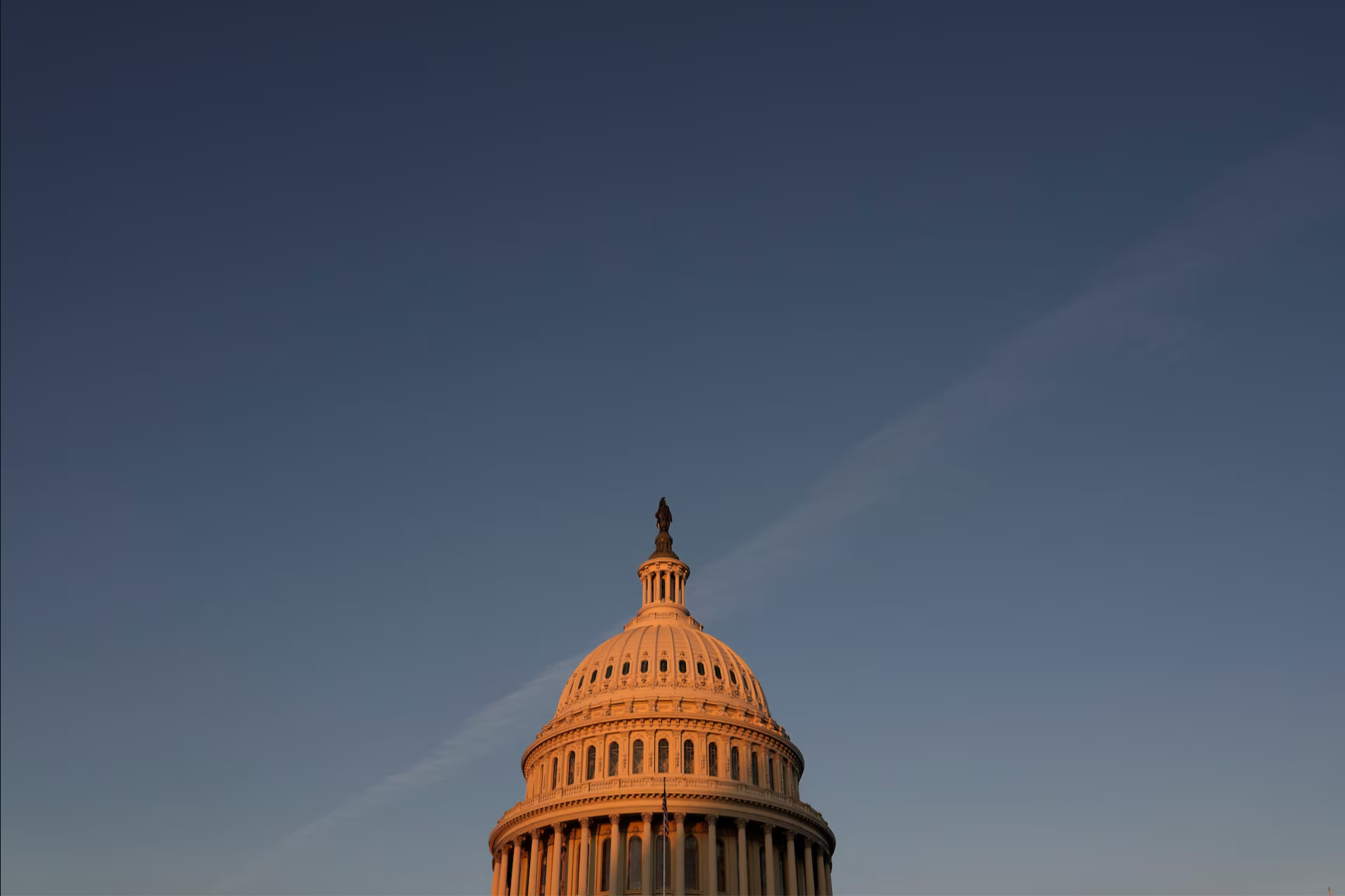
The U.S. Capitol in Washington, D.C. Democrats will assume control of both chambers in January 2027, with nearly two years of executive decisions awaiting congressional scrutiny.
Democrats will take control of both chambers of Congress in January, inheriting nearly two years of executive decisions made under Republican majorities that largely declined to investigate the Trump administration. House and Senate committees are already preparing inquiries into federal contracting, immigration enforcement, financial dealings, the Justice Department, and the handling of sensitive government information. Some of the officials and businesses involved have been identified publicly. Others may emerge only after investigators obtain records that the administration has so far resisted providing.
There are already documented gaps in what the federal government can account for. In September, the Government Accountability Office reported that agencies had failed to provide information necessary to establish the extent of DOGE personnel's access to sensitive federal systems. The Justice Department is preparing to contest congressional demands for information, including through an expansive interpretation of executive privilege. And on November 7, President Trump directed the department to investigate Democrats whom he accused of making criminal threats through their calls for impeachment and accountability. Reuters reported that he supplied no evidence establishing a crime.
Congress will have more authority to investigate in January. The administration will still control the executive agencies, much of the relevant documentation, and the officials responsible for explaining how decisions were made. Some records may be available through private companies or former employees. Others may require litigation to obtain. Where information was never adequately documented, even a successful subpoena may leave questions unanswered.
The election has made a constitutional correction possible. Whether that correction reaches the decisions already made, the resources already spent, and the people already affected is considerably less certain.
Two years of decisions, and an incomplete record
The incoming congressional committees will not be starting with an empty investigative record. The Government Accountability Office, inspectors general, federal courts, journalists, and congressional Democrats have spent much of the past two years examining particular aspects of the administration's conduct. Their findings provide starting points for investigations that will soon have majority-backed subpoena authority.
They also show how much remains unresolved.
The September 29 GAO report examined DOGE access to information systems at six federal agencies. Four agencies identified more than 23 systems to which DOGE personnel had been granted access. Those systems handled contracts, grants, finances, personnel information, and other sensitive records. The Small Business Administration and Department of Veterans Affairs did not provide the requested information about which systems DOGE personnel could access. Documentation concerning security controls was also incomplete.
GAO could not establish the full extent of the permissions granted, including whether personnel could view personally identifiable information or modify records. The agencies offered various explanations for their incomplete responses. GAO maintained that its statutory authority entitled it to the information.
The Risk Monitor's earlier Analysis, Federal Agencies Cannot Account for DOGE's Data Access, examined the implications of those findings. The incoming Congress now faces the question of how to recover that information and what to do if the agencies still cannot produce it.
The missing documentation concerns more than whether particular employees completed training or received appropriate permissions. Federal systems preserve records that people and institutions depend on to establish legal obligations, receive payments, challenge decisions, and demonstrate compliance. An agency's ability to identify who accessed those systems, what permissions they possessed, and whether safeguards were followed is part of its responsibility for the information entrusted to it.
Without those records, investigators cannot reliably determine whether the controls were followed. Nor can they establish that a failure to document compliance necessarily means information was misused. The uncertainty remains with the people whose information was held and the institutions responsible for protecting it.
The earlier Treasury investigation provides another example. In April, GAO found that a DOGE employee had been granted access to federal payment systems without Treasury fully implementing its required security controls. The agency subsequently took corrective action, but the original access decision had already occurred.
Treasury's response demonstrates that corrective measures remain available. The September findings show that other agencies have not provided sufficient information to establish whether comparable protections were implemented.
Congressional investigators will have to reconstruct these decisions across agencies with different records, personnel, and administrative arrangements. Some of the people involved have left government. The temporary DOGE organization established in January 2025 formally ended in July 2026, although the broader U.S. DOGE Service and agency personnel could continue operating. That organizational change may complicate the process of determining who held particular responsibilities at different points.
The federal government has continued functioning while these questions remain unanswered. The new Congress will need to determine whether the records necessary to establish accountability have survived the changes in personnel and organizational structure.
The investigations are already expanding beyond federal agencies
House Democratic leaders began preparing their investigative agenda before the election. Hakeem Jeffries assigned Representatives Robert Garcia and Jamie Raskin roles in developing oversight priorities, anticipating that a change in congressional control would provide additional authority and staffing.
Garcia has identified Trump family business relationships, government contracting, DOGE, immigration enforcement, and the administration's handling of the Jeffrey Epstein investigation among his priorities. Senate Democrats are preparing inquiries involving financial institutions, cryptocurrency arrangements, pharmaceutical companies, and federal program administration.
Senator Richard Blumenthal has discussed investigations into real estate and financial arrangements involving administration officials and associates. Senator Ron Wyden has identified banks and pharmaceutical companies as potential subjects of Finance Committee scrutiny.
These investigations will require information from both government agencies and private institutions. A federal contract may involve negotiations among political appointees, career officials, outside advisers, contractors, and financial intermediaries. A regulatory decision may affect businesses whose executives have relationships with administration officials. Determining whether those relationships improperly influenced government action requires reconstructing the sequence of decisions, the interests involved, and the alternatives considered.
The records may be distributed across several institutions, none of which possesses a complete account.
Private companies can sometimes provide documents that government agencies have declined to produce. Corporate correspondence, transaction histories, internal compliance reviews, and contract records may help investigators establish how federal decisions developed. Businesses also have legal grounds to contest certain demands, including those involving privileged communications or commercially sensitive information.
The White House has rejected Democratic allegations of wrongdoing and described the planned investigations as politically motivated. Individual allegations will have to be evaluated on their evidence. Congressional authority does not establish misconduct by the people or businesses under investigation.
There is also a practical constraint that may prove more consequential than the public dispute over motives.
Congress has limited time and investigative staff. Committees will need to determine which records are essential, which witnesses can establish facts unavailable elsewhere, and which disputes are worth litigating. A subpoena that produces years of litigation may yield less useful information than a narrower demand supported by existing documentation.
Reuters reported that congressional oversight specialists were already advising Democrats to prioritize their inquiries and anticipate resistance from the White House. The House and Senate will have overlapping interests but different committee jurisdictions, staff, and investigative procedures.
The new majorities will have to make decisions about where to concentrate their resources before they know the full extent of what they are investigating.
The Justice Department is preparing to resist
The Justice Department presents a particularly difficult problem because it is both a prospective subject of investigation and an institution involved in determining the executive branch's response to congressional demands.
Democrats intend to examine the department's handling of investigations and prosecutions, its treatment of political opponents, the Epstein files, and legal arrangements involving the president. Among the matters identified in November reporting is a settlement involving Trump's lawsuit against the IRS over the disclosure of his tax returns. The agreement included provisions affecting potential inquiries into Trump, his sons, and associated entities.
The department's conduct during the second administration has also included decisions about prosecutions of individuals Trump has publicly criticized. Investigators may seek records explaining how those decisions were reached and whether political considerations affected prosecutorial independence.
The Justice Department has legitimate reasons to protect certain information. Criminal investigations can involve confidential sources, grand jury material, privacy interests, and ongoing proceedings. Executive privilege can also protect some presidential communications and deliberations. Disputes over access are an established feature of congressional oversight.
The administration's interpretation of those protections has expanded.
According to November 8 reporting by The Washington Post, the department's Office of Legal Counsel issued an opinion earlier in 2026 extending executive privilege to certain communications between the president or his direct advisers and people outside government. That interpretation could affect congressional investigations involving private businesses, donors, advisers, or intermediaries whose communications with administration officials are relevant to federal decisions.
Congress may challenge the interpretation in court. Until those disputes are resolved, investigators could encounter privilege claims covering communications that would otherwise help establish relationships between public authority and private interests.
The department's own congressional liaison capacity has also deteriorated. The Washington Post reported that experienced career personnel had departed the Office of Legislative Affairs and that major decisions about congressional relations had increasingly been handled through senior leadership. The office ordinarily helps maintain working relationships with both parties and manage requests for information.
Those relationships will be needed when the incoming Congress begins issuing subpoenas.
A functioning liaison office cannot eliminate disputes over privilege or investigative jurisdiction. It can help identify what information can be provided, negotiate accommodations, and prevent disagreements from becoming litigation unnecessarily. Rebuilding that capacity would require personnel and cooperation from department leadership.
The administration has given little indication that cooperation will be its initial approach.
The president has directed the department toward his prospective investigators
On November 7, Trump called for the Justice Department to investigate Democrats he accused of threatening people with impeachment and other punishment. He characterized the alleged conduct as criminal and cited congressional letters requesting information about donations from technology companies toward the White House ballroom project.
He also criticized Senator Elissa Slotkin, who had discussed holding administration officials accountable for their conduct. Slotkin said her comments concerned lawful accountability for people who break the law or misuse public funds.
The Justice Department did not immediately comment on the president's demand. Reuters reported that Trump provided no evidence establishing criminal conduct.
The department had already investigated Slotkin and other Democratic lawmakers over a video urging military and intelligence personnel to refuse unlawful orders. A grand jury declined to indict them.
The new demand comes as Democrats prepare to use congressional authority to examine the department's own conduct.
The president can publicly criticize congressional investigations, and lawmakers remain subject to criminal law. Impeachment proceedings, lawful document requests, and congressional oversight are also constitutionally established functions. An allegation that those activities amount to criminal threats requires evidence of conduct beyond the ordinary exercise of legislative authority.
The consequences of directing investigative attention toward prospective congressional investigators extend into the work they are preparing to undertake.
Federal employees may possess records necessary to establish whether agency officials acted lawfully. Contractors may have information about decisions involving public money. Former officials may be able to explain how particular policies were developed. Some will need legal representation or whistleblower protections before providing information.
A person considering whether to cooperate with Congress must evaluate the potential consequences of doing so. When the president publicly demands criminal scrutiny of lawmakers preparing investigations, that decision becomes more complicated for people whose employment, contracts, security clearances, or professional standing depend on executive agencies.
There is no public evidence establishing that the November 7 demand has produced a new prosecution or that witnesses have already been deterred from cooperating. Those outcomes would require separate verification.
The conflict is nevertheless present. The administration is invoking the possibility of criminal investigation against political opponents preparing to scrutinize its conduct. The department responsible for evaluating those allegations will itself be subject to congressional investigation.
The independence of prosecutorial decisions, the department's response to lawful subpoenas, and the treatment of witnesses will provide evidence of how that conflict is being managed.
The Limits of Congressional Remedies
The investigations will cover decisions affecting federal spending, consumer protection, immigration enforcement, healthcare, and the administration of public programs. Their consequences have been distributed across institutions and households long before Congress acquires the authority to examine them more fully.
A disputed federal contract may have already directed money toward a particular company. An administrative change may have altered how benefits are processed. A regulatory decision may have affected borrowing costs or consumer protections. An immigration enforcement action may have separated families or interrupted employment.
Investigators may eventually determine that particular decisions were lawful and properly administered. Others may reveal failures requiring correction. The people affected cannot necessarily recover what they lost while the government determines which occurred.
An improperly denied benefit may require retroactive payment, correction of records, and restoration of eligibility. A person whose private information was mishandled may need access to the relevant records and an effective remedy. A family affected by an unlawful enforcement action may have suffered consequences that financial compensation cannot fully address.
Congressional committees can establish facts, expose misconduct, change laws, and exercise appropriations authority. Individual remedies often depend on agencies, courts, and administrative processes that Congress does not directly control.
Those institutions may already be carrying substantial workloads. An investigation that identifies thousands of affected people can create additional obligations for agencies responsible for reviewing claims and correcting errors. If those agencies lack adequate staffing, records, or funding, the work may move slowly even after Congress establishes what happened.
The public can therefore experience an accountability failure twice: first through the original decision, and again through the difficulty of obtaining a remedy.
The incoming Congress will also be expected to address current economic conditions. The Associated Press voter survey found that approximately four in ten voters identified the economy as the country's leading problem, while roughly three in ten identified the state of democracy. About half considered government corruption crucial to their vote.
These concerns overlap in the actual operation of government. Federal contracting affects public expenditures. Financial regulation affects household borrowing. Medicare administration affects access to treatment and the costs people must absorb. Oversight of those decisions can establish whether public institutions are fulfilling their obligations.
But investigations themselves require resources. Congress will need to manage appropriations, legislation, constituent services, and ongoing emergencies while examining decisions made over the preceding two years.
A broad investigative agenda may be justified by the evidence. Its effectiveness will depend on how much of that evidence Congress can obtain and what institutions can do with the findings.
January will change the balance of authority
The 120th Congress convenes January 3, 2027. Democrats will then control committee agendas and gain additional capacity to compel testimony and documents. The executive branch will remain under Trump, whose administration will continue directing federal agencies and making decisions that Congress may seek to investigate.
The November election is a consequential constitutional development. Voters have changed the composition of the legislature, and the incoming majorities can exercise powers that were largely unavailable to Democratic committee leaders during the preceding two years.
Federal courts have also demonstrated the ability to constrain executive action. In the days before the election, judges blocked several federal demands affecting state voting procedures and the distribution of disputed voter information. State officials and civil rights organizations obtained relief through litigation, preserving important protections while ballots were being cast.
The November 3 Risk Monitor Analysis examined how much work those institutions had to undertake to maintain established election procedures. The new congressional majorities add investigative and legislative capacity to a system that has been relying heavily on courts, state governments, independent auditors, and private organizations to challenge executive decisions.
Congressional authority may reduce some of that dependence. Committees can investigate matters without waiting for an individual plaintiff to establish standing or suffer a legally recognizable injury. They can examine patterns across agencies and compel information relevant to legislative responsibilities.
Their effectiveness will still depend on cooperation from other institutions.
The Justice Department may contest subpoenas. Agencies may produce incomplete records. Courts may need to resolve disputes over privilege and enforcement. Witnesses may require protection. Investigators may discover that particular decisions cannot be reconstructed with the information available.
The administration's resistance to oversight is already documented in the GAO findings, and its public confrontation with prospective investigators has intensified since the election. At the same time, the results demonstrate that electoral accountability remains capable of changing the distribution of constitutional power.
The United States is entering a period of divided government during an unresolved constitutional crisis over executive authority and accountability. The new Congress has a meaningful opportunity to constrain power and investigate past conduct. The executive retains the authority to govern and substantial control over the information investigators need.
The first months of 2027 will reveal how much of the preceding two years can be reconstructed. Some investigations may establish misconduct and produce remedies. Others may identify administrative failures that can still be corrected. Some may encounter records that are incomplete, inaccessible, or no longer available.
Those differences will matter to the people who have been living with the consequences of the decisions under examination.
The election has restored an important route for congressional accountability. Congress now has to find out how much information remains available, how much authority it can effectively exercise, and what can still be repaired.
What I'm watching now
The earliest document-preservation requests will provide an indication of how the incoming committees intend to proceed. Requests tied to specific decisions, identifiable records, and existing investigative findings may be easier to enforce than sweeping demands covering entire agencies or years of communications. The administration's responses will show whether ordinary accommodations remain possible or whether even narrowly framed requests require litigation.
The GAO investigations offer an immediate test. The agencies examined in September should be able to identify the systems accessed by DOGE personnel, the permissions granted, and the security controls implemented. Production of those records would resolve some of the uncertainty already documented. Continued failure to provide them would leave Congress with an established example of oversight authority being frustrated by the institutions subject to examination.
The Justice Department's handling of the November 7 presidential demand requires separate scrutiny. A documented decision to investigate lawmakers for lawful congressional activity without evidence of criminal conduct would substantially increase concern about prosecutorial independence. Evidence that the department independently evaluates and rejects unsupported allegations would provide a different indication of its capacity to constrain executive demands.
Committee coordination will become important as investigations expand. Federal contracting, DOGE, financial regulation, and executive business relationships may involve overlapping witnesses and documents. Shared investigative work could preserve staff capacity and reduce duplicative demands. Prolonged jurisdictional disputes or competing requests could consume resources before the underlying decisions are adequately examined.
The most consequential findings will concern remedies. Where investigations substantiate unlawful conduct, improper expenditures, or failures in federal programs, I will be watching whether agencies correct records, restore benefits, recover public funds, or change the procedures that produced the harm. Congressional findings that do not lead to practical correction may still establish responsibility, but the costs of the original decisions will remain with the people and institutions that absorbed them.
Current Risk Assessment · November 10, 2026
Current assessment: The incoming Democratic majorities have substantially increased congressional capacity to investigate executive conduct. That authority will take effect amid documented failures of agency cooperation with GAO, unresolved questions about access to sensitive federal systems, and an emerging confrontation between the administration and prospective congressional investigators. The November 7 presidential demand for Justice Department scrutiny of Democrats adds pressure to an already contested relationship between executive and legislative authority.
Expected if this assessment holds: Congressional committees will expand preservation requests, prepare subpoenas, and pursue investigations involving federal contracting, financial relationships, agency operations, immigration enforcement, and the Justice Department. Some requests will encounter disputes over privilege, records, or testimony. The consequences of decisions made during the preceding two years will continue to affect agencies and households while investigations proceed.
Would weaken the assessment: Complete production of records requested by GAO and congressional investigators; effective cooperation between executive agencies and congressional committees; independent handling of allegations involving lawmakers; timely judicial resolution of legitimate access disputes; and documented remedies for substantiated administrative failures. Evidence that committees can obtain information and secure corrective action without prolonged obstruction would demonstrate improved institutional repair capacity.
Status: OPEN. Electoral correction has materially strengthened congressional oversight capacity. Documented information-access failures and executive resistance remain unresolved. The November election improves the prospects for constitutional accountability, while the administration's response and the availability of records will determine how much of that authority can be exercised in practice.
Sources
U.S. Government Accountability Office. September 29, 2026. DOGE: Congress and the Public Lack Assurance That Systems and Data Were Protected at Multiple Agencies (GAO-26-108192).
U.S. Government Accountability Office. April 28, 2026. Department of Government Efficiency: Treasury Needs to Fully Implement Data Protection Controls (GAO-26-108131).
Associated Press. November 5, 2026. After taking control of Congress, Democrats vow major probes into Trump's alleged corruption.
Reuters, Alexandra Ulmer. November 5, 2026. Democrats to investigate Trump deals, with eye on 2028 race.
Reuters. November 7, 2026. Trump orders DOJ to look into Democrats for 'threatening' people.
The Washington Post, Perry Stein. November 8, 2026. Justice Department braces for congressional scrutiny after Democrats sweep elections.
The Washington Post, Meryl Kornfield. May 18, 2026. Agencies won't hand over records for an investigation into how DOGE accessed data.
Axios. November 4, 2026. Democrats' new balancing act: Subpoenas and affordability.