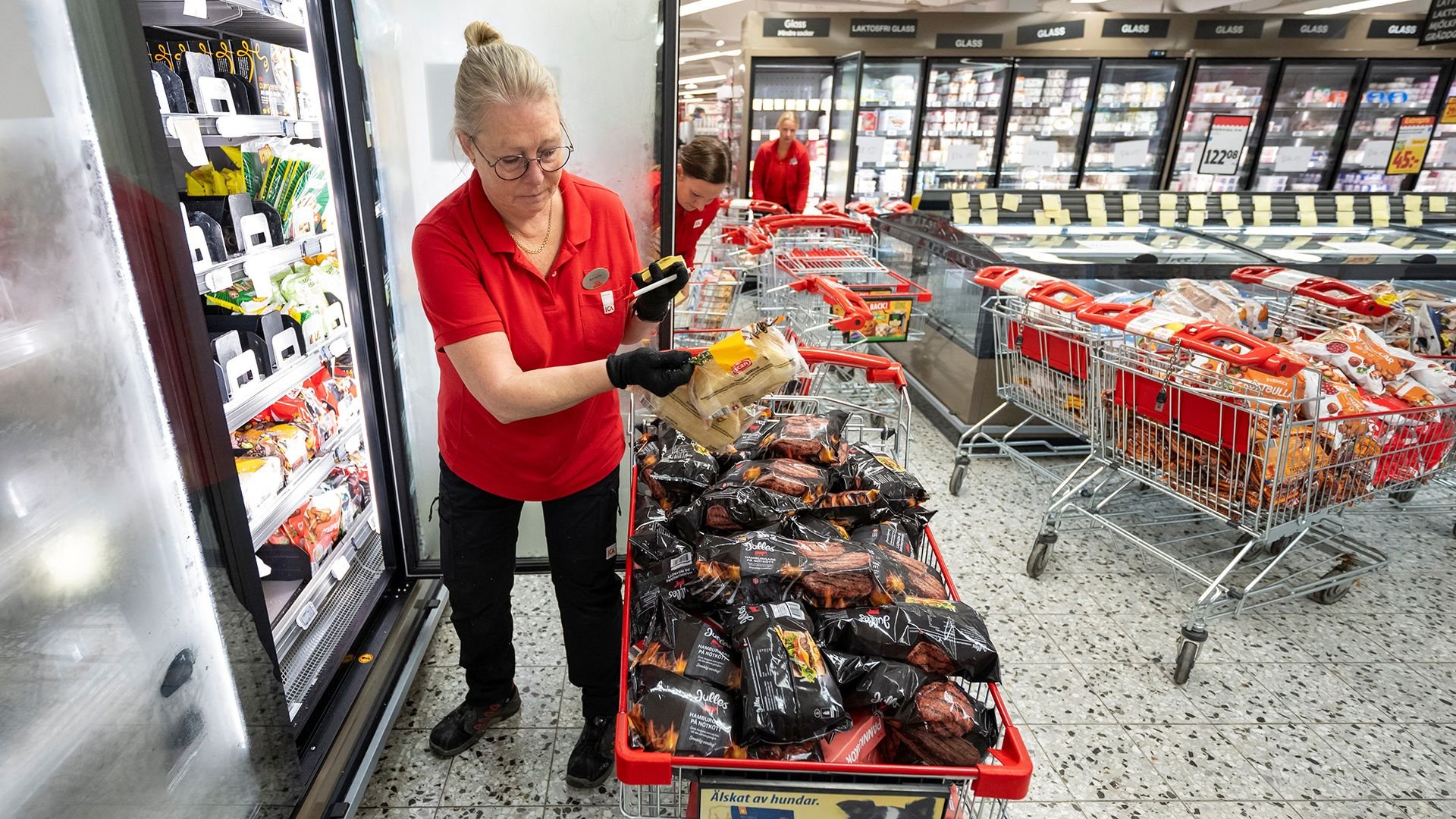
European supermarkets have lost refrigerated inventory after attackers remotely manipulated temperature controls. A November 5 warning from five U.S. federal agencies identifies related vulnerabilities across food, healthcare, transportation, and other essential services.
Refrigeration equipment at European supermarkets was remotely manipulated during a series of cyberattacks in October and early November, leaving retailers with spoiled food, damaged equipment, and the expense of restoring operations. In France, similar interference reached facilities storing donated blood. Staff detected the altered conditions and transferred the supplies before they were damaged.
The attacks targeted equipment that ordinarily receives little public attention. Industrial refrigeration controllers regulate temperatures, manage defrost cycles, and permit technicians to monitor installations remotely. They operate in supermarkets, warehouses, hospitals, laboratories, and refrigerated transportation. Their reliability is assumed throughout the systems that move food and medical supplies from production to use.
On November 5, five U.S. federal agencies issued a joint warning about malicious activity targeting industrial refrigeration and cold-chain monitoring systems. The Cybersecurity and Infrastructure Security Agency, FBI, and Departments of Health and Human Services, Agriculture, and Transportation described vulnerabilities that could allow attackers to alter temperatures, disrupt monitoring, damage equipment, and potentially create fire hazards.
The European incidents had already established that these were operational threats. Refrigerated inventory was destroyed, and medical storage facilities had to intervene to preserve their supplies. The American advisory extended the concern to equipment used throughout U.S. critical infrastructure, although comparable widespread domestic losses had not been established.
An institution can maintain electrical power, staffing, transportation, and access to its facilities while losing the conditions necessary to preserve what passes through them. Food may remain in a functioning distribution network after becoming unsafe to sell. Medical products may remain physically available while their storage history makes them unsuitable for clinical use. By the time the failure becomes visible outside the affected facility, restoring the controller may be the least difficult part of recovery.
The refrigeration attacks and the intervention that preserved France's blood supply
French authorities reported attacks affecting hundreds of supermarket refrigeration installations during October. Attackers gained access to remotely managed cooling equipment and manipulated operating settings. Some retailers experienced significant inventory losses, and reports also described fires associated with compromised equipment.
Additional incidents followed during the first days of November, reaching supermarkets across several European countries. Refrigeration units were forced into operating conditions capable of spoiling their contents, including altered temperature thresholds and defrost settings. Affected stores had to isolate equipment, assess inventory, discard products that could no longer be sold, and arrange repairs.
The number of targeted installations exceeded the number for which detailed losses were publicly documented. Reports of widespread compromise therefore cannot be treated as evidence that every affected retailer suffered equivalent damage. The variation is itself consequential: two stores using similar equipment may face very different losses depending on how quickly staff recognize abnormal conditions, the volume and type of inventory held, and whether unaffected storage is available.
Three French blood-service facilities were also affected in early November. The French Blood Establishment reported that attackers had raised temperature and defrost thresholds to extreme levels. Staff received alerts and transferred blood products into refrigeration equipment outside the compromised systems. No damage to the blood supply was reported.
The intervention depended on capabilities that had to be available before the attack. Monitoring systems detected the altered conditions, personnel were able to act on the warnings, and sufficient alternative refrigeration existed to receive the threatened products. Those arrangements prevented an intrusion into storage controls from becoming a loss of medical supplies.
Blood products are particularly sensitive to interruptions in storage. Their availability depends on donation, processing, testing, compatibility requirements, and clinical demand. A damaged supply cannot necessarily be replaced through an ordinary commercial purchase, and the time required to replenish particular products may exceed the interval in which patients need them.
The successful response in France preserved supplies whose loss could have affected care well beyond the three facilities. It also exposed how much that outcome depended on the surrounding institution's capacity to intervene. The same unauthorized temperature change at a facility with unreliable alerts, limited staffing, or insufficient alternative storage could have produced a substantially different result.
French authorities disabled remote access to affected equipment while investigating the intrusion. That decision reduced the opportunity for further remote interference, but equipment that previously depended on remote monitoring or maintenance still required supervision. The work did not disappear when the connection was closed. It had to be performed through other arrangements.
The supermarkets faced another kind of recovery problem. Refrigeration could be restored, but spoiled food could not. Inventory had to be examined and replaced, equipment cleaned or repaired, and distribution schedules adjusted. Some losses would be borne by retailers; others could reach suppliers, insurers, maintenance contractors, and customers through the costs and availability of replacement products.
Where multiple retailers rely on the same contractors or distributors, simultaneous incidents can increase demand for assistance from a relatively narrow pool of technical and logistical capacity. The available reporting had not established a general European shortage of replacement food or refrigeration equipment by November 6. It had established a pattern of attacks capable of creating those demands across multiple facilities and countries.
Remote maintenance has become part of the infrastructure
Modern refrigeration systems often depend on manufacturers, software providers, and maintenance contractors whose responsibilities extend beyond the facility where the equipment is installed. A supermarket may own its refrigeration units while relying on an outside company to configure controllers, install updates, and monitor performance. A hospital may have even less flexibility when specialized storage equipment requires manufacturer-authorized maintenance.
Remote access makes these relationships workable at scale. Technicians can diagnose faults without traveling to every installation, and centralized monitoring can identify deteriorating equipment before it fails. Large networks of refrigerated facilities would be more expensive and difficult to maintain without some of these capabilities.
The same connections can expose equipment to unauthorized access when authentication, network configuration, or software protections are inadequate. A contractor's credentials may provide access to several installations. A controller exposed directly to the internet may be reachable without passing through the protections applied to other parts of an organization's network. Equipment that remains mechanically reliable may continue operating with software vulnerabilities that its owner has neither the expertise nor the authority to correct.
The November 5 advisory identified authentication bypass, code injection, and insecure configurations among the relevant vulnerabilities. It recommended identifying exposed controllers, restricting unnecessary remote access, strengthening authentication, updating affected software, and securing connections that operators must retain.
Implementation is more complicated than the recommendations may suggest. A facility first needs an accurate inventory of its equipment and the connections supporting it. It must establish which systems can be isolated without interrupting necessary monitoring or maintenance. Where controllers are obsolete or unsupported, remediation may require replacement equipment, specialized contractors, and periods of operational disruption.
Responsibility is distributed unevenly across these arrangements. The manufacturer may determine whether a security update exists. The maintenance contractor may control access credentials. The operator must preserve the inventory and maintain the service. A hospital or retailer can remain accountable for losses arising from a vulnerability it cannot independently repair.
The distribution of authority becomes especially important when a threat requires immediate intervention. An operator may need permission, technical documentation, or assistance from another company before disabling a connection or modifying equipment. A contractor may be responsible for numerous clients facing the same vulnerability. Delays can accumulate while the exposed equipment continues operating.
The costs also begin before any confirmed intrusion. Additional inspections, replacement controllers, revised maintenance contracts, and backup monitoring arrangements require money and personnel. For organizations with substantial reserves, these expenses may be manageable. Smaller suppliers, independent retailers, and financially constrained healthcare facilities may have fewer options, particularly when their equipment remains functional under ordinary conditions.
Maintaining redundant storage and monitoring capacity carries its own continuing expense. The French blood-service intervention demonstrated what those investments can preserve, although the public reporting does not establish the precise cost of the safeguards involved.
A system that appears inexpensive during normal operation may rely on protective capacity financed elsewhere in the institution. When that capacity is reduced to meet budget constraints, the resulting vulnerability can remain invisible until an interruption requires resources that are no longer available.
The banking intrusion reached a different service through an outside provider
A separate cyberattack disclosed by French banking group Crédit Mutuel Arkéa offers another example of the consequences of externally managed technical access.
On November 5, Reuters reported that approximately €100 million had been stolen from the institution. Arkéa had disclosed the intrusion the previous day, explaining that attackers entered through a service provider's platform and used an account belonging to the bank to execute fraudulent transfers to other institutions.
The bank stated that customer accounts had not been used to carry out the transactions and that customer assets were unaffected. It temporarily restricted certain operations while examining the intrusion and strengthening security. Some customers experienced delayed transfers, although Arkéa reported that almost all operations had resumed by the morning of November 4.
The banking theft and refrigeration attacks involved different technical systems and different consequences. No evidence available by November 6 established that they were coordinated or committed by the same actors. Their inclusion in the same assessment rests on the operational relationships exposed by the incidents.
Arkéa's access through an external service provider became the route by which attackers could execute transactions involving the bank's own funds. The institution's subsequent intervention required limiting legitimate activity while it established which operations could safely continue.
In France's blood-service facilities, staff preserved products by moving them outside compromised storage equipment. At Arkéa, transaction restrictions helped contain exposure while the institution investigated unauthorized activity. Both interventions drew on capacities beyond the systems initially compromised. Their effectiveness depended on detection, institutional authority, personnel, and the availability of alternative arrangements.
The consequences extended beyond the organizations conducting the interventions. Customers awaiting bank transfers experienced delays despite their accounts reportedly remaining secure. Retailers whose refrigeration was compromised faced losses even where the broader food distribution network continued functioning. Medical storage facilities avoided product losses because personnel and unaffected equipment were available when needed.
The financial consequences cannot be assumed to have been equally significant for everyone involved. A delayed transfer may have little effect on a customer with substantial liquidity while creating immediate difficulty for someone with a time-sensitive obligation. A large retailer may absorb spoiled inventory through reserves and insurance arrangements that a smaller operator cannot access on comparable terms.
The incidents do not establish the distribution of these burdens across all affected parties. They identify the channels through which costs can move beyond the organization or technical component where an intrusion begins.
The Arkéa case also introduces a question of institutional authority that applies to industrial equipment. The organization responsible for delivering a service may depend on an outside provider whose security practices and access controls it cannot supervise directly. Once a failure occurs, responsibility for protecting the service remains with the institution facing its customers, patients, or suppliers, even where another entity controls part of the compromised infrastructure.
Contractual obligations and regulatory requirements can allocate responsibility after an incident. They cannot, by themselves, restore spoiled food, recover a missed clinical opportunity, or reverse the immediate consequences of a delayed payment. The practical availability of remedies depends on the resources and authority available to the affected parties.
The American warning places existing equipment under scrutiny
The November 5 federal advisory identified refrigeration and cold-chain monitoring vulnerabilities relevant to U.S. food production, healthcare, chemical facilities, and transportation. The agencies warned of malicious activity targeting these systems internationally and urged American operators to assess their exposure.
No comparable widespread disruption of American hospitals or food distribution facilities had been established by November 6. The European incidents nevertheless gave the warning an unusually concrete basis. Operators were being asked to address vulnerabilities associated with equipment that had already been manipulated to destroy inventory and threaten medical supplies elsewhere.
The immediate work involves determining which installations are exposed, how remote access is managed, and whether staff can recognize unauthorized changes before stored products become unusable.
An accurate equipment inventory may be difficult to assemble across organizations that have expanded, changed contractors, or retained older installations. Refrigeration equipment can remain in service for many years, including after software support becomes limited. Its maintenance history may be held partly by outside providers, while the institution's cybersecurity staff concentrate on conventional computer networks rather than industrial controllers.
Even where a vulnerable connection can be disabled quickly, the facility must retain reliable temperature monitoring and maintenance. Manual inspections may be feasible for a small installation, but they impose additional work across a large warehouse or hospital network. Some equipment requires specialized technical intervention, and replacement may be difficult without interrupting storage operations.
These constraints create unequal starting conditions for remediation. A major distributor may have dedicated engineering staff and access to alternative facilities. A small food supplier may rely on a single contractor and possess little spare storage capacity. A large hospital system may redistribute supplies among locations, while a smaller facility must arrange external transportation and storage at short notice.
The federal advisory establishes a reason to investigate these differences. It does not establish that smaller organizations are universally less secure or that larger institutions have adequate safeguards. Their actual exposure will depend on equipment, maintenance practices, staffing, and the condition of their protective arrangements.
International manufacturing and service relationships further complicate remediation. Controllers may be designed in one country, installed in another, and maintained through software or contractors operating across several jurisdictions. Manufacturers must identify affected products and provide remedies that operators can implement without compromising necessary functions.
If multiple facilities discover the same vulnerability, they may seek updates, replacement equipment, and technical assistance simultaneously. A manufacturer or maintenance provider capable of supporting ordinary repair volumes may face substantially greater demand during a coordinated security response.
The European attacks have already imposed losses and emergency operating costs. The American response will impose additional preventive costs even if no comparable domestic attack occurs. Those expenditures are part of maintaining the reliability of services that have become dependent on remotely accessible industrial equipment.
Recovery depends on capacity that must survive the interruption
The October 30 Risk Monitor Analysis examined pressures on infrastructure reliability, electricity requirements, and the financing of essential services. Refrigeration attacks introduce a different route through which functioning infrastructure can become unable to perform its intended purpose.
The affected facilities did not need to lose electrical power or suffer extensive mechanical destruction. Unauthorized changes to operating instructions were sufficient to threaten the products inside otherwise functioning equipment.
That vulnerability complicates conventional assessments of continuity. A warehouse may remain open, its workforce present, and its transport arrangements intact while the inventory it holds becomes unusable. A hospital may maintain normal staffing and clinical operations while a storage failure threatens supplies required for future treatment. A bank may preserve customer balances while temporarily restricting the movement of money.
Restoring the immediate technical function resolves only part of the disruption. Retailers still need replacement inventory and may face additional transport, labor, and equipment costs. Healthcare facilities must establish whether supplies remain safe, preserve documentation, and obtain replacements where necessary. Banks may have to investigate unauthorized transactions, recover funds, reconcile records, and restore customer access.
These activities consume resources that would otherwise support ordinary operations or future contingencies. They may also increase demands on institutions that were not directly attacked, including suppliers, contractors, transport providers, and other facilities asked to absorb displaced work.
The French blood-service response demonstrates that this process can succeed. Staff acted on reliable information and used available storage to preserve the threatened products. Arkéa likewise reported containing the fraudulent activity and restoring most operations relatively quickly, despite the substantial reported theft.
Those outcomes provide evidence of functioning compensatory capacity. They do not establish that the same resources would remain sufficient during repeated or simultaneous attacks, particularly if several facilities required assistance from the same providers.
Repeated incidents could erode that capacity without producing an immediate, system-wide interruption. An organization might restore operations after each attack while spending reserves, postponing maintenance, exhausting personnel, or reducing the resources available for the next emergency. The cumulative burden would become visible in repair times, replacement costs, staffing demands, and the narrowing range of alternatives.
The evidence available by November 6 does not establish that such depletion has occurred across European food distribution or healthcare. It establishes physical losses, successful protective interventions, and a newly urgent need to secure equipment embedded throughout essential services.
The ability to preserve continuity will depend on how much authority operators have over the systems they use, whether their technical providers can deliver timely remediation, and how much operational capacity remains available when protective measures require intervention.
What I'm watching now
The November 5 advisory should lead to more detailed information about exposed refrigeration controllers in American facilities. Confirmed vulnerabilities, completed updates, changes to remote-access arrangements, and documented failures of monitoring systems would help establish the scale of the problem. Reports of actual domestic inventory losses or interruptions to medical services would materially increase the assessed exposure.
European investigations may identify whether the October and November attacks exploited shared software, equipment models, maintenance arrangements, or access credentials. Those findings would help determine whether the incidents reflect vulnerabilities concentrated in particular installations or weaknesses affecting a broader installed base. Attribution remained unresolved as of November 6.
The French blood-service response may provide useful information about detection and intervention. The condition of the monitoring systems, the time available for transferring supplies, and the availability of unaffected refrigeration would clarify which safeguards prevented losses and how readily other facilities could reproduce them.
Manufacturer and contractor responses will be important, particularly where vulnerable equipment is obsolete or difficult to replace. Remediation that requires facilities to abandon essential monitoring functions could create additional operating costs or introduce different forms of exposure.
Continued attacks would place greater pressure on repair contractors, replacement inventory, and alternative storage arrangements. Evidence of longer recovery times, repeated losses, or emergency demand exceeding available capacity would strengthen concern about cumulative depletion.
The Arkéa investigation remains relevant as a separate examination of external service-provider access. Recovery of stolen funds, identification of the compromised access arrangements, and the duration of transaction restrictions will help establish the financial and operational consequences. Any claim of coordination with the refrigeration attacks would require independent evidence.
The distribution of prevention and recovery costs warrants attention across all these sectors. Technical assistance, manufacturer support, effective coordination, and adequate alternative capacity would reduce the likelihood that the organizations with the fewest resources experience the most persistent disruption.
Current Risk Assessment · November 6, 2026
Current assessment: Cyberattacks targeting industrial refrigeration and cold-chain monitoring equipment have caused confirmed inventory losses in European supermarkets. Three French blood-service facilities experienced compromised refrigeration controls but preserved their supplies through monitoring and alternative storage. A November 5 warning from five U.S. federal agencies identifies vulnerabilities relevant to American food, healthcare, chemical, and transportation infrastructure. Widespread domestic disruption has not been established.
The separate Crédit Mutuel Arkéa intrusion demonstrates exposure through an external service provider, resulting in substantial reported financial losses and temporary transaction restrictions. No operational connection to the refrigeration attacks has been established.
Expected if this assessment holds: Operators will identify vulnerable controllers and remote-access arrangements requiring remediation. Some facilities will face replacement costs, additional monitoring demands, and changes to maintenance procedures. Further attacks may cause additional inventory losses and increase demand for repair services, alternative storage, and replacement supplies. The extent of disruption will depend on the protective resources available and the capacity of supporting institutions to respond.
Would weaken the assessment: Verified remediation across affected equipment, declining attack activity, effective containment without product losses, and evidence that operators can maintain reliable monitoring while securing remote access. Adequate manufacturer support, repair capacity, and alternative storage would reduce the likelihood of broader operational disruption.
Status: OPEN. Confirmed European food-sector losses, successful containment of medical-storage intrusions, and active vulnerabilities across essential industrial systems. The evidence supports concern about shared technical dependencies, uneven protective capacity, and the costs of maintaining continuity. It does not establish widespread American cold-chain disruption, coordination among the separate attacks, or generalized failure of food and medical distribution.
Sources
Cybersecurity and Infrastructure Security Agency, Federal Bureau of Investigation, Department of Health and Human Services, Department of Agriculture, and Department of Transportation. November 5, 2026. US Government Partners Urge Hardening Industrial Refrigeration and Cold Chain Monitoring Systems.
Reuters, Dominique Vidalon and Inti Landauro. November 4, 2026. French blood banks hit alongside cyberattack on European supermarkets.
Associated Press, Sylvie Corbet. November 4, 2026. Cyberattack hits French blood bank site but no blood products were compromised.
BleepingComputer, Lawrence Abrams. November 4, 2026. Cyberattack disrupts blood storage refrigeration systems in France.
BleepingComputer, Lawrence Abrams. November 5, 2026. FBI, CISA warn of cyberattacks targeting refrigeration systems.
SC Media, Steve Zurier. November 6, 2026. FBI, CISA warn of cyberattacks targeting refrigeration systems.
Crédit Mutuel Arkéa. November 4, 2026. Additional Information Following the Cyberattack on Crédit Mutuel Arkéa.
Reuters, Mathieu Rosemain, Elizabeth Howcroft and Mateusz Rabiega. November 5, 2026. French bank Crédit Mutuel Arkéa says €100 million missing after cyberattack.