The Power Grid Is Running Out of Room for Its Backup Plans
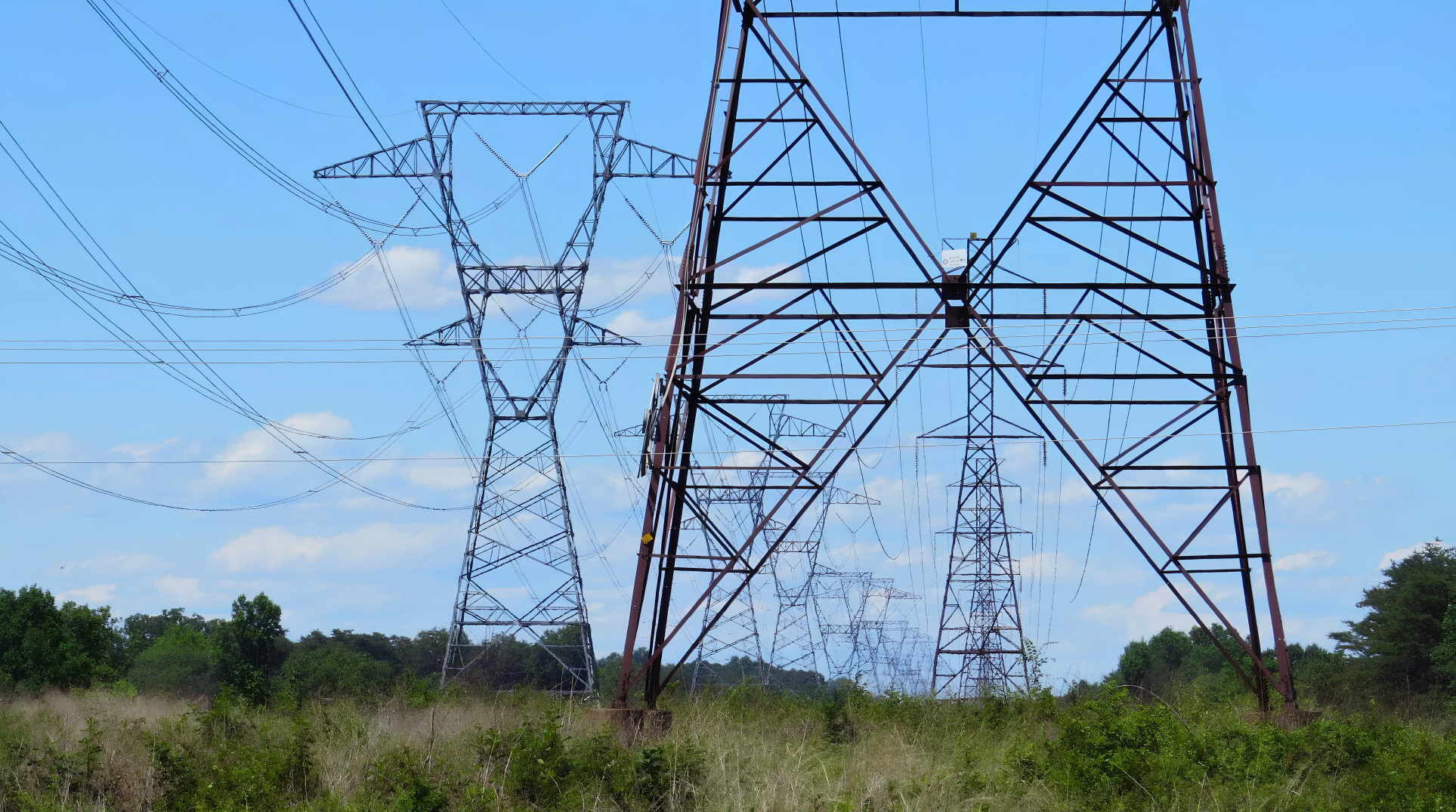
PJM's electricity grid serves approximately 67 million people across the Mid-Atlantic and Midwest. Rising demand, generation shortages and transmission constraints are placing increasing pressure on the resources used to maintain reliability. (Patrick Lewis/Loudoun Now)
On October 9, federal regulators rejected a proposal that would have allowed the nation's largest electricity grid operator to impose special curtailment obligations on certain large electricity customers, including data centers. Three days later, the Department of Energy authorized that same operator to use emergency generating resources and, under specified conditions, direct large electricity users to operate their own backup generators. By October 13, PJM Interconnection had issued a Maximum Generation Emergency/Load Management Alert, recalled active maintenance outages and identified generating resources it needed available to maintain reliability.
The decisions weren't responses to a single event. The Federal Energy Regulatory Commission was addressing how PJM could accommodate rapidly growing electricity demand without compromising future reliability. The Department of Energy was responding to an immediate operating problem involving elevated demand, scheduled generation outages and transmission constraints. But both decisions concern the same electricity system, and both involve arrangements intended to preserve service when ordinary available resources may be insufficient. The distinction between the two problems matters, particularly because a future capacity shortage isn't the same as an immediate shortage of electricity. What makes their convergence significant is that PJM is having to address both while the resources available to compensate for either are becoming more consequential.
PJM coordinates wholesale electricity markets and regional transmission across all or parts of 13 states and the District of Columbia, serving approximately 67 million people. Its July capacity auction, intended to secure electricity resources for the 2028–2029 delivery year, obtained 138,318 megawatts of accredited generation and demand-response capacity. Including resources committed outside the centralized auction, PJM still fell 6,831 megawatts short of its reliability requirement. The auction price reached its federally approved ceiling of $325 per megawatt-day, marking the second consecutive auction that failed to secure the required capacity. The previous shortfall had been approximately 6,517 megawatts. Higher prices were encouraging additional supply, but not enough to keep pace with the resources PJM expected to need.
That shortfall doesn't mean PJM will be unable to provide electricity in 2028. Capacity requirements include reserve margins designed to protect against unexpected failures and periods of unusually high demand, and the system has additional opportunities to secure resources before the delivery year begins. The significance is that the market responsible for arranging those resources in advance hasn't been able to meet its own reliability requirement, even at the maximum permitted auction price. PJM must now rely on additional procurement, changes in demand, generating upgrades or other arrangements to close the gap. Those responses may succeed, but they also require time, regulatory approval, financing and physical infrastructure that isn't yet available.
The October emergency brought a different set of constraints into immediate view. In its October 11 application to the Department of Energy, PJM anticipated electricity demand of approximately 111,500 megawatts or more on October 13, alongside roughly 61,591 megawatts of generation outages during the autumn maintenance season. It identified transmission restrictions limiting the movement of electricity between parts of its territory and neighboring systems, and warned that its operating reserves could become unusually tight. DOE issued Order No. 202-26-50 on October 12, authorizing specified emergency measures through October 16. PJM's subsequent operating notices confirmed that it had identified a reliability need for designated generating resources on October 13.
These measures don't establish that blackouts have occurred, or that every resource authorized under the emergency order has been dispatched. They do establish that the operator is making additional resources available through emergency procedures because the ordinary operating configuration may not provide sufficient flexibility. The distinction is important. An emergency intervention that prevents a service interruption is evidence that a protective mechanism worked. It can also be evidence that the system needed protection from conditions it could no longer comfortably accommodate through ordinary operations. Understanding which of those circumstances is developing requires examining what the intervention absorbed, how often similar interventions are needed and whether the conditions requiring them are improving.
Demand Is Growing Faster Than the System Can Accommodate It
PJM's capacity problems have been developing for several years, but the scale of projected demand growth has changed the planning environment. Data centers, particularly facilities supporting artificial intelligence infrastructure, are becoming increasingly important to the operator's forecasts. Unlike many traditional commercial customers, large data centers can require enormous amounts of electricity concentrated at individual sites, with relatively consistent consumption throughout the day. Some facilities also have demanding reliability requirements because even short interruptions can affect equipment, customer services and contractual obligations.
A single large project can therefore create requirements extending well beyond the amount of electricity it consumes. The grid must have sufficient generating capacity to serve that demand, transmission infrastructure capable of delivering it, and enough reserve capacity to manage equipment failures or unexpected changes in operating conditions. Those requirements become more difficult when several large projects seek connections within the same geographic area, particularly where the existing transmission network was designed around different patterns of electricity consumption.
The pace of development is also uneven. A data center can move from planning to construction and operation on a different timeline than a new generating station or major transmission project. New power plants may require years of permitting, equipment procurement, financing, construction and interconnection work. Transmission projects can involve multiple utilities, jurisdictions and regulatory proceedings. Even when the financing is available, the physical system cannot necessarily expand at the same speed as demand. PJM has been working to accelerate interconnections and obtain additional supply, but its capacity auctions indicate that the resources available within the relevant planning periods haven't caught up with projected requirements.
The July auction also demonstrates why higher prices alone cannot be treated as a sufficient response. The price cap was intended to moderate volatility and protect customers from abrupt increases in capacity costs. It provides a degree of financial predictability, which has value for households, businesses and electricity providers. But the cap doesn't create generating capacity. If the resources required to satisfy projected demand cannot be developed or committed within the relevant period, a higher market price may encourage investment without producing enough available supply in time. PJM itself acknowledged that the price collar could limit volatility without resolving the underlying imbalance between demand and supply.
The system's response has consequently expanded beyond its ordinary capacity auction. PJM has proposed a special Reliability Backstop Procurement process intended to secure additional resources, while pursuing changes to how large electricity customers connect to the grid. Both approaches recognize that the existing arrangements may be insufficient for the amount and timing of demand now being anticipated. They also introduce new questions about cost, authority and responsibility. If additional generation must be procured through long-term commitments, someone must assume the financial obligations. If large customers are allowed to connect before enough new supply becomes available, the operator needs enforceable rules governing what happens when the grid becomes constrained. Neither problem can be resolved solely by identifying the demand or announcing the investment required to serve it.
That was the issue behind FERC's October 9 decision. PJM proposed creating a registry of large electricity loads and an interim service arrangement that would allow certain new customers to connect under special curtailment obligations. FERC approved the registry, which will improve the operator's ability to identify and plan for large loads, but rejected the proposed interim service arrangement. The commission raised questions about jurisdiction and whether the proposal adequately justified treating some customers differently from others. Retail electricity service is generally subject to state regulatory authority, while FERC oversees interstate transmission and wholesale electricity markets. PJM's proposal had to operate within those divisions of responsibility.
The rejection doesn't mean regulators have decided that data centers must receive unrestricted electricity service regardless of system conditions. PJM can revise its proposal, and other arrangements may ultimately be approved. FERC's concerns also reflect legitimate questions about the authority to curtail service and the consequences of applying different rules to different customers. A large industrial facility, a hospital, a data center and a manufacturing plant may all consume substantial amounts of electricity, but they don't necessarily have the same ability to interrupt operations or substitute other sources of power. Any enforceable system must account for those differences without arbitrarily transferring obligations among customers.
For PJM, however, the practical consequence is that a proposed mechanism for accommodating additional demand while preserving emergency flexibility remains unresolved. The registry will provide better information about large loads, but information alone doesn't create capacity or establish when consumption can be reduced. The operator can identify a growing constraint without yet having an approved arrangement to manage every aspect of it. Meanwhile, projects continue moving through planning, financing and development, and the electricity system must prepare for the demand they may eventually create.
The Emergency Measures Are Drawing on the Same Resources That Provide Redundancy
The October emergency illustrates how the system's remaining flexibility can become increasingly important even when the immediate cause isn't the same as the longer-term capacity problem. Autumn is normally an opportunity for electricity generators to perform maintenance because demand is often lower than during the summer cooling season or winter heating season. Taking generating units offline during these periods allows operators to repair equipment, perform inspections and prepare for more demanding conditions. The practice is itself a reliability measure. Equipment that isn't maintained properly may become more likely to fail when it is needed most.
PJM's October 11 application identified unusually extensive generation outages during a period when electricity demand was expected to remain elevated. It also described transmission constraints affecting the movement of electricity between different parts of its territory and neighboring systems. Those constraints are important because electricity available somewhere in a regional network isn't necessarily deliverable wherever it is needed. Transmission lines have physical operating limits, and congestion can prevent generating resources in one area from compensating for shortages elsewhere. PJM also identified limitations involving neighboring systems, including the Midcontinent Independent System Operator, which had issued its own capacity advisory and conservative-operations notice.
Interconnection between regional grids is one of the electricity system's most important sources of redundancy. It allows operators to exchange electricity, share available resources and respond to localized shortages without requiring every region to maintain enough generating capacity to meet every conceivable circumstance independently. But that flexibility depends on conditions outside the affected operator's control. Neighboring systems must have electricity available to export, and the transmission infrastructure connecting them must have sufficient capacity to move it. If multiple regions experience elevated demand, maintenance outages or transmission restrictions at the same time, the amount of assistance available to any one system can become limited.
The Department of Energy's October 12 order provided PJM with additional options for managing those constraints. It authorized the dispatch of specified generating resources when necessary to preserve reliability and permitted the operator, under narrowly defined emergency conditions, to direct backup generation at large electricity-consuming facilities. The latter provision is especially consequential because it allows resources ordinarily maintained for private continuity to help reduce demand on the wider electricity system. A data center operating its own backup generators may continue supporting its equipment while drawing less electricity from the grid, leaving centrally supplied electricity available for other customers.
This is a useful arrangement, but it also exposes the limits of treating backup capacity as an uncomplicated solution. Backup generators require fuel, maintenance and equipment capable of operating safely. Batteries have finite storage capacity. Some facilities need their backup resources available for their own essential operations, and operating those resources may involve environmental restrictions or other practical constraints. The DOE order doesn't convert privately maintained backup equipment into permanent regional generating capacity. It authorizes a temporary response under specified conditions, including circumstances immediately preceding or during the most severe level of an energy emergency.
PJM's operating notices provide a more precise indication of what was happening on October 13. The operator had issued a Maximum Generation Emergency/Load Management Alert and instructed generators to provide information about how quickly they could return from planned outages. It also stated that certain resources identified under the DOE order were needed for the October 13 operating day, while clarifying that the order didn't automatically require those resources to operate at maximum output. That distinction prevents the emergency from being overstated. The authorization and the identified reliability need are documented; the eventual amount of additional generation actually dispatched, and the effect on operating reserves, require subsequent operating records.
The October order also follows earlier emergency authorizations involving PJM during 2026. Repeated authorization doesn't establish that the system is approaching collapse. Emergency procedures exist precisely because unexpected or difficult conditions arise, and their successful use can prevent much more serious consequences. But recurrence changes the questions worth asking. If the operator increasingly needs extraordinary measures during periods that were previously suitable for routine maintenance, those measures may be compensating for a reduction in ordinary operating flexibility. If maintenance must repeatedly be postponed or recalled, the system may also be exchanging flexibility in one period for additional equipment and scheduling pressure in another.
The available evidence doesn't yet establish that this exchange is producing a measurable deterioration in equipment reliability. It does establish that PJM is relying on several compensatory arrangements simultaneously: returning generators from maintenance, obtaining emergency operating authority, managing transmission constraints and preserving the option to reduce large customers' dependence on grid-supplied electricity. Each arrangement can work as intended while the underlying conditions remain unresolved. The important measure isn't simply whether customers retain service during the emergency, but whether the system can restore its ordinary operating margins afterward without requiring the same interventions again.
New Power Generation Won't Arrive Until 2028
Private investment is beginning to address some of the capacity constraints, including through agreements that connect major technology companies directly with electricity producers. On October 6, Google and Constellation announced a long-term agreement involving more than $4.3 billion in upgrades to existing nuclear generating facilities across PJM's territory. The upgrades are expected to add approximately 890 megawatts of generating capacity, with the first additions scheduled for 2028. A separate agreement covers 2,700 megawatts of existing electricity supply. The distinction matters because extending commercial support for existing generation isn't the same as creating new capacity, although retaining dependable resources can be valuable when the system is already facing a shortage.
The agreement demonstrates that large electricity customers can contribute to the infrastructure required to serve their demand. Long-term purchasing commitments can provide generating companies with the financial certainty needed to justify upgrades that might otherwise be difficult to finance. Improving the output of existing nuclear facilities may also avoid some of the permitting and construction challenges associated with building entirely new power plants. Demand-response commitments can provide additional flexibility during emergencies. These are meaningful responses, particularly where investment produces additional dependable capacity rather than simply reallocating electricity already available to the system.
But the timing remains consequential. PJM is managing emergency conditions in October 2026, while its capacity auctions have identified shortfalls for future delivery years. The first additional generation under the Google-Constellation agreement isn't expected until 2028. The planned 890 megawatts also represent only a portion of the 6,831-megawatt shortfall identified in July, although those figures aren't directly interchangeable without accounting for capacity accreditation and the timing of delivery. Additional projects may close more of the gap, and some existing resources may remain available longer than previously anticipated. Those possibilities should be included in the assessment. They don't change the fact that financial commitments and announced construction plans cannot supply electricity before the infrastructure becomes operational.
There is another dimension to this investment response. On October 13, the International Monetary Fund's Global Financial Stability Report identified growing financial exposure to artificial intelligence infrastructure. Hyperscale technology companies now account for approximately 10% of global investment-grade bond issuance, compared with less than 1% in 2024, according to the IMF findings reported that day. That doesn't establish that AI infrastructure investment is unsustainable. The companies involved include businesses with substantial revenues, existing assets and access to financing. But it does show that the expansion of AI infrastructure is becoming more important to corporate borrowing markets, while the IMF has identified the potential for weaker-than-expected returns or changes in investment expectations to affect broader financial conditions.
This creates a relationship between two systems operating on different timelines. Electricity providers need long-term commitments to justify infrastructure investment, while technology companies need reliable electricity to support their planned facilities. Financing arrangements can help both parties proceed, but the resulting commitments may remain exposed to changes in construction costs, interest rates, electricity availability and expected demand. A delay in transmission infrastructure can affect when a data center becomes operational. A change in the data center's development schedule can affect the anticipated demand supporting an electricity investment. Changes in financing conditions can influence both projects, even when the underlying need for additional electricity remains.
The allocation of those risks matters. Some contracts place substantial obligations on the companies purchasing electricity. Other projects may involve regulated utility investments, shared transmission infrastructure or costs recovered from broader groups of customers. It would be inaccurate to assume that private investment automatically transfers costs to the public, just as it would be inaccurate to assume that private financing eliminates public exposure. The relevant questions concern who is obligated to pay, what happens if projected demand doesn't materialize, and whether infrastructure built for concentrated private demand creates costs or benefits extending to other electricity users.
This is where the electricity problem begins interacting with a broader financial one. The same investment cycle generating additional electricity demand is also helping finance the infrastructure intended to satisfy that demand. If the cycle proceeds as anticipated, new generating capacity and transmission improvements may reduce pressure on the grid. If demand, financing or construction schedules diverge, the consequences could extend beyond individual technology projects. That is a conditional exposure, not an established failure. The IMF's findings make it more important to examine because the financial commitments involved are becoming large enough to matter outside the technology sector.
Emergency Measures Are Keeping the Grid Operational
The strongest evidence against an immediate reliability crisis is that PJM continues to have functioning mechanisms for managing difficult operating conditions. Its capacity auctions have attracted additional resources, even though they haven't met the full reliability requirement. Emergency procedures allow the operator to recall generating capacity, coordinate transmission and obtain additional operating authority. Federal regulators have approved the large-load registry, improving the information available for planning, while leaving open the possibility of a revised curtailment framework. Private investment is supporting generating upgrades and longer-term supply commitments. None of these developments should be discounted simply because the underlying problem remains unresolved.
The concern is that the mechanisms aren't interchangeable, and success in one doesn't necessarily repair a constraint in another. A backup generator can reduce demand on the regional grid during an emergency, but it doesn't automatically become a permanent source of accredited capacity. A transmission improvement can make existing electricity more deliverable without increasing the total amount generated. A long-term purchasing agreement can support new investment without ensuring that the resulting capacity will be operational during the next emergency. A regulatory decision can preserve appropriate legal authority while leaving an immediate planning problem unresolved.
PJM's recent experience therefore needs to be evaluated across several measures rather than through a single outcome. The capacity auction measures whether enough dependable resources have been committed for future years. Emergency operating notices show how the system responds when available resources become constrained. Regulatory proceedings determine which obligations can be imposed on different participants. Infrastructure investment indicates whether additional capacity is being developed, but its eventual contribution depends on completion and operation. Financial conditions influence whether the investment needed to close the gap remains viable.
Those measures are now interacting more visibly. The July auction identified a substantial future shortfall. PJM pursued additional procurement and a special arrangement for large loads. FERC rejected central elements of that arrangement in October, while an immediate operating emergency required separate federal authorization. At the same time, technology companies are making major electricity commitments, and international financial regulators are identifying growing exposure to the investment cycle supporting their expansion.
The evidence doesn't establish that these developments will produce widespread electricity shortages or a financial disruption. It establishes that several mechanisms responsible for maintaining reliability, accommodating growth and financing additional infrastructure are under pressure at the same time. Some are successfully absorbing that pressure. Others remain incomplete, delayed or subject to regulatory resolution.
The distinction between absorption and restored capacity is central to the assessment. PJM can successfully manage the October emergency without having resolved its 2028–2029 capacity shortfall. It can secure additional generation commitments without eliminating transmission constraints. It can obtain emergency authorization without establishing a permanent framework for managing large loads. Each successful response preserves service or creates additional options, but whether those responses collectively restore sufficient flexibility remains an open question.
The immediate evidence to examine will be the actual operating outcome of October 13–16, followed by the pace at which PJM resolves its procurement and large-load arrangements. A return to ordinary operating conditions, accompanied by increasing dependable supply and more manageable demand forecasts, would weaken the concern. Repeated reliance on emergency measures, persistent capacity shortfalls and growing dependence on resources that aren't yet operational would strengthen it.
For now, the electricity system is continuing to function through a combination of ordinary market arrangements, emergency authority, private investment and operational adjustments. The unresolved issue is whether those arrangements are creating enough additional capacity to accommodate the demands being placed on them, or whether an increasing share of their flexibility is being consumed simply maintaining the service they already provide.
What I’m watching now
The first test is the outcome of PJM's October 13–16 emergency period. Its subsequent operating records should show whether forecast demand and generation outages materialized, how close the system came to its reserve requirements, and whether additional generating resources or privately maintained backup systems were actually dispatched. An emergency order isn't evidence that every authorized intervention was used. The amount of intervention required, the operating margin remaining afterward and the speed with which normal maintenance schedules resume will provide a clearer measure of the system's condition.
The second is whether PJM can resolve the longer-term capacity problem through ordinary procurement and additional arrangements. Its next capacity auction, proposed reliability backstop and revised large-load rules will show whether the operator is securing enough dependable resources to meet projected demand. The relevant measure isn't simply the number of projects announced or the amount of capacity proposed, but how much accredited capacity becomes available within the delivery periods for which it is needed. Changes in demand forecasts also matter. Delayed or canceled data center projects, improved efficiency or reduced electricity requirements could materially improve the outlook without requiring every projected generating project to be completed.
I'm also watching whether transmission constraints and maintenance pressures become recurring features of operating emergencies. A grid can have substantial generation available overall while still struggling to deliver electricity to particular regions. If neighboring systems experience simultaneous shortages or transmission restrictions, the ability to compensate through imports becomes more limited. Repeated maintenance recalls would warrant attention as well, particularly if they begin affecting equipment availability during later periods of high demand. The October emergency provides a documented set of conditions against which future events can be compared.
Finally, the financing relationship between AI infrastructure and electricity development deserves closer examination. The IMF's findings establish that hyperscale investment is becoming a more significant component of corporate borrowing markets. The next indicators are changes in borrowing costs, capital expenditure commitments, project schedules and contractual arrangements between technology companies and electricity providers. A slowdown in AI investment wouldn't necessarily worsen grid reliability; reduced demand growth could relieve some pressure. But if generating investments have already been financed or costs allocated on the expectation of demand that subsequently changes, the consequences will depend on who carries those obligations. That possibility becomes more important as infrastructure investment and large-load development become increasingly dependent on one another.
Current Risk Assessment · October 13, 2026
Current assessment: Elevated and increasing pressure on electricity-system reliability and planning capacity within PJM. The operator faces a documented 6,831-megawatt shortfall against its 2028–2029 reliability requirement, unresolved regulatory arrangements for certain large electricity loads, and an immediate October operating emergency involving generation outages, elevated demand and transmission constraints. Existing compensatory mechanisms remain functional, but several are being relied upon simultaneously.
Expected if this assessment holds: Continued use of emergency operating measures during periods of constrained supply, additional procurement efforts to address future capacity shortages, and growing reliance on long-term private investment commitments. Reliability and cost pressures may persist where demand growth exceeds the pace of completed generating and transmission infrastructure. The severity of those pressures will depend on actual resource availability, demand growth and the effectiveness of operational responses.
Would weaken the assessment: Completion of the October emergency with adequate operating reserves and limited extraordinary dispatch; restoration of ordinary maintenance schedules; successful procurement of sufficient dependable capacity; approval of workable large-load management arrangements; improved transmission availability; and evidence that new generating resources or lower demand forecasts are closing the projected reliability gap.
Status: Elevated. Multiple mechanisms are absorbing stress, but the evidence doesn't yet establish that they are restoring sufficient capacity or operational flexibility to accommodate projected demand. The October emergency is an immediate test of operating resilience, while future capacity procurement and infrastructure completion will determine whether the longer-term imbalance is improving.
Sources
PJM Interconnection — Capacity Auction Procures 138,318 MW of Generation Resources. July 14, 2026. Primary auction results documenting the 2028–2029 capacity shortfall and auction pricing.
PJM Interconnection — Capacity Market. Updated 2026. Auction reports, capacity requirements and planning materials.
PJM Interconnection — The Capacity Auction Is Coming. Here's What We're Doing Now. June 2026. PJM's explanation of capacity pricing, supply constraints and demand growth.
Federal Energy Regulatory Commission — PJM filings and orders, Docket ER26-3515-000. October 9, 2026. Regulatory proceedings concerning the large-load registry and interim service proposal.
Reuters — U.S. Panel Approves PJM's Registry of Data Centers, Rejects Plan to Curtail Power to Them. October 12, 2026. Reporting on the FERC decision and implications for large-load management.
U.S. Department of Energy — PJM Emergency Order No. 202-26-50. October 12, 2026. Primary emergency order and supporting application for the October 13–16 operating period.
PJM Interconnection — Emergency Procedures and Operating Notices. October 11–13, 2026. Primary operational alerts and notices concerning generation availability and emergency measures.
U.S. Department of Energy — 2026 Emergency Orders. Updated October 2026. Record of emergency authorizations, including earlier PJM orders.
Reuters — PJM Capacity Market Woes Spur Activity in Bilateral Power Deals. August 26, 2026. Reporting on alternative procurement, bilateral contracts and generating investment constraints.
International Monetary Fund — Global Financial Stability Report. October 2026. Assessment of financial vulnerabilities, including growing exposure to AI infrastructure investment.