Trump Waives Russia Sanctions Weeks After Signing Them Into Law
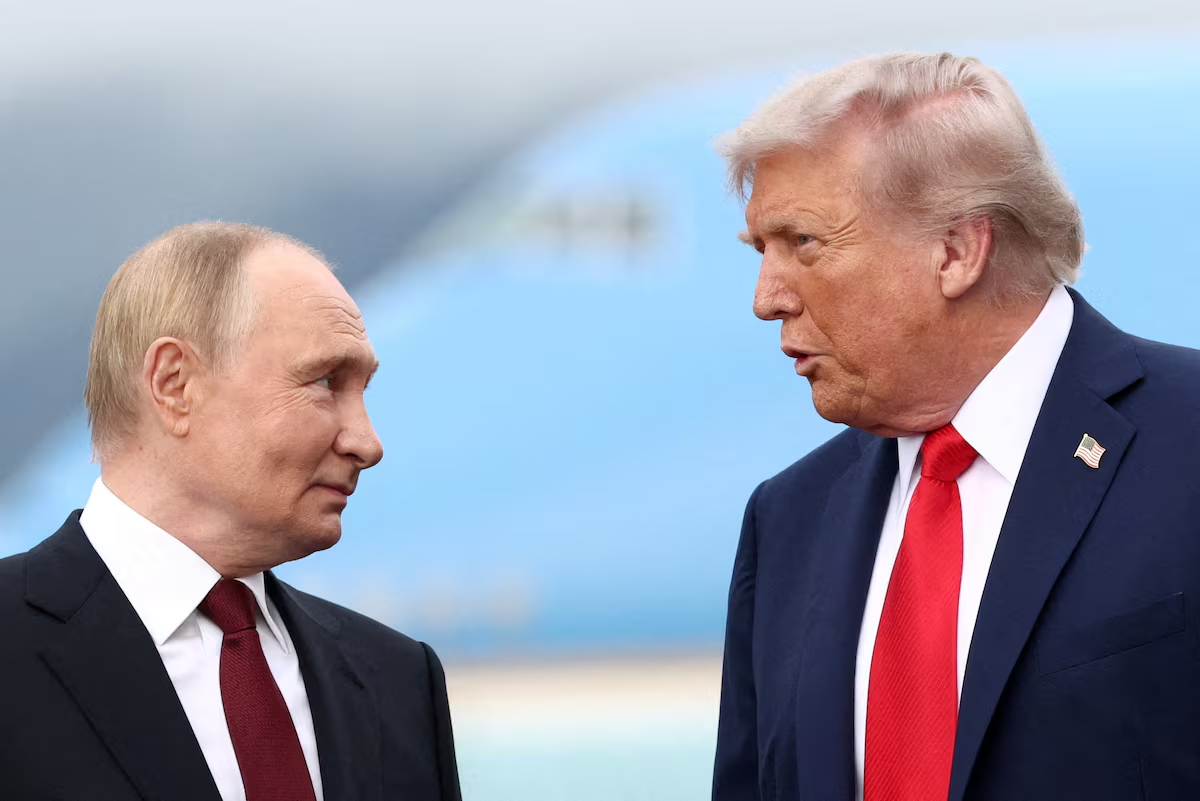
US President Donald Trump speaks with Russian President Vladimir Putin, as they meet to negotiate for an end to the war in Ukraine, at Joint Base Elmendorf-Richardson in Anchorage, Alaska, US, August 15, 2025. Photo: Kevin Lamarque
On October 16, President Donald Trump waived most of the sanctions and tariffs established under the Lindsey O. Graham Sanctioning Russia and Iran Act of 2026, less than a month after signing the legislation into law. The measures were intended to increase economic pressure on Russia over its invasion of Ukraine, including through substantial tariffs on countries purchasing Russian oil and gas. Instead, the administration suspended their application before they could take effect, citing the national interest and the potential economic consequences of enforcement.
The decision follows Trump's October 9 announcement of an agreement with Russian President Vladimir Putin to purchase Russian diesel in an effort to reduce fuel prices. It also comes amid deteriorating relations between Washington and Kyiv, with Trump criticizing Ukrainian strikes on Russian energy infrastructure while the war involving Iran continues to disrupt global energy supplies. Together, these developments represent a change in how the United States is approaching the economic pressure it has sought to impose on Russia.
There is another development that warrants examination. In September, ProPublica revealed that Umar Kremlev, a Russian oligarch with close ties to Putin, had paid hundreds of thousands of dollars toward celebrations surrounding Donald Trump Jr.'s wedding. The arrangement prompted congressional investigations and a formal request for an FBI counterintelligence assessment. The payments were subsequently reported to have been reimbursed, and there is no publicly established evidence connecting them to the sanctions waiver. Nevertheless, the financial relationship raises questions about foreign access to the president's family, the safeguards surrounding presidential decision-making, and the institutions responsible for examining potential conflicts of interest.
Congress Passed the Sanctions, but Trump Controls Their Enforcement
The Graham Act became law on September 18, 2026, following months of negotiations and bipartisan support in Congress. Its purpose was to increase the economic consequences of Russia's continued invasion of Ukraine, particularly by targeting the international trade that sustains Russian energy revenues. The legislation established additional sanctions against Russian officials, financial institutions, and entities involved in moving Russian energy products, while creating penalties for countries that continue purchasing those products or facilitate sanctions evasion.
The October 16 executive order describes a 500% increase in duties on goods imported from Russia, along with 100% tariff increases affecting major importers of Russian oil and natural gas and countries facilitating sanctions evasion. These provisions were designed to extend American economic pressure beyond Russia itself. China and India, among the largest purchasers of Russian energy, were particularly exposed to the potential consequences, and both governments had raised concerns about the legislation.
Yet Section 4 of the executive order waives the application of the new duties and numerous sanctions provisions. The order relies on Section 115 of the Graham Act, which permits the president to waive penalties after certifying to Congress that doing so serves the national interest and providing a report explaining the decision. Trump states that those submissions have been made. The waivers remain effective until the president or designated administration officials determine that further action is appropriate.
The administration has not eliminated all sanctions on Russia. The order explicitly preserves measures imposed under separate executive authorities, meaning existing restrictions remain in force even as the newly enacted provisions are suspended. Nor has the law itself been repealed. Congress's statutory framework remains available for future enforcement, but its principal new penalties are not currently being applied.
That leaves Congress in an unusual position. Lawmakers enacted a sanctions package with overwhelming bipartisan support, but they also included the authority Trump used to suspend it. The administration's action therefore cannot be treated as a straightforward refusal to obey the statute. The law expressly permits waivers, subject to specified requirements. The more consequential issue is how much control Congress retained over the policy it enacted and what meaningful options remain available when the executive branch exercises that discretion in a way lawmakers oppose.
Members of both parties have criticized the decision, arguing that it undermines efforts to pressure Russia. But Congress is currently in recess, and any attempt to change the waiver authority or compel a different outcome would require additional legislative action. The sanctions law remains intact while its intended enforcement has been postponed, demonstrating how broad agreement on a policy can coexist with limited congressional control over whether that policy actually operates.
Energy Prices Are Changing the Administration's Calculations
The waiver arrives during a period of considerable strain in global energy markets. The war involving Iran has disrupted production and shipping, contributing to higher fuel prices and uncertainty over the availability of oil and gas. The administration has increasingly focused on expanding available energy supplies, including through arrangements involving Russia, even as the United States continues to support Ukraine in its defense against the Russian invasion.
Trump's October 9 announcement of a diesel agreement with Putin is especially relevant. According to the president, Russia agreed to supply more than 300,000 tons of diesel initially, followed by additional deliveries in November and afterward. The administration presented the arrangement as an effort to reduce fuel costs, while critics warned that renewed purchases of Russian energy could provide revenue supporting Moscow's war effort. The announced agreement establishes the administration's intention to purchase Russian fuel, although the delivery volumes and economic effects still require confirmation through subsequent trade data.
Secretary of State Marco Rubio said the administration would take up to 60 days to evaluate the economic consequences of implementing the sanctions. He pointed to the potential effects on the United States, the global economy, and countries such as India that depend heavily on Russian energy. Rubio also cited the existing pressure on energy markets from the Iran war and other tariffs already in place.
Those concerns reflect a genuine difficulty in the legislation's design. Secondary sanctions and tariffs are intended to influence behavior by imposing costs on countries and companies that continue trading with the targeted state. But the same international connections that make those penalties potentially effective also create consequences for businesses, consumers, and governments beyond the intended target. A substantial tariff on goods imported from India, for example, could affect American companies and households whose supply chains depend on Indian manufacturing, even when those businesses have no direct relationship with Russian energy purchases.
The administration is effectively arguing that the costs of enforcing the new measures require further consideration. That doesn't establish whether the waiver is economically necessary or whether the alternative approach will produce better results. It does show that the government is confronting a conflict between two stated objectives: increasing pressure on Russia and limiting additional economic strain on the United States and its trading partners.
The legislation was designed to make continued purchases of Russian energy more costly. The administration is now treating the potential consequences of those costs as a reason to delay enforcement. Whether the government can achieve the law's objectives without applying its principal penalties remains an open question.
A Putin-Connected Oligarch Paid for Donald Trump Jr.'s Wedding Celebrations
On September 14, ProPublica published an investigation revealing that Umar Kremlev, a Russian businessman with close ties to Vladimir Putin, had financed substantial portions of the celebrations surrounding Donald Trump Jr.'s May wedding in the Bahamas. According to financial records reviewed by the newsroom and interviews with people familiar with the event, Kremlev paid hundreds of thousands of dollars toward expenses that included renting a private island, accommodations, fireworks, and event planning.
Kremlev is president of the International Boxing Association, an organization that has received financing from Gazprom, Russia's state-owned energy company. ProPublica reported that the wedding payments originated from a Dubai-based entity affiliated with the boxing association. Kremlev has received state honors from Putin, including the Order of Friendship, and has accompanied him on international visits. Ukraine has sanctioned Kremlev, describing him as closely connected to senior figures in Russia's security establishment.
The wedding celebrations involved approximately 50 guests, including members of Trump's family and several Russian attendees associated with Kremlev. Jared Kushner, who has participated in American negotiations concerning Russia and Ukraine, was among the guests. ProPublica also identified Alexander Lagutin, a businessman who has held senior positions at a Russian defense contractor and a state-backed energy company. The presence of these individuals does not establish improper conduct, but it places the financial arrangement within a network of relationships involving Russian state-connected business interests and people with access to senior American policymakers.
The relationship between Kremlev and Trump Jr. was not entirely new. The two appeared together at an International Boxing Association event in Istanbul in September 2025. Following that appearance, the organization issued a statement indicating that further joint initiatives were expected. Kremlev's representatives have described the relationship as a personal friendship and said that political matters were never discussed. Trump Jr.'s spokesperson similarly described Kremlev as a friend rather than a business associate.
After ProPublica published its investigation, Donald Trump Jr. and his wife, Bettina, publicly acknowledged Kremlev's role in financing two nights of celebrations following their private wedding ceremony. They characterized the arrangement as a generous gift from a friend and rejected suggestions that it carried a political motive. President Trump, who did not attend the wedding, said he did not know Kremlev and defended the arrangement as permissible. He subsequently told reporters that his son intended to repay the money, and reporting at the time indicated that reimbursement had occurred. On October 6, Kremlev publicly stated that Trump Jr. had repaid him. The public reporting does not independently establish the precise amount, timing, or financial records of that repayment.
The disclosure nevertheless prompted congressional scrutiny. On September 15, Representative Robert Garcia, the ranking Democrat on the House Oversight Committee, opened an investigation and requested financial records concerning the arrangement. Two days later, Representative Jim Himes, the ranking Democrat on the House Intelligence Committee, wrote to FBI Director Kash Patel requesting a counterintelligence assessment of the relationship.
Himes's letter focused on the risks created when foreign nationals with connections to adversarial governments provide substantial financial benefits to people close to American decision-makers. Although Donald Trump Jr. does not hold public office, his family relationship and political influence make him a potential avenue of access to senior officials. Himes asked whether the FBI had evaluated the arrangement and what steps had been taken to identify or mitigate any resulting risks. His letter requested answers by September 30. A substantive public response establishing the FBI's findings has not been identified in the reporting reviewed for this analysis.
The concerns are not limited to whether the payments violated a criminal statute. Counterintelligence work also examines relationships that may provide foreign governments or their associates with access, information, influence, or opportunities to cultivate obligations. A financial benefit does not have to result in a documented exchange of favors to warrant examination, particularly when it involves someone connected to a foreign government whose interests are directly affected by American policy.
The reported repayment is relevant because it may have ended the immediate financial benefit. It does not, by itself, establish what access Kremlev obtained, whether any expectations accompanied the original arrangement, or whether appropriate safeguards were applied. Those questions require evidence beyond the existence of the wedding payments.
There is no publicly established evidence that Kremlev requested the October 16 sanctions waiver, that Trump discussed the waiver with him, or that the financial arrangement influenced the president's decision. The chronology alone cannot establish causation. But the relationship is relevant to an assessment of institutional safeguards because the administration is making consequential decisions affecting Russian economic interests while Congress is seeking answers about financial access to the president's family by an individual with documented ties to Putin's government.
The Counterintelligence Questions Extend Beyond the Wedding
The Kremlev investigation raises a separate but related question about the government's capacity to identify and address potential foreign influence. That question becomes more consequential when the people involved have access to officials responsible for foreign policy, economic sanctions, intelligence cooperation, and diplomatic negotiations.
Former American intelligence and counterintelligence officials interviewed by ProPublica and The Atlantic described the wedding arrangement as the kind of access opportunity that foreign intelligence services may seek. Their concerns centered on the combination of substantial financial generosity, private social access, and relationships with individuals close to presidential decision-making. Those assessments identify a potential vulnerability; they do not establish that Kremlev acted on behalf of Russian intelligence or that anyone attending the wedding engaged in improper conduct.
The distinction is important because counterintelligence risk and proven corruption are not the same thing. A government may need to investigate a relationship precisely because its purpose and consequences are uncertain. Waiting until a specific improper decision can be proven may leave the institutions responsible for preventing foreign influence unable to act until after any damage has occurred.
The reported presence of Kushner adds another dimension. He has been involved in negotiations concerning Russia and Ukraine, placing him within the administration's diplomatic efforts involving the same foreign government to which Kremlev is closely connected. His attendance at a family wedding does not establish a conflict of interest. It does, however, make the question of access more significant than it would be if the event involved individuals with no connection to government decisions.
The institutional response is therefore as important as the relationship itself. Congress has requested information, but the public record reviewed here does not establish whether the FBI conducted an assessment, what it found, or whether any additional safeguards were implemented. Nor does it establish whether the administration considered the financial relationship when evaluating potential conflicts surrounding its Russia policy.
These gaps do not justify assuming that improper influence occurred. They do limit the public's ability to evaluate whether the relevant institutions identified and addressed the risk. A functioning counterintelligence process should be capable of examining potentially consequential foreign relationships without requiring proof of a completed crime, and the institutions responsible for oversight should be able to obtain enough information to assess whether that process occurred.
The sanctions waiver makes these questions more immediate because it is a concrete exercise of presidential authority with consequences for Russian economic interests. The wedding investigation does not explain why Trump waived the sanctions. It does establish a separate, documented concern about foreign financial access to his family that remains relevant when examining the safeguards surrounding decisions of this magnitude.
Ukraine Faces a Reduction in New Economic Pressure on Russia
For Ukraine, the waiver removes a newly authorized source of economic pressure intended to constrain Russia's ability to sustain its invasion. President Volodymyr Zelenskyy criticized the decision, arguing that it undermines the legislation's purpose and could encourage Russia to continue its attacks. His response follows growing tensions with Trump over Ukrainian strikes on Russian energy infrastructure and the administration's attempts to reduce global fuel prices.
Reuters reported on October 17 that relations between Washington and Kyiv had deteriorated over the preceding week, with disputes involving Russian energy, American intelligence support, and satellite communications important to Ukraine's defense. The sanctions decision is therefore not occurring in isolation. It is part of a broader set of changes affecting Ukraine's relationship with its most important international supporter.
The immediate consequences should not be overstated. The waiver does not eliminate existing American sanctions, end military assistance, or establish that Russia has received a measurable financial benefit from the suspended provisions. Because the new penalties had not yet taken effect, their removal cannot be measured as a reduction from an already operating enforcement system. The direct change is that additional pressure authorized by Congress will not begin on the original schedule.
Still, that change affects the options available to the United States and its allies. The Graham Act was intended to increase the costs of continued Russian energy trade, including by extending penalties to countries and intermediaries outside Russia. Suspending those measures leaves existing trade arrangements less exposed to the new American penalties, at least for now. It also changes the incentives facing countries that had been preparing for their implementation.
Whether Russia receives additional revenue, whether major energy purchasers change their behavior, and whether the waiver influences negotiations over Ukraine will require further evidence. But the direction of American policy has already changed. The administration is pursuing additional Russian energy supplies and delaying newly enacted penalties while simultaneously attempting to manage the diplomatic and security consequences for Ukraine.
That places economic policy, international security, and alliance relationships in increasingly direct competition. Measures intended to weaken Russia's capacity to wage war may also increase costs for countries the United States depends on economically. Efforts to reduce those costs may, in turn, limit the pressure available to support American security objectives.
The Law Remains in Place, but Its Enforcement Has Been Suspended
The institutional concern is not simply that the president exercised discretion. Governments need discretion to respond to changing conditions, and Congress explicitly authorized it in this legislation. The concern is what happens when a policy's enforcement depends on the willingness of the same institution that can suspend it, particularly when the reasons for enforcement are also the reasons enforcement becomes costly.
The Graham Act established a mechanism intended to change conduct through economic consequences. Those consequences were supposed to reach Russia and the countries helping sustain its energy revenues. But before the penalties became operative, the administration determined that their potential economic effects justified a waiver. The United States retains the authority to impose them, yet the decision to activate that authority now rests with the president and designated officials.
There is a difference between retaining a legal power and maintaining an effective enforcement system. A sanctions regime can exist in statute without changing the behavior it was designed to influence, especially if affected governments and businesses believe its penalties are unlikely to be applied. Conversely, the credible possibility of future enforcement may still influence behavior even while a waiver remains in place. Which of those conditions develops will depend on what the administration does next and how other governments respond.
The executive order directs the U.S. Trade Representative, working with other agencies, to continue monitoring Russian energy purchases and sanctions evasion. That preserves an administrative mechanism for gathering information and recommending further action. It does not establish an automatic date when the waived penalties will become effective. Rubio's proposed 60-day review may produce a new decision, but the order itself allows the waivers to continue until officials determine otherwise.
Congress's role also remains important. Section 115 requires a certification and explanatory report, creating a formal means by which the executive branch must account for its decision. Whether that requirement provides meaningful oversight depends on what the administration disclosed, how lawmakers evaluate the justification, and whether Congress can respond if it concludes that the waiver defeats the legislation's purpose.
The separate counterintelligence concerns involving Kremlev expose another part of the same institutional problem. Congress can request an assessment of potential foreign influence, but the effectiveness of that process depends on whether the responsible agencies examine the relationship, whether their findings reach the officials empowered to act, and whether any necessary safeguards are implemented. The existence of oversight authority does not establish that the underlying concern has been resolved.
These two developments should not be treated as proof of a common cause. The sanctions waiver is a confirmed policy decision, while the wedding investigation concerns a documented financial relationship and potential foreign influence risk. Their connection lies in the institutional responsibilities they engage: the ability to enforce policies, identify conflicts, evaluate foreign influence, and provide meaningful answers when consequential decisions are questioned.
Governments routinely establish mechanisms to regulate harmful conduct, enforce obligations, or correct failures. Those mechanisms often impose costs on the institutions and interests responsible for implementing them. If those costs become grounds for repeatedly suspending enforcement, the government can preserve the appearance of a functioning policy without delivering the consequences the policy was created to produce. Likewise, if oversight bodies cannot establish whether potential conflicts have been examined, formal accountability mechanisms may exist without providing the information necessary to evaluate government conduct.
Russia's war against Ukraine has not ended, and the economic relationships the Graham Act sought to influence remain active. The administration may ultimately determine that alternative measures can achieve the same objectives with fewer economic consequences. But that outcome has not been established. For now, the government has replaced scheduled enforcement with monitoring and the possibility of later action, while separate questions about foreign financial access to the president's family remain under congressional scrutiny.
What Happens After the Waiver
The administration's next decisions will determine whether the October 16 order represents a temporary adjustment or a more durable change in American sanctions policy. Rubio's 60-day review provides an initial point to watch, although the executive order does not require the waivers to expire at the end of that period. A decision to restore the penalties, narrow the waivers, or establish specific conditions for enforcement would materially change the current situation.
Congress's response will be equally important. Lawmakers can request additional information about the national-interest determination, examine the certification and explanatory report, hold hearings, or seek to amend the legislation. The effectiveness of those measures will depend on whether they produce substantive scrutiny and whether Congress can assemble the support necessary to alter the administration's discretion.
The Kremlev investigation requires its own follow-up. Garcia's request for financial records and Himes's request for an FBI counterintelligence assessment could establish more about the nature of the relationship, the original payments, the reported reimbursement, and whether government agencies identified any security concerns. Evidence of contacts involving Kremlev or his associates and officials responsible for Russia policy would also be relevant, although no such connection to the sanctions waiver has been established in the reporting reviewed here.
The international effects will be harder to measure immediately. Changes in Russian energy exports, purchases by major trading partners, sanctions-evasion activity, and American import patterns may provide evidence of how governments and businesses respond. Developments in Ukraine's security relationship with Washington will also matter, particularly if economic concessions to Russia coincide with changes in military assistance, intelligence cooperation, or diplomatic commitments.
The central question is whether the United States can maintain the economic pressure Congress intended while managing the domestic and international costs of enforcement. Alongside that question is whether the institutions responsible for examining foreign influence can meaningfully assess financial relationships involving people close to the president when those relationships intersect with matters of national security. Neither question can be resolved through the existence of a law, an investigation, or an executive review alone. The answers depend on what those mechanisms actually produce.
Current Risk Assessment · October 18, 2026
Current assessment: The United States has suspended major sanctions and tariff provisions of the Graham Act before implementation, leaving the statutory authority intact but shifting enforcement to future executive discretion. The change reduces the immediate availability of a newly enacted economic-pressure mechanism targeting Russia and countries involved in Russian energy trade. Existing sanctions under separate authorities remain in force. The administration continues to monitor relevant transactions, but the executive order establishes no automatic expiration date for the waivers. Separately, documented financial benefits provided by a Putin-connected Russian businessman to Donald Trump Jr. have prompted congressional oversight and counterintelligence concerns. The public record does not establish a causal connection between that relationship and the sanctions waiver.
Expected if this assessment holds: The new penalties will remain inactive while the administration reviews their economic consequences, and governments and businesses exposed to secondary tariffs will continue operating under uncertainty about possible future enforcement. American policy may continue balancing efforts to increase energy supply against the economic pressure intended to constrain Russia. Congressional scrutiny could increase after lawmakers return, particularly if the waivers remain in effect without a clear enforcement timetable. The Kremlev investigation may produce additional information about financial relationships, access to senior policymakers, and the government's handling of potential counterintelligence risks.
Would weaken the assessment: The administration reinstates the penalties or establishes enforceable conditions and deadlines for their application; Congress successfully modifies the waiver authority or demonstrates effective oversight of the national-interest determination; or verified evidence shows that alternative American measures are achieving the legislation's objectives without the waived sanctions. A documented reduction in Russian energy revenues attributable to American policy would also weaken concerns that the suspended provisions have materially reduced economic pressure. Regarding the separate foreign-influence concerns, independently documented financial records, completed counterintelligence assessments, and evidence of effective safeguards would help clarify whether the Kremlev relationship created an unresolved institutional vulnerability.
Status: HIGH — A confirmed change in the operation of newly enacted sanctions authority, with consequential exposure across governance, security and foreign policy, international energy trade, and global spillover. The Kremlev financial relationship is documented and has prompted congressional scrutiny, but its relationship to presidential policy decisions remains unestablished. The longer-term economic, security, and institutional effects remain uncertain.
Sources
The White House, “Implementing the Lindsey O. Graham Sanctioning Russia and Iran Act of 2026,” October 16, 2026.
U.S. Government Publishing Office, Lindsey O. Graham Sanctioning Russia and Iran Act of 2026, Public Law 119-111, September 18, 2026.
ProPublica, “Donald Trump Jr.'s Bahamas Wedding Was Secretly Bankrolled by Russian Oligarch Close to Putin,” September 14, 2026.
ProPublica, “Top Oversight Dem Opens Investigation of Donald Trump Jr.'s Russian Oligarch-Funded Wedding,” September 15, 2026.
House Permanent Select Committee on Intelligence Democrats, “Top Intel Democrat Probes Counterintelligence Threat from Trump Family Ties to Kremlin,” September 17, 2026.
The Atlantic, “Don Jr.'s Wedding Trap,” September 22, 2026.
Reuters, “Trump says his son told him he will repay Russian oligarch for wedding parties,” September 18, 2026.
Deseret News, “Trump Jr. returns wedding gift to Russian oligarch amid backlash,” October 6, 2026.
Reuters, “Trump waives many Russia-related sanctions, tariffs before they were to take effect under new law,” October 16, 2026.
Associated Press, “Trump puts new Russia sanctions passed by Congress on hold, saying waiver is in US national interest,” October 16, 2026.
Associated Press, “Trump's decision to waive Russian sanctions outrages Congress, but no quick counter seen,” October 17, 2026.
Reuters, “Trump-Zelenskiy rift threatens vital support for Kyiv,” October 17, 2026.
Reuters, “Rubio says Trump to take up to 60 days to weigh Russia sanctions,” October 18, 2026.