Ukraine's Strikes on Russian Data Centers Raise Questions About U.S. Pressure and Election Interference
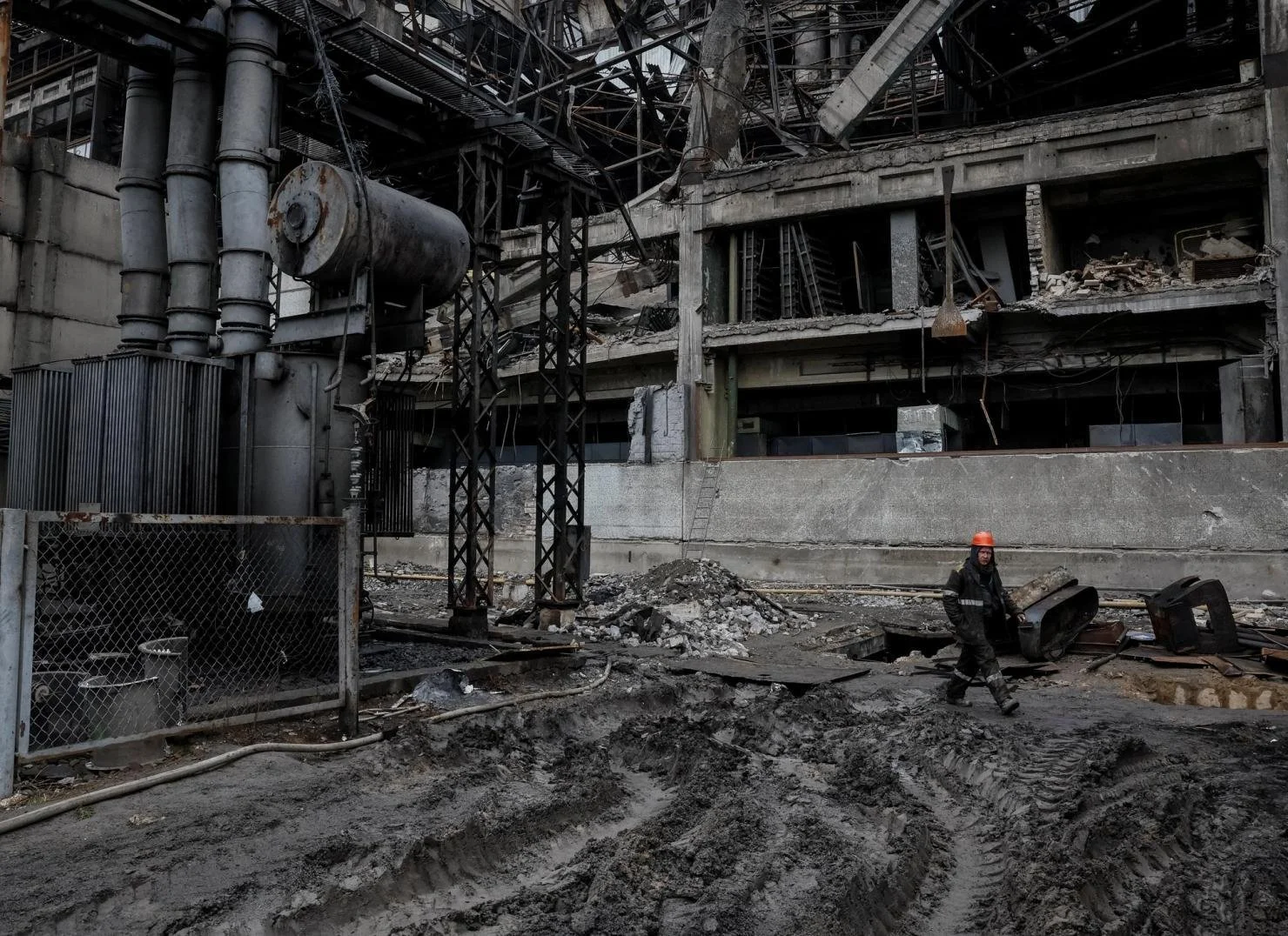
Ukrainian drone strikes on Russian Yandex data centers in October 2026 disrupted digital infrastructure and prompted questions about whether Russian influence operations were affected. Independent researchers have not established that the strikes disabled networks targeting Western elections.
Between October 7 and 11, Ukrainian drones struck three data centers operated by Yandex, one of Russia's largest technology companies. The attacks disrupted Russian internet infrastructure and were followed by claims that Russian propaganda accounts supporting Donald Trump and other Western political movements had suddenly gone quiet.
The timing was particularly interesting. The United States is less than three weeks away from its midterm elections, and researchers have already documented Russian influence operations targeting Democratic candidates. If Ukrainian attacks had disrupted the infrastructure supporting those operations, the consequences could extend well beyond Russia's war with Ukraine.
But something else was happening at the same time. The Trump administration was pressuring Ukraine to stop attacking Russian oil refineries, reportedly threatening access to American weapons and intelligence. Ukraine then experienced unexpected restrictions on the satellite communications systems used by its military drones. Ukrainian officials also reported that Western intelligence warnings hadn't arrived before Russian missile attacks. On October 14, Russia struck 30 Ukrainian energy facilities, leaving at least 600,000 people without electricity.
I don't think we can establish that these events were coordinated, or that the communications restrictions were retaliation for the Yandex attacks. The evidence available so far doesn't support that conclusion. But I'm interested in the relationships between them, particularly because they involve several forms of power that aren't usually examined together: control over digital infrastructure, the ability to conduct foreign influence operations, dependence on military technology, and the authority to restrict access to systems other people need to survive.
The approaching American election makes those relationships especially consequential.
The Yandex Attacks Disrupted More Than Internet Search
Yandex operates a substantial part of Russia's digital infrastructure. Its services include search, cloud computing, mapping, transportation, advertising and other systems used by businesses and individuals. Its data centers provide computing capacity for services that depend on remote servers rather than equipment located with the end user.
Between October 7 and 11, Ukrainian drone attacks struck three Yandex facilities. According to Cloudflare's October 14 analysis, traffic associated with Yandex's search network fell approximately 99 percent below its previous baseline, while traffic associated with Yandex Cloud fell roughly 90 percent. Both networks remained substantially disrupted through October 13.
Those are significant disruptions, although they don't tell us that every service operating on the affected networks stopped working. Cloudflare also observed a decline in malicious scanning and probing activity originating from Yandex Cloud, followed by activity shifting to other hosting providers.
That last finding is worth paying attention to. Some automated activity was disrupted, but the activity didn't necessarily disappear. Cloudflare found evidence that high-volume automation migrated elsewhere. The distinction matters because the ability to move operations between providers is itself a form of redundancy.
A physical attack can disable a facility, interrupt connections and make a particular provider unavailable. Whether it disables an operation depends on how much that operation relies on the affected infrastructure and whether its operators have somewhere else to go.
In the days following the strikes, social media users circulated charts showing the collapse in Yandex traffic alongside claims that Russian-operated political accounts had disappeared from MAGA communities, Germany's Alternative für Deutschland, Britain's Reform UK and other online groups.
The implication was that Ukrainian drones had unintentionally, or perhaps deliberately, interrupted the infrastructure supporting Russian political influence abroad.
Graphika investigated those claims using its existing maps of online communities. Its researchers found that none of the Western political communities identified in the viral posts had lost their active accounts or their most prolific contributors. The strongest reductions in posting appeared in Russian-speaking communities, where activity declined following the strikes.
The charts that had circulated most widely measured Yandex's automated web crawlers, which index internet content for search. They weren't measuring political accounts on social media platforms.
That changes what we can conclude from the attacks. There was a substantial disruption to Russian digital infrastructure, including some automated activity associated with Yandex Cloud. There wasn't a demonstrated collapse of Russian propaganda operations in Western political communities.
But the distinction also identifies something that remains unresolved. Graphika's findings address the specific claims circulating online. They don't establish that no influence operation anywhere was affected, just as the traffic declines don't establish that one was.
To answer that question, we'd need evidence connecting particular influence networks to the infrastructure that was damaged. We would also need to know whether those networks experienced operational changes that couldn't be explained by ordinary fluctuations or movement to other providers.
That's a much narrower question than whether Russian bots suddenly disappeared from the internet. It's also one we may eventually be able to investigate.
Russian Influence Operations Are Already Targeting the Midterms
The reason I think the election connection deserves attention is that we don't have to speculate about whether Russia is conducting influence operations against American political candidates.
On September 21, Graphika published an investigation identifying a coordinated Russia-aligned operation targeting candidates in the November midterms and Germany's September state elections.
The researchers attributed the activity with high confidence to Operation Overload and the Foundation to Battle Injustice, an organization founded by Yevgeny Prigozhin. The network distributed manipulated videos, impersonated established news organizations and circulated unverified allegations of corruption and electoral misconduct.
Among the American politicians targeted were James Talarico, Jon Ossoff, Chris Pappas, Sherrod Brown, Mary Peltola, Roy Cooper, Abdul El-Sayed, Joshua Turek and Troy Jackson. The operation also used footage of American celebrities with fabricated text suggesting they supported an anti-Democratic campaign.
Some of the material went further. It impersonated news outlets and journalists to promote allegations that Democrats themselves were manufacturing claims of Russian election interference.
That is an important part of the operation because it targets the process by which interference might be recognized. An influence campaign can circulate false allegations against political candidates while simultaneously attempting to discredit the people and institutions investigating those allegations.
The United States has encountered this before. American intelligence agencies concluded that Russia conducted an influence campaign during the 2016 presidential election, including efforts intended to damage Hillary Clinton and a preference for Donald Trump. The Senate Intelligence Committee's bipartisan investigation subsequently documented the scope of Russian activities, including social media operations and efforts to exploit political divisions.
The historical record establishes that Russian actors have sought to benefit Trump politically. The current Graphika findings establish that Russia-aligned operations are targeting Democrats ahead of another American election. They don't establish that Trump requested, directed or coordinated the present campaign.
That distinction doesn't make the political implications disappear. The administration has an interest in the outcome of the midterms, Russian influence operators are attempting to shape the information environment in which those elections occur, and Ukraine has attacked Russian infrastructure that could conceivably support some digital operations.
The question is whether those interests have intersected in decisions about Ukraine.
I wouldn't treat the Yandex traffic collapse as evidence that they have. But I also wouldn't dismiss the possibility of an electoral dimension simply because the most widely circulated explanation of the bot activity was wrong.
There is already enough documented activity to investigate what Russian influence networks are doing, how their infrastructure is distributed, and whether disruption to Russian computing capacity has any measurable effect on their operations.
The U.S. Has Reduced Election-Security Support While Foreign Operations Continue
The Russian influence campaign is occurring during a period when the federal government's election-security support has been significantly reduced.
On September 24, the Cybersecurity and Infrastructure Security Agency released its election infrastructure security plan, approximately 40 days before the midterms. The plan described services intended to help state and local election officials address cybersecurity threats, physical security risks and information sharing.
But Associated Press reporting found that election officials in multiple states considered the plan inadequate and too late to replace assistance they had previously received.
The Trump administration had cut approximately 1,000 positions from CISA and reduced funding for cybersecurity initiatives, including support for state and local election officials. Officials described losing access to services such as penetration testing, security exercises and intelligence briefings. Minnesota expected to spend approximately $250,000 on private penetration testing that federal assistance had previously helped provide.
Other states reported different experiences. Some federal services continued, and election officials have been developing their own arrangements to maintain security. Michigan officials expressed confidence in their ability to administer the election despite reporting a substantial deterioration in their relationship with CISA.
The problem isn't that every state has suddenly become unable to protect its elections. It's that a shared source of expertise and coordination has been reduced, leaving states to compensate according to their individual resources.
That matters for foreign influence operations because the threat doesn't respect state boundaries. A coordinated campaign can target candidates in several states, impersonate national media organizations and circulate content across platforms used throughout the country. Identifying connections between those activities requires information that may be distributed among federal agencies, state officials, private researchers and technology companies.
If the federal coordination layer weakens, individual states can still detect and respond to threats, but they may have less access to the information needed to recognize a larger operation.
There's also a difference between maintaining the ability to conduct an election and maintaining the ability to identify attempts to manipulate the information surrounding it. Election infrastructure can remain secure while foreign actors circulate fabricated material intended to influence voters.
That distinction is particularly relevant here because the documented Russian operation involves political messaging and impersonation rather than a demonstrated compromise of voting equipment.
The election-security system can absorb some of the loss of federal support through private contractors, state resources and independent research. But those substitutions don't necessarily restore the same coordination or investigative capacity. They may also create new differences between jurisdictions with substantial resources and those with fewer options.
We have evidence of continuing foreign influence activity and reduced federal assistance. We don't yet know whether the remaining institutions can compensate adequately for what has been lost.
Washington Was Already Pressuring Ukraine Over Russian Energy Attacks
While the Yandex strikes were taking place, the Trump administration was pursuing a separate dispute with Ukraine over attacks on Russian oil refineries.
Ukraine has targeted Russian refining infrastructure because it contributes to Russia's fuel supply, military logistics and revenue. The attacks also have consequences for energy markets, especially when fuel supplies are already under pressure.
Trump has made lowering fuel prices a political priority ahead of the midterms. His administration recently lifted sanctions on Russian diesel, and he has urged Ukraine to stop attacking Russian refineries.
On October 11, Reuters reported that the Financial Times had obtained accounts from European officials describing American threats to restrict intelligence sharing and the Prioritised Ukraine Requirements List, the mechanism through which European governments purchase American weapons for Ukraine.
Reuters couldn't independently verify those reported threats at the time, and the White House hadn't responded to its request for comment. The Financial Times account nevertheless identified a specific form of pressure: restricting resources Ukraine depends upon unless it changes its military targeting decisions.
Trump also announced that Russia and Ukraine had agreed to an immediate ceasefire covering energy infrastructure. Neither government confirmed the agreement at the time, and Russia continued attacking Ukrainian facilities.
The administration's position has an identifiable economic rationale. Russian refinery disruptions can contribute to fuel-market pressures, and higher fuel prices are politically damaging to a president whose party faces an approaching election.
Ukraine's position has a different rationale. Russian energy infrastructure supports a state conducting an ongoing war against it, and limiting that infrastructure can affect Russia's capacity to sustain military operations.
The disagreement itself isn't unusual. Allies can have conflicting economic and military priorities. What matters here is the mechanism available to resolve that disagreement.
The United States controls access to weapons procurement and intelligence systems that Ukraine needs. If those resources are used to compel changes in Ukrainian targeting decisions, the United States can exercise considerable influence without assuming direct responsibility for the military consequences.
That is where the relationship becomes structurally important. Ukraine remains responsible for defending its territory and population, but some of the capabilities required to do so depend on decisions made by another government.
The pressure over Russian refineries was already documented as the Yandex controversy developed. That means we can't reasonably infer that the pressure began because of the data-center attacks. The chronology supports an existing conflict over Russian energy infrastructure, with the Yandex strikes occurring during the same period.
It leaves open whether the data-center attacks created any additional concern within the administration, but there isn't evidence establishing that they did.
Starlink Restrictions Affected Ukrainian Drone Operations
On October 14, Ukrainian officials reported that restrictions affecting SpaceX's military satellite communications systems had disrupted drone missions.
Ukraine uses Starlink technology extensively for military communications, including systems integrated into drones. Some of those drones operate at speeds that require communications terminals to remain connected while moving rapidly across the battlefield.
According to Reuters, Ukrainian officials said military-grade Starshield terminals began disconnecting when moving above specified speeds. Presidential adviser Serhiy Beskrestnov reported a limit of 160 kilometers per hour, although a Ukrainian defense source said some units experienced disconnections at lower speeds.
Beskrestnov said Ukrainian forces hadn't received advance warning and that several missions had been disrupted. Military sources told Reuters the restrictions affected both offensive drone operations and defensive interception of Russian drones.
Elon Musk responded that limits on the military system's speed or use were determined by the American military and ultimately the president. His statement placed responsibility for those restrictions with the U.S. government rather than solely with SpaceX.
The distinction between Starlink and Starshield matters because they operate under different arrangements. SpaceX controls its commercial services, while Starshield provides military and intelligence capabilities under government arrangements. Reporting about restrictions to one system shouldn't automatically be treated as evidence that every Starlink service was restricted in the same way.
But the broader dependence is clear. Ukraine has incorporated externally controlled satellite communications into military operations that require reliable connectivity. A change in access conditions can affect those operations even when the underlying equipment remains functional.
Ukrainian officials suspected the restrictions might be connected to Washington's pressure over refinery strikes. American officials disputed administration involvement in the reported restrictions. The available reporting doesn't establish who authorized the specific changes, what rules governed them or whether political considerations influenced the decision.
What we do know is that the restrictions were reported by the people operating the systems, that Ukraine said missions were disrupted, and that the resulting questions about responsibility remained unresolved.
The distinction between technical and political causes matters for determining who should answer for the decision. It doesn't change the immediate dependency.
A drone that loses its connection during an interception can't complete the same mission simply because the restriction originated in a contract, a technical configuration or an instruction from another government.
The system's ability to function depends on a condition that its operators don't fully control.
Ukraine Also Reported Missing Intelligence Warnings Before Russian Attacks
The satellite restrictions were accompanied by another concern: Ukraine reported that it hadn't received the usual advance intelligence warnings before Russian missile strikes.
On October 13, Zelenskyy said Ukraine had experienced a second consecutive attack without warnings from Western partners. The attacks included ballistic missiles targeting Kyiv and energy infrastructure.
American officials maintained that intelligence sharing continued. Other reporting indicated that warnings resumed during subsequent attacks, and officials offered technical explanations for the disruptions.
That leaves an important factual question unresolved. A missing warning doesn't establish that intelligence sharing was deliberately suspended, particularly when officials responsible for the systems dispute that interpretation.
But the difference between an interruption in intelligence sharing and an interruption in the delivery of intelligence can be smaller for the people depending on the warning than it is for the institutions responsible for producing it.
An early-warning system has several necessary steps. A threat must be detected, identified, assessed and communicated quickly enough for defensive action. A failure at any point can leave the recipient without useful warning, even if the larger intelligence relationship technically remains in place.
That is why the reported warning failures deserve investigation independently of the political dispute. Ukraine needs to know whether the warnings weren't generated, weren't transmitted, arrived too late or were affected by an intentional change in the sharing arrangement.
Each possibility implies a different problem and a different repair.
If the failure was technical, the system needs technical correction and evidence that the correction works. If it was procedural, the communication process needs to change. If access was deliberately restricted, the relevant decision-makers need to account for the authority they exercised and the foreseeable consequences.
Without that information, Ukraine can recognize the failure but may be unable to prevent it from happening again.
Russia's October 14 Strikes Increased Ukraine's Repair Burden
On October 14, Russia launched another large-scale attack on Ukrainian energy infrastructure, primarily affecting Kyiv and Kharkiv.
According to Ukrainian authorities, 30 energy facilities were damaged and at least 600,000 people lost electricity. Three people were reported killed in Kyiv. Russia acknowledged strikes on energy facilities, while Zelenskyy accused Moscow of disregarding Trump's announced energy ceasefire.
The attacks followed several days of disagreement over whether an energy ceasefire existed at all. Trump had announced an agreement, but neither Russia nor Ukraine had confirmed it in the form he described. Russia continued attacking Ukrainian infrastructure.
There's no evidence establishing that the October 14 strikes were coordinated with American decisions about satellite communications or intelligence warnings. Russia had been attacking Ukraine's energy infrastructure long before the Yandex strikes, and its military campaign has its own objectives.
But the simultaneous pressures matter because they affect different parts of Ukraine's ability to withstand and recover from attacks.
Air defenses attempt to prevent damage. Intelligence warnings provide time to prepare. Communications systems support the operations of defensive equipment. Repair crews and utilities restore infrastructure after an attack succeeds.
A problem in one part of that arrangement increases the demands placed on the others. If fewer incoming drones can be intercepted, more may reach infrastructure targets. If warnings arrive late, preparations may be reduced. If multiple facilities are damaged, restoration crews must divide their equipment and labor across a larger number of sites.
Ukraine has repeatedly restored electricity following Russian attacks. Those restorations demonstrate substantial operational capacity, but they don't tell us how much replacement equipment, redundancy or reserve capacity remains afterward.
An electrical system can return to service while operating with fewer backup options than it had before the attack. Repeated repairs may preserve electricity delivery while consuming the components and labor needed to respond to the next disruption.
The effect extends beyond power generation. Electricity supports water systems, communications, heating, transportation, healthcare and industrial activity. Damage to a relatively small number of critical facilities can therefore create demands across several other systems.
The October 14 attacks add to that accumulated burden. The fact that Ukraine continues restoring service is important, but it shouldn't be mistaken for evidence that the underlying system has recovered all the capacity it has lost.
The Election Connection Changes What Needs to Be Investigated
The strongest reason to examine these events together is that they involve different systems through which governments and private actors can influence outcomes without exercising direct control over the institutions ultimately responsible for them.
Russia-aligned influence operations can distribute fabricated political material across American platforms without controlling American elections. The Trump administration can influence Ukrainian military decisions through access to weapons and intelligence without directly commanding Ukrainian forces. SpaceX and the U.S. government can establish operating conditions for satellite systems used in Ukrainian military equipment without operating that equipment themselves.
In each case, a decision made in one part of a system can change what another part is able to do.
The possibility of retaliation for the Yandex attacks is worth investigating because the affected infrastructure, the ongoing influence operations and the approaching election create a plausible area of overlapping political interest. But plausibility isn't enough to establish that the attacks damaged election operations or that American officials responded to protect them.
For that interpretation to become stronger, we'd need evidence connecting the Yandex facilities to identified influence networks, measurable disruption to those networks, and some indication that the disruption influenced decisions by American officials or technology providers.
We don't have that evidence now.
There is, however, a more immediate question about whether the Trump administration's documented pressure over Russian energy targets was accompanied by changes to Ukraine's access to military resources. The reported threats concerning weapons and intelligence are directly relevant to that question. So are the Starshield restrictions, the missing intelligence warnings and the competing explanations offered by officials.
The available evidence doesn't yet establish a common decision behind those developments. It does establish that Ukraine experienced operational problems involving capabilities controlled by outside actors during a period of unusually explicit political pressure.
I think the distinction is important because uncertainty about the motive shouldn't prevent us from examining the mechanism.
We don't need to know whether the Yandex strikes angered Trump or Musk to recognize that Ukraine's military dependence gives outside decision-makers significant power over its operations. We also don't need proof that the strikes affected Russian election operations to recognize that Russia-aligned networks are actively targeting American candidates while federal election-security support has been reduced.
Those are independently significant conditions. If evidence eventually connects them, the consequences become more serious. If it doesn't, the underlying problems remain.
What I’m watching now
The first thing I'm watching is whether anyone establishes a reliable connection between the damaged Yandex infrastructure and identifiable Russian influence operations. Cloudflare's findings show that some automated activity shifted to other providers after the attacks, while Graphika found no collapse in the Western political communities named in viral claims. I'd want to know whether specific operations changed their hosting arrangements, whether their activity declined for more than a brief period and whether any reduction was actually attributable to the strikes.
I'm also watching the Russia-aligned operations Graphika identified in September. Those accounts were distributing manipulated material about American candidates before the Yandex attacks. Their subsequent activity could provide a useful comparison, although a change in posting alone wouldn't establish its cause. We would need to distinguish disruption from ordinary campaign changes, platform enforcement and movement between accounts or services.
On the American side, I'm watching whether state election officials regain meaningful access to federal intelligence and cybersecurity support before November. CISA has announced services, but state officials have reported that some of the assistance they previously relied upon is no longer available or arrived too late to be useful. I want to know whether the promised coordination actually reaches election officials, particularly when researchers identify foreign operations targeting candidates across multiple states.
For Ukraine, the immediate question is who authorized the Starshield restrictions and whether the affected capabilities have been fully restored. Ukrainian officials reported that missions were disrupted without warning, while Musk said the military system's operating limits were determined by American authorities. That should be traceable through the relevant operational arrangements, even if the records aren't currently public. I'd also want to know whether any restrictions remain and whether Ukraine has been given a reliable process for learning about future changes before they affect active missions.
The intelligence-warning failures require the same attention. American officials say intelligence sharing continued, while Ukraine says warnings didn't arrive before particular attacks. Those accounts could both describe parts of the same event, depending on where the failure occurred. What matters is whether the cause is established and the warning system returns to reliable operation.
I'm also watching whether Washington continues threatening weapons procurement or intelligence access in response to Ukrainian attacks on Russian refineries. The administration has a stated interest in reducing fuel prices, and Ukraine has a military interest in limiting Russia's energy resources. If the United States uses control over essential support to enforce its preferred outcome, that would provide a clearer example of the dependence already visible in the communications dispute.
Finally, I'm watching Ukraine's energy restoration capacity after the October 14 attacks. The number of people without electricity tells us how extensive the immediate disruption was, but the repair timeline and the condition of the restored system will tell us more about what Ukraine has available for subsequent attacks. If service is restored through temporary arrangements, depleted reserves or equipment borrowed from other facilities, the visible recovery may conceal a reduction in the system's ability to absorb another strike.
What interests me most about this sequence is that several of the important questions concern decisions or information held by institutions outside the reach of the people experiencing the consequences. Ukraine can report a lost communications link or missing warning, but it may not have access to the records explaining why. Election officials can recognize foreign influence activity while lacking the federal intelligence relationships that previously helped them investigate it.
Those gaps don't establish misconduct. They do make misconduct harder to distinguish from ordinary failure, and they make both harder to correct.
Current Risk Assessment · October 15, 2026
Current assessment: Ukrainian attacks substantially disrupted Yandex infrastructure, but independent investigations haven't established that they disabled Russian influence operations targeting Western political communities. Separately, Graphika has documented Russia-aligned operations targeting American midterm candidates, while state election officials report reduced federal cybersecurity and intelligence support. During the same period, the United States reportedly threatened restrictions on military assistance over Ukrainian refinery strikes, and Ukraine reported disruptions to military satellite communications and intelligence warnings. The evidence supports elevated concern about Ukraine's dependence on externally controlled defense systems and reduced American election-security coordination. It doesn't establish a coordinated retaliation campaign connecting these developments.
Expected if this assessment holds: Ukraine will remain vulnerable to operational changes involving American-controlled military and intelligence systems, particularly where alternatives can't immediately replace the affected capabilities. Further restrictions or interruptions would increase the demands placed on Ukraine's other defensive systems and could add to the burden of repairing damaged infrastructure. In the United States, state election officials will continue relying on uneven combinations of state resources, private services and remaining federal assistance while Russia-aligned influence operations continue targeting political candidates. Investigations may identify additional activity, but establishing its origins and infrastructure will depend on access to information distributed across multiple institutions.
Would weaken the assessment: A documented explanation and durable correction of the Starshield restrictions and intelligence-warning failures would reduce concern about Ukraine's exposure to unpredictable access changes. Demonstrated alternatives capable of replacing the affected military functions would reduce its dependence on any single provider or government. Consistent restoration of federal election-security services, including actionable intelligence sharing and technical assistance, would weaken the assessment of declining coordination. Evidence that the Yandex disruption was limited to services unrelated to identified influence operations would further narrow the election connection. Conversely, documented links between the damaged infrastructure, election influence networks and subsequent political decisions would substantially strengthen the broader concern.
Status: ELEVATED — Ukraine's military dependence and the reduction in American election-security support are documented structural concerns. The possibility that disruption to Russian digital infrastructure influenced U.S. decisions remains unresolved and should be treated as an investigative question.
Sources
Graphika — Yandex Strikes, Russian Bots and Influence Operations. October 13, 2026.
Cloudflare — Yandex Outage: Data Shows That Instead of Going Dark, Malicious Bots Went on the Move. October 14, 2026.
Graphika — Russia-Aligned Influence Operation Targets US Midterm Candidates, German State Elections. September 21, 2026.
Associated Press — 40 Days to Midterms, Election Officials Say New US Cyber Plan Comes Too Late. September 24, 2026.
The Washington Post — With Threats to Midterms, States Say Trump Administration Isn't Helping. October 4, 2026.
Congressional Research Service — Election Security and the Cybersecurity and Infrastructure Security Agency. October 1, 2026.
Reuters — US Threatens to Block Arms for Ukraine Over Refinery Attacks, FT Reports. October 11, 2026.
Reuters — Ukraine Says SpaceX Hampers Drones for Attack and Defence, as US Ties Fray. October 14, 2026.
The Washington Post — U.S. Warnings Sow Confusion, Alarm in Ukraine Over Intelligence, Starlink Access. October 14, 2026.
Reuters — Russian Strikes Kill Three, Damage Dozens of Power Facilities. October 14, 2026.