Saudi Arabia Is Moving More Oil Back Through Hormuz
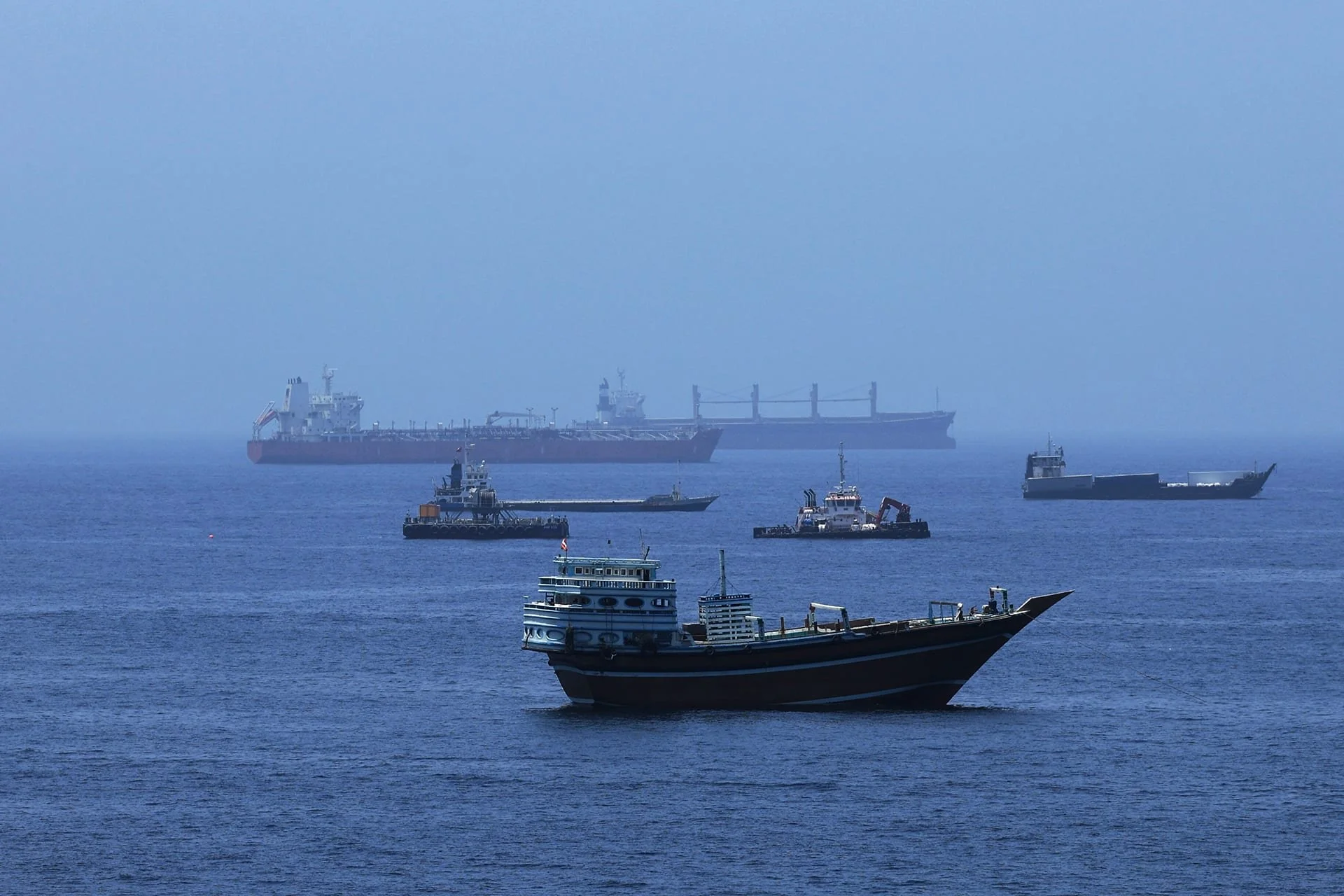
Commercial vessels in the Strait of Hormuz.
Saudi Arabia has recovered part of the export volume lost after attacks damaged the East–West Pipeline by moving more crude through the Persian Gulf. Saudi Aramco increased shipments through the Strait of Hormuz after halting some loadings at Yanbu, and Saudi exports have risen above 4 million barrels per day in September after falling to 2.4 million barrels per day in August, according to provisional Kpler data. Satellite data cited by JPMorgan showed Saudi crude moving through Hormuz averaging about 2.9 million barrels per day over six days, compared with roughly 700,000 barrels per day in August.
The additional shipments have helped relieve the immediate supply pressure created by the damage to the East–West Pipeline. They have also changed where the system is carrying that pressure. The pipeline had allowed Saudi crude to cross the peninsula to Yanbu and reach the Red Sea without passing through Hormuz. With that route impaired, more of the replacement volume is moving through the same strait that the pipeline had been used to bypass.
That change is occurring while visible commercial traffic through Hormuz remains far below prewar levels. Twelve commodity vessels crossed the strait over the weekend of September 19–20, compared with 35 the previous weekend. Before the conflict began in February, the strait typically handled about 125 large commercial vessels per day. Some oil tankers are moving with their transponders turned off, so visible vessel counts understate actual traffic, but the available data still show a waterway operating under substantial constraint.
Saudi Arabia has therefore restored a significant amount of throughput without restoring the geographic redundancy that existed before the East–West Pipeline attacks.
Saudi exports have recovered faster than the pipeline
The East–West Pipeline had become increasingly important during the disruption of Hormuz because it provided a route from Saudi Arabia’s eastern oil fields to the Red Sea. Reuters reported on September 17 that three pumping stations were damaged in the attack, one more than initially assessed. The 1,200-kilometer pipeline had been moving roughly 4 million to 5 million barrels per day and temporarily shut after the strikes. Industry sources gave repair estimates ranging from partial operation sooner to five or six weeks for more complete repairs.
Saudi Arabia did not wait for the pipeline to return to full service. Aramco increased Gulf exports and arranged additional ship-to-ship transfers outside the strait, allowing crude to reach Asian buyers despite the reduction in Yanbu loadings. By the week of September 13, 13 tankers carrying about 34 million barrels of crude had exited Hormuz, with Saudi Arabia accounting for approximately half of that volume.
The rerouting has reduced the immediate risk of a sharp Saudi supply loss. Middle Eastern oil flows averaged about 17.1 million barrels per day over the ten days covered by a September 18 JPMorgan analysis, roughly 6.1 million barrels per day below the 2025 average but substantially higher than would be expected under a near-total regional export shutdown. Oil prices have also retreated from the levels reached after the East–West Pipeline disruption. Brent fell to $101.71 per barrel early September 21 as markets responded to recovering Saudi shipments and the possibility of renewed diplomacy between Washington and Tehran.
The recovery is not equivalent to restoration of the pre-attack transport system. Before the damage, Saudi Arabia could move large quantities of crude westward without using Hormuz. The current arrangement preserves exports by sending more oil east through the Gulf first. The available volume has improved, while the number of independent routes available to move it has not.
Hormuz remains constrained
Shipping data continue to show a large difference between current activity and prewar traffic. Reuters reported four commodity vessels crossing Hormuz on September 17, below a ten-day average of about 16. Over the following weekend, 12 commodity vessels crossed, down from 35 the weekend before. Tracking data do not capture every tanker because ships operating in the conflict zone may switch off transponders, but that limitation applies to an environment in which normal commercial visibility and routing have already been disrupted.
LNG movements have shown a similar pattern of partial activity rather than normalization. Three LNG vessels reappeared outside Hormuz on September 17 after periods in which they had not been visible on tracking systems. Kpler also recorded a ship-to-ship transfer between two Qatar-linked vessels off Oman on September 13 while their transponders were off. These movements show that cargoes can still be moved through or around the disruption, but they also involve operating practices different from ordinary peacetime shipping.
The shift in Saudi exports makes those conditions more important to the regional supply system. Saudi Arabia is now relying more heavily on a route with reduced visible traffic, elevated security risk and greater operational uncertainty. If the East–West Pipeline returns to substantial service, some of that dependence can move back toward the Red Sea. Until then, recovery in Saudi export volume increases the amount of supply using Hormuz rather than reducing the system’s dependence on it.
Pressure around Bab el-Mandeb has also increased
The Red Sea route has not remained isolated from the conflict. Reuters reported that Houthi forces had seized Yemen’s Red Sea coastline and strengthened their position around Bab el-Mandeb, the southern entrance to the Red Sea. On September 17, 23 commodity vessels crossed Bab el-Mandeb, close to the ten-day average of 26, so commercial traffic through the strait had not stopped. The military environment surrounding that traffic had nevertheless changed.
On September 19, the Houthis said they launched missiles and drones at sites in Riyadh and at an Aramco facility in Yanbu. Reuters video showed smoke near Riyadh’s main international airport following explosions, while Saudi Arabia did not confirm the Houthis’ description of the targets. A Saudi-led coalition said it had intercepted other attacks on the kingdom.
Yanbu matters because it is the Red Sea terminus of the East–West Pipeline. Bab el-Mandeb matters because ships leaving the Red Sea for Asian markets eventually pass through it. The infrastructure and waterway that provide the principal alternative to Hormuz are therefore operating within the same expanding security environment that has pushed additional Saudi exports back toward the Gulf.
Iran added further uncertainty on September 20 when its military central command said any new U.S. attack would trigger sustained retaliation against U.S. bases and interests and warned that regional states assisting such an attack could be treated as parties to the conflict. The command also claimed it had information that another attack was being prepared but did not provide evidence supporting that claim. The United States separately issued a regional security alert warning of possible escalation, flight cancellations and airspace closures.
At the same time, the possibility of renewed U.S.-Iran talks has reduced some of the market risk premium. President Donald Trump said he would be open to meeting Iranian President Masoud Pezeshkian during the UN General Assembly, and oil prices fell as investors priced in the possibility of de-escalation. The physical constraints on the pipeline and shipping system remain in place while that diplomatic outcome is unresolved.
Qatar is seeing effects on both current and future LNG capacity
The shipping disruption is also affecting Qatar’s LNG system. QatarEnergy CEO Saad al-Kaabi said on September 20 that the company was producing only a very small volume of LNG and that delays in receiving critical equipment through the Strait of Hormuz could affect some expansion projects. The first trains in Qatar’s North Field East expansion are scheduled to begin operating in 2027, followed by North Field South in 2028.
The equipment problem extends the effect of the shipping constraint beyond cargoes currently trying to leave the Gulf. Large energy projects depend on equipment, replacement parts and construction inputs moving into the region as well as fuel moving out. If those deliveries remain disrupted, the effect can move from current export capacity into the schedule for future production.
That is different from a temporary tanker delay. The immediate LNG loss affects current supply; delayed project equipment can affect capacity expected in later years. The extent of that effect will depend on how long access remains constrained and whether QatarEnergy can reroute or replace the affected deliveries.
Saudi Arabia’s current export strategy shows that the region still has substantial capacity to improvise around damaged infrastructure. Qatar’s difficulty receiving equipment shows where the limits of that improvisation can appear. Not every interrupted flow can be replaced by sending the same cargo through another terminal.
The economic effects remain uneven
The partial recovery in Saudi exports has reduced crude-price pressure, but other energy and transport costs do not necessarily move at the same speed. Reuters reported U.S. diesel prices above $6 per gallon during the previous week while global refining capacity remained constrained and inventories were tight. Diesel costs reach trucking, agriculture, construction and other parts of the physical economy even when crude prices are falling.
That pattern is consistent with the previous Risk Monitor analysis, Energy Disruption Is Spreading Into Freight and Credit. The original energy shock has not produced a uniform downstream effect. Crude availability, refined-product supply, tanker capacity, freight rates and borrowing conditions respond through different mechanisms and on different timelines.
The latest Saudi data add another layer to that picture. Additional oil is reaching the market, but some of it is doing so through longer or more operationally complicated routes. A decline in Brent therefore does not establish that the transportation and logistics effects associated with the disruption have disappeared. It establishes that crude supply has proved more adaptable than the worst-case scenarios implied immediately after the pipeline attack.
The next question is whether that adaptation persists long enough for the damaged infrastructure to be repaired, or whether another disruption affects one of the routes now carrying the additional load.
What I’m watching now
East–West Pipeline throughput is the clearest measure of whether Saudi Arabia is regaining actual redundancy. Partial repair may increase capacity, but the more important change would be sustained restoration of westbound crude flows sufficient to reduce reliance on Hormuz.
Hormuz vessel traffic also needs to recover over a sustained period. Because transponder data are incomplete, any individual daily count is a poor measure of total oil movement. A broader rise in visible tanker, LNG and commercial traffic alongside lower reliance on dark shipping would provide stronger evidence that operating conditions are normalizing.
Bab el-Mandeb remains relevant because the Red Sea route only provides meaningful redundancy if ships can move through its southern exit without a comparable increase in security risk. Continued commercial traffic is evidence that the strait remains usable. Further Houthi attacks on Saudi infrastructure or tighter control over shipping near the strait would increase the exposure of the alternative route.
QatarEnergy’s LNG production and equipment deliveries will show whether the current disruption remains primarily a shipping problem or begins to affect longer-term capacity. Resumed equipment access would reduce the risk of project delays even if some LNG exports remain constrained.
Diplomatic developments could alter all of these conditions before physical repairs are complete. A sustained reduction in U.S.-Iran military risk would lower the threat to shipping and regional infrastructure. Renewed direct attacks would raise the probability that additional transport routes or energy facilities are affected while current workarounds are still carrying extra load.
Current Risk Assessment · September 20, 2026
Current assessment: Saudi and regional energy flows remain materially impaired but continue to adapt. Saudi Arabia has recovered substantial export volume by routing more crude through Hormuz and using additional transfer arrangements outside the Gulf, while the East–West Pipeline remains damaged and normal commercial traffic through Hormuz remains sharply reduced. The available supply picture has improved faster than the transport system’s redundancy.
Expected if this assessment holds: Saudi exports should remain above their August lows as long as Hormuz remains usable for large crude carriers and Aramco can continue routing additional shipments through the Gulf. Freight, refining and LNG constraints may remain uneven even if crude prices continue to fall. Continued dependence on Hormuz would leave Saudi export recovery exposed to another disruption in the strait until meaningful East–West Pipeline capacity returns.
Would weaken the assessment: Sustained restoration of East–West Pipeline throughput, a durable increase in normal commercial traffic through Hormuz, continued operation of Bab el-Mandeb without additional interference, recovery in Qatari LNG production and equipment access, and a reduction in the extraordinary shipping arrangements currently being used to maintain exports.
Status: Elevated, with redundancy weakening.
Sources
Reuters, “Vessels trickle through Strait of Hormuz as Middle East conflict persists,” September 20, 2026.
Reuters, “Oil hits over 1-week low on hopes of boost to diplomacy in Iran war,” September 20, 2026.
Reuters, “Iran and US trade threats after Houthi attacks escalate regional conflict,” September 20, 2026.
Reuters, “QatarEnergy says Hormuz crisis may delay some expansion projects,” September 20, 2026. Read the Reuters report
Reuters, “Hormuz traffic below 10-day average, LNG vessels reappear outside strait,” September 18, 2026.
Reuters, “Three pumping stations along Saudi East-West Pipeline were hit in recent attack, sources say,” September 17, 2026.